Anglo-Saxon Chronicle

Definition and stakes

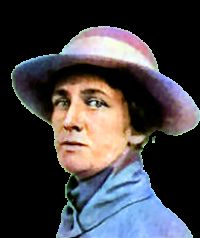
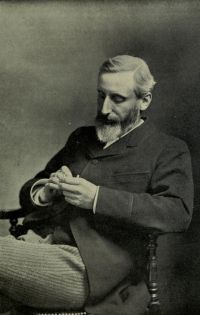
Portrait of Grant Allen Grant Allen,  Anglo-Saxon Britain

“ Though the so-called history of the conquest, handed down to us by Bæda and the "English Chronicle," [1] is now considered by many enquirers to be mythical in almost every particular, the facts themselves speak out for us with unhesitating certainty. We know that about the middle of the fifth century, shortly after the withdrawal of the regular Roman troops, several bodies of heathen Anglo-Saxons, belonging to the three tribes of Jutes, English, and Saxons, settled en masse on the south-eastern shores of Britain, from the Firth of Forth to the Isle of Wight. ”

Source: Gutenberg

John Earle,  Anglo-Saxon Literature

“ The Norman Conquest gave the death-blow to our old native literature, in the sense that the use of the literary Anglo-Saxon in its first integrity, as at once a learned language and a spoken language, did not extend beyond the generation that witnessed that great dynastic change. In this strict sense we might point to the close of the Worcester Chronicle in 1079 as the termination of Anglo-Saxon literature. ”
Source: Gutenberg

Benjamin Thorpe,  The Anglo-Saxon Chronicle (1861)

“ An edition to the Anglo-Saxon Chronicle, down to the date of the Norman conquest, is included in the 'Monumenta Historica Britannica' published in the year 1848, in folio, by Royal authority. This edition, with an English translation, is by the late eminent Anglo-Saxon scholar, Mr. Richard Price, and is, as far as it extends, in every respect greatly superior to any of the preceding ones. ”
Source: Wikisource

Get perspective with Kwize: daily news enlightened by great literature