Antirrhinum

Definition and stakes

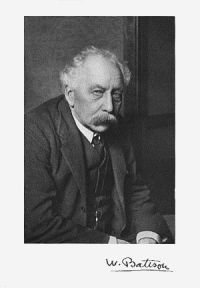
Portrait of William Bateson William Bateson,  Problems of Genetics

“ Where, however, no such sterility is met with, as for instance in the crosses made by E. Baur among the species of Antirrhinum there is every reason to think that the whole mass of differences can and will eventually be expressed in terms of ordinary Mendelian factors. Baur has for example crossed species so unlike as Antirrhinum majus and molle, forms differing from each other in almost every feature of organisation. [1] The F2 generation from this cross presents an amazingly motley array of types which might easily if met with in nature be described as many distinct species. ”
Source: Gutenberg

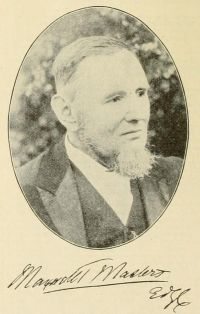
Portrait of Maxwell T. Masters Maxwell T. Masters,  Vegetable Teratology

“ With this suppression an increase in the size of the flower very generally coincides. The number of parts is also frequently increased; thus, in Antirrhinum majus the corolla, when subjected to peloria, is very generally six-parted, and has six stamens. Fusion of one or more flowers is also a common accompaniment of peloria, as in Digitalis purpurea, in which plant prolification often adds increased complexity to the flower. ”
Source: Gutenberg

Portrait of Charles Darwin Charles Darwin,  The Variation of Animals and Plants under Domestication… (1868)

“ It is also difficult to believe that the other four stamens and the petals, after an arrest of development at a very early embryonic age, would have come to full perfection in colour, structure, and function, unless these organs had at some former period normally passed through a similar course of growth. Hence it appears to me probable that the progenitor of the genus Antirrhinum must at some remote epoch have included five stamens and borne flowers in some degree resembling those now produced by the peloric form. ”
Source: Wikisource

Get perspective with Kwize: daily news enlightened by great literature