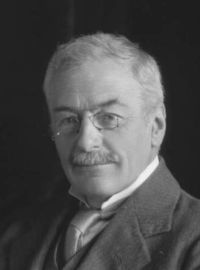
The Aramaic language, a Semitic tongue historically spoken across Syria, Mesopotamia, and Palestine, functioned as a common language in ancient trade and religious settings. Scholars such as A. H. Sayce and John D. Quackenbos emphasize its adoption by Jews after the Babylonian exile, while others, like Leighton Pullan, investigate its possible role as the original language of the Synoptic Gospels.
The 1911 Encyclopædia Britannica points out its clear prose style and separation from Greek influence, contrasting it with Hebrew’s poetic tradition. These viewpoints highlight Aramaic’s dual legacy: a practical tool for everyday communication and a linguistic link in religious and literary dissemination. Its study continues to be essential for understanding the development of Semitic languages and their interactions with Hebrew, Greek, and Arabic.
 A. H. Sayce,
Assyria: Its Princes, Priests and People