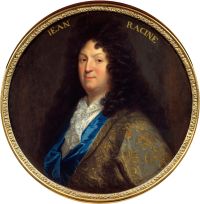
“ O gods! to serve her what have I not done? This is the due reward that I have won. ACT V SCENE I HIPPOLYTUS, ARICIA ARICIA Can you keep silent in this mortal peril? Your father loves you. Will you leave him thus Deceived? If in your cruel heart you scorn My tears, content to see me nevermore, Go, part from poor Aricia; but at least, Going, secure the safety of your life. Defend your honor from a shameful stain, And force your father to recall his pray'rs. There yet is time. Why out of mere caprice Leave the field free to Phaedra's calumnies? ”
Aricia
Definition and stakes
The theme of “Aricia” has been addressed by authors such as Jean Racine, Edward Lucas White, Livy, W. Warde Fowler and James George Frazer. It is often associated with terms like Rome, Ludovico, Ariosto, Arius and Alicia.
Quotes about “Aricia”
“ Hippolytus can feel, but not for me! Aricia has his heart, his plighted troth. Ye gods, when, deaf to all my sighs and tears, He arm'd his eye with scorn, his brow with threats, I deem'd his heart, impregnable to love, Was fortified 'gainst all my sex alike. And yet another has prevail'd to tame His pride, another has secured his favour. Perhaps he has a heart easily melted; I am the only one he cannot bear! ”
“ Bound to Aricia by my heart's devotion, The child of Pallas has subdued your son. A rebel to your laws, her I adore, And breathe forth ardent sighs for her alone. THESEUS You love her? Heav'ns! But no, I see the trick. You feign a crime to justify yourself. HIPPOLYTUS Sir, I have shunn'd her for six months, and still Love her. To you yourself I came to tell it, Trembling the while. Can nothing clear your mind Of your mistake? What oath can reassure you? By heav'n and earth and all the pow'rs of nature-- THESEUS The wicked never shrink from perjury. ”
Edward Lucas White, The Unwilling Vestal
“ The priesthood at Aricia is no part of our hierarchy; the safety of Rome in no way depends on its sanctity. It is important enough for the nine towns that share the cult, but it concerns no others. It’s an alien cult, anyhow. Whether Orestes brought it to Aricia or Hippolytus or who else makes no difference, nor the tradition that it is four hundred years older than Rome. It’s a disgrace to Italy and it exists on sufferance. Father told me that Grandfather and he were both in half a mind to have it suppressed as the Bacchanals were suppressed. The curative repute of the Grove stood in the way. ”
Livy, The History of Rome, Books 01 to 08
“ The army of the Auruncians had set out from home simultaneously with the ambassadors; the report of which having been seen not far from Aricia, excited such a tumult among the Romans, that neither the senate could be consulted in regular form, nor could they, while themselves taking up arms, give a pacific answer to those advancing against them in arms. They march to Aricia with a determined army, come to an engagement not far from thence, and in one battle put an end to the war. ”
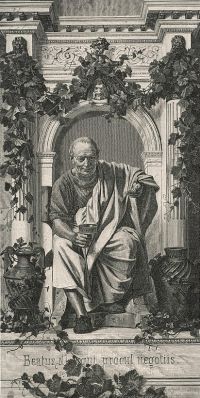
“ Having left mighty Rome, Aricia received me in but a middling inn: Heliodorus the rhetorician, most learned in the Greek language, was my fellow-traveler: thence we proceeded to Forum-Appi, stuffed with sailors and surly landlords. This stage, but one for better travelers than we, being laggard we divided into two; the Appian way is less tiresome to bad travelers. ”
Edward Lucas White, The Unwilling Vestal
“ In fact, before they reached Aricia, the road was alive with parties of celebrants, men and women, but no children, every man carrying a lighted torch, nearly every man accompanied by a slave with an armful or a back-load of spare torches, all moving in the same direction with them. ”
1911 Encyclopedia Britannica (1911)
“ ARICIA (mod. Ariccia) , an ancient city of Latium, on the Via Appia, 16 m. S.E. of Rome. The old town, or at any rate its acropolis, now occupied by the modern town, lay high (1350 ft. above sea-level) above the circular Valle Aricciana, which is probably an extinct volcanic crater ”
Livy, Roman History, Books I-III
“ Porsina, having abandoned the war against the Romans, that his army might not seem to have been led into those parts to no purpose, sent his son Arruns with part of his forces to besiege Aricia. The unexpected occurrence at first terrified the Aricians: afterward aid, which had been sent for, both from the people of Latium and from Cumæ, [15] inspired such hope that they ventured to try the issue of a pitched battle. At the beginning of the battle the Etruscans attacked so furiously that they routed the Aricians at the first onset. ”
W. Warde Fowler, The Roman Festivals of the Period of the Republic
“ The day of the festival at Aricia is thought to have been also Aug. 13 (Lex. s. v. Diana, 1006) . 833. Beloch, Italischer Bund, 180; Cato (ap. Priscian, 7. 337, ed. Jordan, p. 41) gives the names of the towns united in and by the Arician cult—Aricia, Tusculum, Lanuvium, Laurentum, Cora, Tibur, Pometia, Ardea. 834. Liv. I. 45 Dionys. 4. 26; Varro, L. L. 5. 43. ”
Lucan, Pharsalia; Dramatic Episodes of the Civil Wars
“ About the year 1100 it was stormed and taken by Robert the Guiscard, after furious battles with the troops of the Emperor Alexius. Its modern name is Durazzo. It may be observed that, according to Caesar's account, he succeeded in getting between Pompey and Dyrrhachium, B.C. 3, 41, 42. (2) C. del Faro, the N.E. point of Sicily. (3) The shores of Kent. (4) Aricia was situated on the Via Appia, about sixteen miles from Rome. There was a temple of Diana close to it, among some woods on a small lake. Aricia was Horace's first halting place on his journey to Brundisium ("Satires", i. 5) . ”
1911 Encyclopædia Britannica (1911)
“ These meetings took place on the spot where the sacred shield had fallen from heaven, and here Numa dedicated a grove to the Camenae, like Egeria deities of springs. After the death of Numa, Egeria was said to have fled into the grove of Aricia, where she was changed into a spring for having interrupted the rites of Diana by her lamentations (Ovid, Metam. xv. 479) . At Aricia there was also a Manius Egerius, a male counterpart of Egeria. Her connexion with Diana Nemorensis, herself a birth goddess, is confirmed by the fact that her aid was invoked by pregnant women. ”
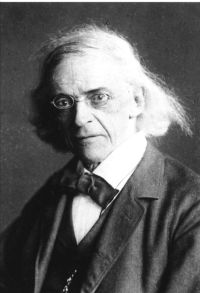 Theodor Mommsen,
The History of Rome, Book II
Theodor Mommsen,
The History of Rome, Book II
“ To all appearance Velitrae, although situated in the plain, was originally Volscian, and so a Latin colony; Cora, on the other hand, on the Volscian mountains, was originally Latin.12. Not long afterwards must have taken place the founding of the -Nemus Dianae- in the forest of Aricia, which, according to Cato's account (p. 12, Jordan) , a Tusculan dictator accomplished for the urban communities of old Latium, Tusculum, Aricia, Lanuvium, Laurentum, Cora, and Tibur, and of the two Latin colonies (which therefore stand last) Suessa Pometia and Ardea (-populus Ardeatis Rutulus-) . ”
W. Warde Fowler, The Religious Experience of the Roman People
“ The dies natalis of the temple is the same as that of the famous shrine of the same goddess at Aricia—the Ides of August.489 Aricia was at this time the centre of a league of cities including Tusculum and Tibur, with both of which, as we have just seen, Rome was closely connected at this time; a league which is generally supposed to have superseded that of Alba, marking some revolution in Latium con235sequent on the fall of Alba.490 Diana was a wood-spirit, a tree-spirit, as Dr. Frazer has taught us, with some relation to the moon and to the life of women ”
 James George Frazer,
The Golden Bough: A Study in Comparative Religion…
James George Frazer,
The Golden Bough: A Study in Comparative Religion…
“ We are now able to suggest an explanation of the proverb “there are many Manii at Aricia.”267 Certain loaves made in the shape of men were called by the Romans maniae, and it appears that this kind of loaf was especially made at Aricia.268 Now, Mania, the name of one of these loaves, was also the name of the Mother or Grandmother of Ghosts,269 to whom woollen [pg 083] effigies of men and women were dedicated at the festival of the Compitalia. ”
Edward Lucas White, The Unwilling Vestal
“ When they reached the margin of the open space, Brinnaria, choking with the realization that she had arrived too late, peered between the drawn curtains of her litter and saw the pavement of the temple-area bright under the splendor of the torch-rays; saw a dozen young women, dressed in gowns of a startling deep orange, standing in a row clear of the torch-bearing crowd; saw the five aldermen of Aricia in their official robes, grouped about the square marble altar ”
James George Frazer,
The Golden Bough
(1922)
“ By the usual misunderstanding the horse thus killed would come in time to be regarded as an enemy offered up in sacrifice to the god whom he had injured, like the pig which was sacrificed to Demeter and Osiris or the goat which was sacrificed to Dionysus, and possibly to Athena. It is so easy for a writer to record a rule without noticing an exception that we need not wonder at finding the rule of the Arician grove recorded without any mention of an exception such as I suppose. ”
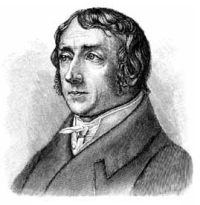 Barthold Georg Niebuhr,
Niebuhr's lectures on Roman history…
(1875)
Barthold Georg Niebuhr,
Niebuhr's lectures on Roman history…
(1875)
“ The Aricians also are mentioned by Livy among those who had received the citizenship; but according to an authentic account, they stood some years later in the position of a dependent municipium. Thus therefore these peoples attained to great honours. No place has given birth to so many renowned families as the little town of Tusculum, the cradle of the Fulvii, Porcii, Coruncanii, Curii, and others. This is a remark of Cicero’s, and as a general rule, a particularly large number of great men thus often come from certain places. Of Lanuvium hardly a family can be named. ”
James Frazer, The Golden Bough — Chapter 58:… (1922)
“ If then the civilised Greeks of Asia and Athens habitually sacrificed men whom they regarded as incarnate gods, there can be no inherent improbability in the supposition that at the dawn of history a similar custom was observed by the semibarbarous Latins in the Arician Grove. ”
Arthur Thomas Malkin, The Gallery of Portraits: with Memoirs…
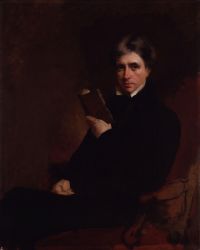
“ The Italians have bestowed on Ariosto the epithet of “the Divine,” and they also call him “the Homer of Ferrara.”The character of Ariosto may be easily gathered from this brief sketch of his life. He was trustworthy, loyal, and sincere, free from envy or jealousy, and a warm friend; he was fond of meditation and retirement, often absent and absorbed in thought, and yet he could be very pleasant and jovial in company. He was not a great reader, and he selected the Latin classics in preference to other authors. He studied men and nature more than books. ”
 Leigh Hunt,
Stories from the Italian Poets…
Leigh Hunt,
Stories from the Italian Poets…
“ Ariosto makes them literally flights—flights on a hippogriff, and to the moon. The moon, it has been said, makes lunatics; he accordingly puts a man's wits into that planet. Vice deforms beauty; therefore his beautiful enchantress turns out to be an old hag. Ancient defeated empires are sounds and emptiness; therefore the Assyrian and Persian monarchies become, in his limbo of vanities, a heap of positive bladders. Youth is headstrong, and kissing goes by favour; so Angelica, queen of Cathay, and beauty of the world, jilts warriors and kings, and marries a common soldier. ”
Arius the Libyan: A Romance of the Primitive Church
“ Many of them, knowing his great erudition and holy character, consulted him privately, and he fully gave them the benefit of his learning and opinions. Arius was now sixty years of age, and was greatly changed from the bright and happy youth whom we knew at Baucalis; greatly changed even from the broken-hearted but ever-diligent, earnest, and eloquent presbyter of the earlier years of his ministry at Alexandria. "He is tall and thin, apparently unable to support his stature; he has an odd way of contorting and twisting himself, which his enemies compare to the wrigglings of a snake. ”
Baron Thomas Babington Macaulay Macaulay, Critical, Historical, and Miscellaneous Essays…
“ Tasso, Marino, Guarini, Metastasio, and a crowd of writers of inferior merit and celebrity, were spell-bound in the enchanted gardens of a gaudy and meretricious Alcina, who concealed debility and deformity beneath the deceitful semblance of loveliness and health. Ariosto, the great Ariosto himself, like his own Ruggiero, stooped for a time to linger amidst the magic flowers and fountains, and to caress the gay 60and painted sorceress. ”
Arius the Libyan: A Romance of the Primitive Church
“ Eusebius glowed with pleasure as he listened to the language in which the emperor depicted the character of Arius, and replied: "Only the truly great are able to do justice to those whom they have strong reason to dislike, but thou hast painted the grand and lonely soul of the Libyan even as it is. He hath been purified by sorrow. He is all for Christ, and earthly hopes, fears and ambitions no more can move his chaste and lofty spirit." ”
Henry Hallam, Introduction to the Literature of Europe in the Fifteenth…
“ It is felt already in Spenser, as it is perhaps even in Ariosto, when we read much of either, that tales of knights and ladies, giants and savage men, end in a satiety which no poetical excellence can overcome. Ariosto, sensible of this intrinsic defect in the epic romance, has enlivened it by great variety of incidents, and by much that carries us away from the peculiar tone of chivalrous manners. The world he lives in is before his eyes, and to please it is his aim. He plays with his characters as with puppets that amuse the spectator and himself. ”
 Madame de Staël,
Corinne; Or, Italy. Volume 1 (of 2…
Madame de Staël,
Corinne; Or, Italy. Volume 1 (of 2…
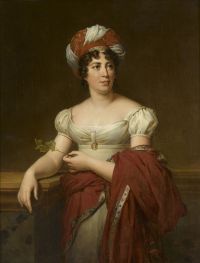
“ Ariosto derived inspiration from our serene atmosphere, and our delicious climate. He is the rainbow which appeared after our long wars; brilliant and many-hued, like that herald of fine weather, he seems to sport familiarly with life; his light and gentle gaiety is the smile of nature and not the irony of man. ”
John Colin Dunlop, History of Roman Literature from its Earliest Period to the Augustan Age…
“ As Ariosto, in his story of Olimpia, principally chose Ovid for his model, so Tasso, in that of Armida, seems chiefly to have kept his eye on Virgil and Catullus. But Armida is not like Ariadne, an injured and innocent maid, nor a stately queen, like Dido; but a voluptuous and artful magician, —— “Che nella doglia amaraGia tutte non obblia l’arte e le frodi.” It has been mentioned, that the desertion of Ariadne was represented on one compartment of the coverlet of the nuptial couch of Peleus—on another division of it the story of Bacchus and Ariadne was exhibited. ”
 Elizabeth Robins,
The Mills of the Gods
(1908)
Elizabeth Robins,
The Mills of the Gods
(1908)
“ Alicia faces danger as she faces life, with the same dead calm with which the rock of Castellontano looks up to the sunrise, or down at nightfall into the blackness underneath!” He paused an instant—and then, with something like a sob, he caught his breath. “I pour out my heart to her—she wears an air of listening, but her soul is far away. If I ask her questions, she smiles vaguely or shakes her head. ”
“ I was saying, "for ten thousand lire on Naples. Your best rate at that date." And with the receiver to my ear I heard a voice within me, independent of the telephone, whispering:"Could it be that he too is bewitched by Alicia?—with all his roving and experience—or is it his sense of duty to his children?""Four ninety-eight," said the exchange man, Hoskyns, at the National City, and "four ninety-eight," I repeated after him automatically. "Can't you do better—at thirty days?" And the independent voice in my brain put in: "Perhaps I am hipped upon the subject of Alicia?" ”
Arius the Libyan: A Romance of the Primitive Church
“ The aged bishop hath been raised too much under the influence of the mighty causes which molded the character of Arius himself, to be a fit antagonist for him; and younger blood, warm with the new age of Constantine rather than with that of primitive Christianity, is imperatively required. Thine agents at Alexandria have been zealous and faithful, but a remarkable man is needed at that place; less than genius will accomplish nothing.""Such men are rare enough," responded the emperor; "but surely thou must have discovered at least one." ”
John R. Effinger, Women of the Romance Countries
“ On the other hand, Ariosto's evident sincerity is in striking contrast to the cold, intellectual, amatory verse of Lorenzo de' Medici, which was, in truth, but an æsthetic diversion for that brilliant prince. And even this was due to the inspiration he received from the sight of a fair lady, many years his senior, for whom he had a most distant, formal, Platonic affection, while it never dawned upon him that his own wife's beauty might deserve a sonnet now and then. ”
