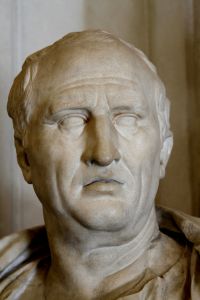
Arsaces

Definition and stakes

Neilson Carel Debevoise,  A Political History of Parthia (1938)

“ There is a story that the first Parthian leader, Arsaces, was a Bactrian who became discontented with the rule of the satrap Diodotus of Bactria, invaded Parthia, and successfully fomented a revolt. [38] Still a third and more detailed version is to be found in Arrian, [39] according to which either Arsaces or Tiridates was insulted by the Seleucid satrap. The brothers thereupon took five men into their confidence, killed the offender, and persuaded the people to revolt. Without additional evidence it is impossible to determine the correct account. ”

Source: Wikisource

Neilson Carel Debevoise,  A Political History of Parthia (1938)

“ In the last years of the empire the name "Arsaces" became but a shuttlecock, bandied back and forth by claimants who possessed little if any real power. Under such conditions a strong leader backed by a powerful army had little difficulty in overcoming the disunited efforts of the nobles, many of whom must have longed for another strong central authority which should restore peace and prosperity. ”
Source: Wikisource

Neilson Carel Debevoise,  A Political History of Parthia (1938)

“ On the death of Artaxias III (Zeno) of Armenia, Artabanus seized the opportunity thus occasioned to place his eldest son, known to us only as Arsaces, upon the throne. [57] To the aged Tiberius he wrote, claiming the treasure left by Vonones in Syria and Cilicia and threatening to add to his domain all the lands of the Achaemenidae and Seleucidae. [58]
Perhaps it was Artabanus III who brought the Mandaeans from "Madai" to the country of the Two Rivers. [59] The long reign of Artabanus suggests that he was both able and powerful and that he must have restored central authority over the nobles.
”
Source: Wikisource

Get perspective with Kwize: daily news enlightened by great literature