Celtic languages

Definition and stakes

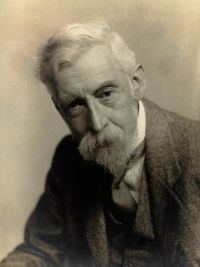
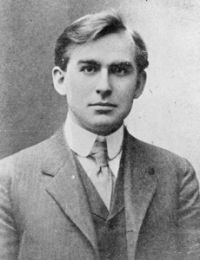
William Ridgeway, Edmund C. Quiggin and William J. Gruffydd,  1911 Encyclopædia Britannica, Volume 5… (1911)

“ Celtic Languages
Introduction.—The Celtic languages form one group of the Indo-European family of languages. As might be expected from their geographical distribution, they hold a position between the Italic and Teutonic groups. They are distinguished from these and other branches of the family by certain well-marked characteristics, the most notable of which are the loss of initial and inter-vocalic p, cf. Ir. athair with Lat. pater; Ir. lān, “full,” Welsh llawn, Breton leun, with Lat. plenus; Gaulish are-, “beside,” Ir. ar. Welsh, Breton ar, with Gr. περί, παρά
”
Source: Wikisource

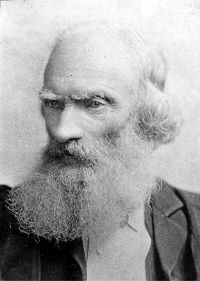
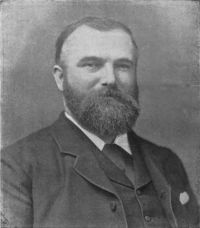
Portrait of Alexander MacBain Alexander MacBain,  An Etymological Dictionary of the Gaelic Language (1911)

“ Latin and Celtic, further, show intimate relations in having in common an î in the gen. sing, of the o- declension (originally a locative) , -tion- verbal nouns, a future in b, and the passive in -r.
The Celtic group now comprises five living languages; in. the 18th century there were six, when Cornish still lived. These six Celtic languages are grouped again into two branches, which may be named the Brittonic and the Gadelic. The former includes the Welsh, Cornish, and Breton; the Gadelic comprises Irish, Manx, and (Scottish) Gaelic.
”
Source: Wikisource

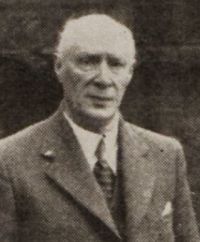
Augustus S. Wilkins and Robert S. Conway,  1911 Encyclopædia Britannica (1911)

“ Italic and Celtic.—It is now universally admitted that the Celtic languages stand in a much closer relation than any other group to the Italic. It may even be doubted whether there was any real frontier-line at all between the two groups before the Etruscan invasion of Italy (see Etruria: Language; Liguria) . The number of morphological innovations on the Indo-European system which the two groups share, and which are almost if not wholly peculiar to them, is particularly striking. ”
Source: Wikisource

Get perspective with Kwize: daily news enlightened by great literature