Euclidean geometry

Definition and stakes

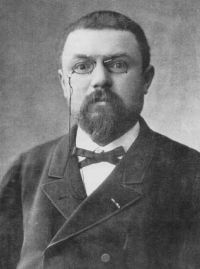
Portrait of Henri Poincaré Henri Poincaré,  Science and Hypothesis (1905)

“ One geometry cannot be more true than another; it can only be more convenient. Now, Euclidean geometry is, and will remain, the most convenient: 1st, because it is the simplest, and it is not so only because of our mental habits or because of the kind of direct intuition that we have of Euclidean space; it is the simplest in itself, just as a polynomial of the first degree is simpler than a polynomial of the second degree; 2nd, because it sufficiently agrees with the properties of natural solids, those bodies which we can compare and measure by means of our senses. ”
Source: Wikisource

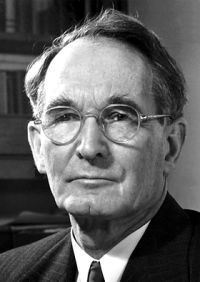
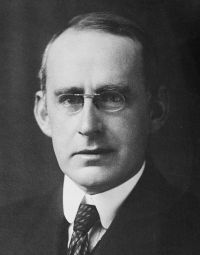
Portrait of Sir Arthur Stanley Eddington Sir Arthur Stanley Eddington,  The nature of the physical world (1928)

“ I do not think that the six extra dimensions have any stalwart defenders; but we often meet with attempts to reimpose Euclidean geometry on the world in another way. The proposal, which is made quite unblushingly, is that since our measured lengths do not obey Euclidean geometry we must apply corrections to them—cook them—till they do. A closely related view often advocated is that space is neither Euclidean nor non-Euclidean; it is all a matter of convention and we are free to adopt any geometry we choose. ”
Source: Gutenberg

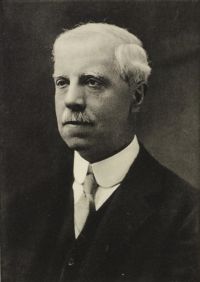
Charles Everitt, Olaus Henrici, Edwin B. Elliott, John H. Grace, Bertrand A. W. Russell and Alfred N. Whitehead,  1911 Encyclopædia Britannica (1911)

“ In projective geometry any two straight lines in a plane intersect, and the straight lines are closed series which return into themselves, like the circumference of a circle. In descriptive geometry two straight lines in a plane do not necessarily intersect, and a straight line is an open series without beginning or end. Ordinary Euclidean geometry is a descriptive geometry; it becomes a projective geometry when the so-called “points at infinity” are added. ”
Source: Wikisource

Get perspective with Kwize: daily news enlightened by great literature