Gordian knot

Definition and stakes

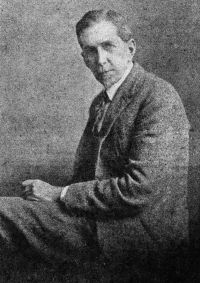
Portrait of Robert E. Howard Robert E. Howard Hawk of the Hills (1935)

Gordon stepped to the silent Pathan, pressed his muzzle against his ribs and drew a knife and revolver from Afdal Khan's girdle. He tossed the weapons up among the rocks and sheathed his own pistol. Then he drew his tulwar with a soft rasp of steel against leather. When he spoke his voice was calm, but Willoughby saw the veins knot and swell on his temples.
"Pick up your blade, Afdal Khan. There is no one here save the Englishman, you, I and Allah--and Allah hates swine!"
Source: Wikisource

Knotting and splicing ropes and cordage (1907)

Some persons’ shoes always come untied, the reason being that they are tied with granny instead of true bows.
Fig. 8.—Overhand Rosette Knot or Bow.
Another way of joining the ends of two pieces of cordage is shown in Fig. 8. This is merely an overhand knot, made with two ropes instead of one. Sometimes it is called an openhand knot. It can be made very quickly, and there is no fear of its slipping, but if there is much strain put upon it the rope is very apt to part at the knot, in consequence of the short “nip,” or turn, that it makes just as it enters the knot.
Source: Gutenberg

Rosa Belle Holt Rugs: Oriental and Occidental, Antique & Modern

Except in the Soumak and the Khilim, which have the flat stitch, there are only two kinds of knotting used in Oriental rugs. These knots are called the Persian or Sinna, and the Turkish or Ghiordes.
In the Persian manner of knotting there are more knots to the square inch than in the Turkish, and the result is a finer surface. Often the Persian knotting is so fine that the surface of the fabric is like velvet. The Persian knot is tied in such a manner that one end of the pile yarn extends from every spacing that separates the warp threads.
Source: Gutenberg

Get perspective with Kwize: daily news enlightened by great literature