Greek alphabet

Definition and stakes

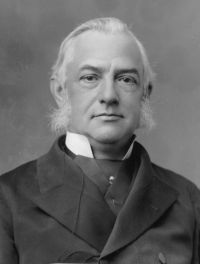
Portrait of Sir Oliver Lodge Sir Oliver Lodge Pioneers of Science

The Greek alphabet also is a thing that should be learnt by everybody. The increased difficulty in teaching science owing to the modern ignorance of even a smattering of Greek is becoming grotesque. The stars are named from their ancient grouping into constellations, and by the prefix of a Greek letter to the larger ones, and of numerals to the smaller ones. The biggest of all have special Arabic names as well. The brightest stars are called of "the first magnitude," the next are of "the second magnitude," and so on.
Source: Gutenberg

Benjamin Drew Pens and Types

Greek words sometimes appear in copy, and are somewhat vexatious to printers who never had the good fortune to study Greek at school—or elsewhere. In a proof-sheet, we once met a word whose etymology was given thus in the copy: “From Ἕλιος the sun, and φιλος a lover” (the epsilon was the author’s mistake) . The compositor, not aware of a Greek alphabet, set up the passage in those English letters which most nearly resemble the Hellenic characters, and it appeared in this guise: “From Ediog the sun, and pidog a lover.”
Source: Gutenberg

Various The New Gresham Encyclopedia. A to Amide

While the ancient Greek alphabet gave rise to the ordinary Greek alphabet and the Latin, the Greek alphabet of later times furnished elements for the Coptic, the Gothic, and the old Slavic alphabets. The Latin characters are now employed by a great many nations, such as the Italian, the French, the Spanish, the Portuguese, the English, the Dutch, the German, the Hungarian, the Polish, &c., each nation having introduced such modifications or additions as are necessary to express the sound of the language peculiar to it.
Source: Gutenberg

Get perspective with Kwize: daily news enlightened by great literature