Greek grammar

Definition and stakes

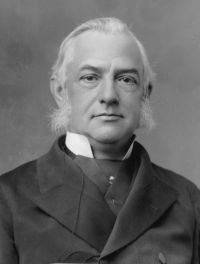
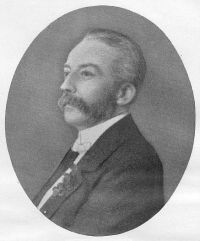
Portrait of George Saintsbury George Saintsbury,  A history of criticism and literary taste in Europe… (1902)

“ To this day, Greek grammar is, to some tastes at any rate, the only grammar which is not too arbitrary or too jejune to excite any interest. The wonderful symmetry of Greek accidence, the mazy but by no means unplanned intricacy of Greek syntax, have had power to fascinate schoolboys who, both at that age and later, were merely bored by the arbitrary niceties of Latin, and refused to accept the attempts that have been made to impose an appearance of system on the antinomianism and the compromises of English. ”

Source: Gutenberg

John St. Loe Strachey,  The Adventure of Living : a Subjective Autobiography

“ Once more, it is because I want people to study and to love classical literature and to imbibe the Greek spirit that I desire that the ordinary man should not be forced to grind away at Greek grammar when he might be getting in touch with great minds and great books. I am not blind, of course, to the gymnastic defence of the classics, though I do not share it. All I say is, do not let us make a knowledge of the Greek and Latin languages a sine qua non in our educational system, on the ground that such knowledge brings the ordinary man into touch with the Greek spirit. ”
Source: Gutenberg

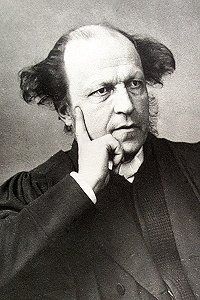
Portrait of A. H. Sayce A. H. Sayce,  Introduction to the science of language… (1880)

“ Greek researches into language fall into three chief periods, the period of the præ-Sokratic philosophy, when language in general was the subject of inquiry, the period of the Sophists, when the categories of universal grammar were being distinguished and worked out, and the period of Alexandrine criticism, when the rules of Greek grammar in particular were elaborated. ”
Source: Gutenberg

Get perspective with Kwize: daily news enlightened by great literature