Han dynasty

Definition and stakes

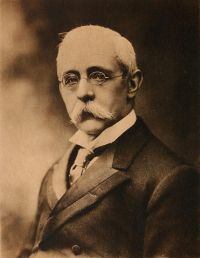
Philip Lake, Richard Lydekker, Augustine Henry, Herbert A. Giles, George Jamieson, Henry Yule, Friedrich Hirth, Robert K. Douglas, Ignatius V. Chirol, Laurence Binyon, Charles J. Holmes and Lionel Giles,  1911 Encyclopædia Britannica (1911)

“ Before long he added the states of Shen-shen, Khotan, Kucha and Kashgar as apanages to the Chinese crown, and for a considerable period the country enjoyed prosperity. The Han dynasty (including in the term the Eastern Han dynasty) has been considered the first national dynasty and is one of the most famous in China; nor has any ruling family been more popular. The Chinese, especially the northern Chinese, still call themselves “the sons of Han.” The wealth and trade as well as the culture of the country was greatly developed, and the competitive examinations for literary degrees instituted. ”

Source: Wikisource

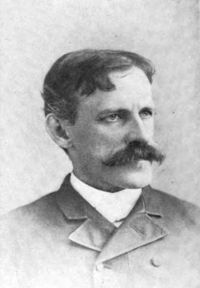
Portrait of Wolfram Eberhard Wolfram Eberhard,  A History of China

“ In 206 B.C. Liu Chi assumed the title of Emperor and gave his dynasty the name of the Han Dynasty. After his death he was given as emperor the name of Kao Tsu. [4] The period of the Han dynasty may be described as the beginning of the Chinese Middle Ages, while that of the Ch'in dynasty represents the transition from antiquity to the Middle Ages; for under the Han dynasty we meet in China with a new form of state, the "gentry state". The feudalism of ancient times has come definitely to its end. ”
Source: Gutenberg

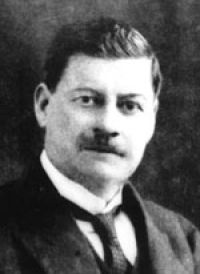
Portrait of H. G. Wells H. G. Wells,  The Outline of History: Being a Plain History of Life and Mankind

“ At his death there was dynastic trouble for four years, and then (206 B.C.) a fresh dynasty, the Han, established itself and ruled for two hundred and twenty-nine years. The opening quarter century of the Christian era was troubled by a usurper; then what is called the Later Han Dynasty recovered power and ruled for another century and a half, until China, in the time of the Antonines, was so devastated by an eleven-year pestilence as to fall into disorder. This same pestilence, we may note, also helped to produce a century of confusion in the Western world (see § 1) . ”
Source: Gutenberg

Get perspective with Kwize: daily news enlightened by great literature