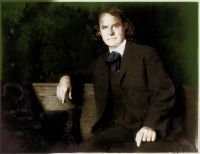
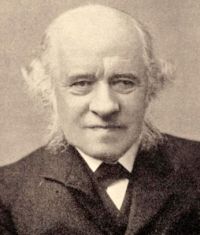
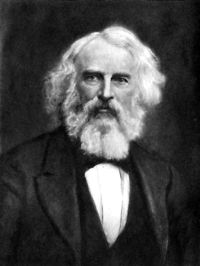
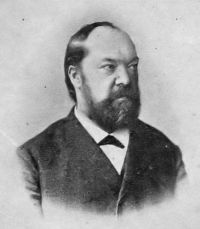
Jean Paul Friedrich Richter

Definition and stakes

The American Cyclopædia (1879)

Reimarus, Jerusalem, Spalding, Michaelis, Rosenmüller, and Ernesti, in theology; Eichhorn in theology and universal and literary history; Blumenbach, Bloch, Herschel, Euler, Vega, and many other eminent writers in various branches of learning and science, belong to this period.—A peculiar and powerful writer, who stood quite alone in his idiosyncrasies, was Jean Paul Friedrich Richter (1763-1825) . He puzzles the reader by his inability to assort his thoughts, which he pours out with the reckless naïveté of a childlike soul
Source: Wikisource

Familiar Quotations

Except by name, Jean Paul Friedrich Richter is little known out of Germany. The only thing connected with him, we think, that has reached this country is his saying,—imported by Madame de Staël, and thankfully pocketed by most newspaper critics,—"Providence has given to the French the empire of the land; to the English that of the sea; to the Germans that of—the air!"
Richter. Edinburgh Review, 1827.
Literary men are . . . a perpetual priesthood.
State of German Literature. Edinburgh Review, 1827.
[578]
Clever men are good, but they are not the best.
Source: Gutenberg

Portrait of William Smith William Smith Memoir of Johann Gottlieb Fichte (1846)

The first years of his residence at Berlin were among the most peaceful in his life of vicissitude and storm. Withdrawn from public duties, and uninterrupted by the outward annoyances to which he had lately been exposed, he now enjoyed a period of tranquil retirement, surrounded by a small circle of congenial friends. Friedrich and Wilhelm Schlegel, Tieck, Woltmann, Reichhardt, and Jean Paul Friedrich Richter, [11] were among his chosen associates
Source: Wikisource

Get perspective with Kwize: daily news enlightened by great literature