Louis the Pious

Definition and stakes

Alexander Clarence Flick The Rise of the Mediaeval Church

These early monasteries were like swarming bees in planting monastic societies in every part of western Europe. The passion grew until it became a veritable madness which seized the pious and lawless alike. Popes like Gregory I. praised the institution and promoted its interest in every possible way. Even kings like Carloman of the Franks, Rochis of the Lombards, great statesmen like Cassiodorus, and others voluntarily became monks. Louis the Pious, the Roman Emperor, was prevented from that course only by his nobles.
Source: Gutenberg

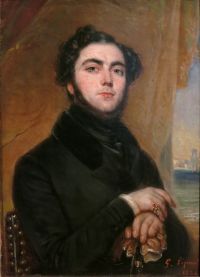
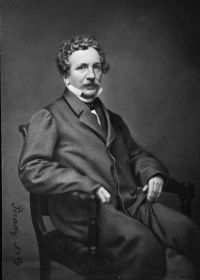
Portrait of Eugène Sue Eugène Sue The Carlovingian Coins; Or, The Daughters of Charlemagne

Himself running for life towards the valley, Louis the Pious thereby gives to his troops the signal to flee. They follow their king tumultuously, anxious only to leave the moor behind them before the flames, that now invade the plateau from end to end, entirely cut off their retreat. Impatient to escape the danger, the cavalry breaks ranks, follows the example set by the king, traverses the cohorts of the infantry, throws them down, and rides rough-shod over them. The disorder, the tumult, the terror are at their height. The soldiers struggle with the horsemen and with one another.
Source: Gutenberg

Portrait of William of Malmesbury William of Malmesbury Chronicle of the Kings of England (1847)

For Louis the Pious, son of Charles the Great, had four sons; Lothaire, Pepin, Louis, and Charles, surnamed the Bald; of these Lothaire, even in his father's life-time, usurping the title of emperor, reigned fifteen years in that part of Germany situated near the Alps which is now called Lorraine, that is, the kingdom of Lothaire, and in all Italy together with Rome. In his latter days, afflicted with sickness, he renounced the world. He was a man by far more inhuman than all who preceded him
Source: Wikisource

Get perspective with Kwize: daily news enlightened by great literature