Manchu language

Definition and stakes

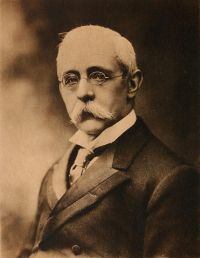
Portrait of Herbert Allen Giles Herbert Allen Giles,  China and the Manchus (1912)

“ Manchu was the court language, spoken as well as written, for many years after 1644, and down to quite recent times all official documents were in duplicate, one copy in Chinese and one in Manchu; but a Manchu literature can hardly be said to exist, beyond translations of all the most important Chinese works. The Manchu dynasty is an admirable illustration of the old story: conquerors taken captive by the conquered.
At this moment, the term "Kʽang Hsi" is daily on the lips of every student of the Chinese language, native or foreign, throughout the empire.
”

Source: Wikisource

Wandering in Northern China

“ The Manchus conquered China, and China began again in her time-honored way to swallow up the conquerors, until to-day there is no such thing as a Manchu nation, hardly a spoken remnant of the sonorous Manchu language, no one resembling the fierce warriors and hardy horsemen who put an end to the Ming dynasty such a little while ago. ”
Source: Gutenberg

Philip Lake, Richard Lydekker, Augustine Henry, Herbert A. Giles, George Jamieson, Henry Yule, Friedrich Hirth, Robert K. Douglas, Ignatius V. Chirol, Laurence Binyon, Charles J. Holmes and Lionel Giles,  1911 Encyclopædia Britannica (1911)

“ They are a lively and enterprising people, but have not in general the intellectual or business ability of the Chinese. They are courteous in their relations with strangers. The common people are frugal and industrious. The Manchu family is generally large. The women’s feet are unbound; they twist their hair round a silver bangle placed cross-wise on the top of the head. The Manchus have no literature of their own, but as the language of the court Manchu has been extensively studied in China. ”
Source: Wikisource

Get perspective with Kwize: daily news enlightened by great literature