Mécanique Céleste

Definition and stakes

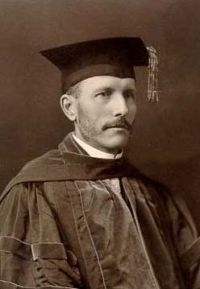
Portrait of Florian Cajori Florian Cajori A History of Mathematics (1893)

Laplace conceived the idea of writing a work which should contain a complete analytical solution of the mechanical problem presented by the solar system, without deriving from observation any but indispensable data. The result was the Mécanique Céleste, which is a systematic presentation embracing all the discoveries of Newton, Clairaut, D'Alembert, Euler, Lagrange, and of Laplace himself, on celestial mechanics.
Source: Wikisource

F. Arago Biographies of distinguished scientific men…

The Academy of Sciences called the attention of geometers of all countries to these menacing perturbations. Euler and Lagrange descended into the arena. Never did their mathematical genius shine with a brighter lustre. Still, the question remained undecided. The inutility of such efforts seemed to suggest only a feeling of resignation on the subject, when from two disdained corners of the theories of analysis, the author of the Mécanique Céleste caused the laws of these great phenomena clearly to emerge.
Source: Gutenberg

F. Arago Biographies of distinguished scientific men…

The author of the Mécanique Céleste had vowed to the young geometer an unbounded attachment, completely justified, certainly, by the beautiful researches which science already owed to him. M. de Laplace could not support the idea that a young astronomer, younger by five years than M. Poisson, a pupil, in the presence of his professor at the Polytechnic School, should become an academician before him. He proposed to me, therefore, to write to the Academy that I would not stand for election until there should be a second place to give to Poisson.
Source: Gutenberg

Get perspective with Kwize: daily news enlightened by great literature