Nietzscheanism

Definition and stakes

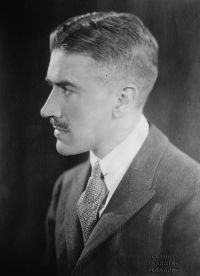
Elma Graves,  The American Journal of Sociology (1901)

“ He discerns half a truth in Nietzscheism, however, and points out that under a certain social condition the fullest exercise of altruism and the conscious furtherance of Nietzsche's ideal may coincide. The soul of good in Nietzscheism is alleged to be its insistence upon the preservation of the vigor of the race. "Beyond any doubt," writes Professor Giddings, "physiological power, physiological vigor, is the only enduring basis of human excellence. Any contrary doctrine is a form of the self-destructive philosophy that existence itself is an evil." ”
Source: Wikisource

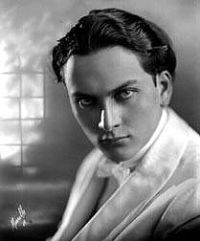
Portrait of Manly Palmer Hall Manly Palmer Hall,  The Secret Teachings of All Ages… (1928)

“ Nietzsche's doctrine did not liberate the masses; it rather placed over them supermen for whom their inferior brothers and sisters should be perfectly reconciled to die. Ethically and politically, the superman was a law unto himself. To those who understand the true meaning of power to be virtue, self-control, and truth, the ideality behind Nietzsche's theory is apparent. To the superficial, however, it is a philosophy heartless and calculating, concerned solely with the survival of the fittest. ”
Source: Wikisource

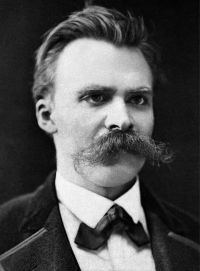
Portrait of Ferdinand Canning Scott Schiller Ferdinand Canning Scott Schiller,  1911 Encyclopædia Britannica, Volume 19… (1911)

“ Revolt against the whole civilized environment in which he was brought up is the keynote of Nietzsche’s literary career. His revolt against Christian faith and morals turns him into a proudly atheistic “free-thinker,” and preacher of a new “master” morality, which transposes the current valuations, deposes the “Christian virtues,” and incites the “over-man” ruthlessly to trample under foot the servile herd of the weak, degenerate and poor in spirit. His revolt against the theory of state supremacy turns him into an anarchist and individualist ”
Source: Wikisource

Get perspective with Kwize: daily news enlightened by great literature