Nikolai Rimsky-Korsakov

Definition and stakes

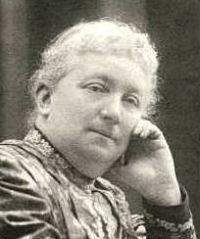
Portrait of Rosa Newmarch Rosa Newmarch,  The Russian Opera

“ Rimsky-Korsakov speaks of his having passed through an early phase of idealism when he composed his Fantasia for piano “St. John’s Eve” (afterwards remodelled for orchestra and now known as “Night on the Bare Mountain”) , “The Destruction of Sennacherib,” and the song “Night,” to a poem by Poushkin. But although at first he may not have been so consciously occupied in the creation of what Rimsky-Korsakov calls “grey music,” it is evident that no sooner had he found his feet, technically speaking, than he gripped fast hold of one dominant idea—the closer relationship of music with actual life. ”
Source: Gutenberg

Portrait of Rosa Newmarch Rosa Newmarch,  The Russian Opera

“ Making some allowance for grandiloquence of language, this observation is particularly true as applied to Rimsky-Korsakov, for not only was he consistently true to the national ideal in all his works, but during his long activity as a teacher he trained a whole group of distinguished musicians—Liadov, Arensky, Ippolitov-Ivanov Grechyaninov, Tcherepnin, Stravinsky—who have all added their stones to the building up of this temple of Russian art. ”
Source: Gutenberg

Portrait of Rosa Newmarch Rosa Newmarch,  The Russian Opera

“ Individual effort, long restricted by official despotism, was becoming active in every direction. Between 1860-1870 a number of philanthropic schools were established in Russia, and the Free School, with its avowed aim of defending individual tendencies and upholding the cause of national music, was really only one manifestation of a widespread sentiment.
Other important events which Rimsky-Korsakov missed during his three years’ cruise were the first production of Serov’s opera Judith, and Wagner’s visit to the Russian capital when he conducted the orchestra of the Philharmonic Society.
”
Source: Gutenberg

Get perspective with Kwize: daily news enlightened by great literature