Pyrrho of Elis

Definition and stakes

active approximately 150-175 Pausanias Pausanias' description of Greece… (1886)

In the middle are no [Pg 410] pillars, but a wall supports the roof, and there are statues on either side of this wall. And at the end of the portico near the market-place is a statue of Pyrrho the son of the Sophist Pistocrates, who had great persuasiveness on any topic. Pyrrho’s tomb is at no great distance from Elis, at a place called Petra, an old hamlet according to tradition. And the people of Elis have in the open air near the market-place a most noble temple and statue of Apollo the Healer.
Source: Gutenberg

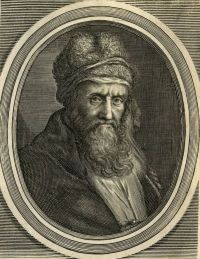
Portrait of Diogenes Laërtius Diogenes Laërtius Lives of the Eminent Philosophers… (1925)

One of the gods shall fall by the stroke of mortal man. [88]
Pyrrho 61. Pyrrho of Elis was the son of Pleistarchus, as Diocles relates. According to Apollodorus in his Chronology, he was first a painter; then he studied under Stilpo's son Bryson: [89] thus Alexander in his Successions of Philosophers. Afterwards he joined Anaxarchus, whom he accompanied on his travels everywhere so that he even forgathered with the Indian Gymnosophists and with the Magi. This led him to adopt a most noble philosophy, to quote Ascanius of Abdera, taking the form of agnosticism and suspension of judgement.
Source: Wikisource

Get perspective with Kwize: daily news enlightened by great literature