“ Pursuant to the provisions of section 55 of the Revenue Act of 1928 and section 257 of the Revenue Act of 1926, it is hereby ordered that decisions of the Commissioner of Internal Revenue allowing a refund, credit, or abatement of income, war-profits, excess-profits, estate, or gift taxes, in excess of $20,000, shall be open to inspection in accordance, and upon compliance, with the regulations prescribed by the Secretary of the Treasury and approved by me, bearing even date herewith. ”
Revenue Act
Definition and stakes
The theme of “Revenue Act” has been addressed by authors such as Adam Smith, Portal:United States Congress, Edmund Burke, by John Marshall Harlan and Ward Hunt. It is often associated with terms like corporation, tax, income, internal and states.
Quotes about “Revenue Act”
 Hugo Black,
Foster v. United States — Opinion of the Court
“ This provision of the Revenue Act of 1928 also substantially obtained in the Revenue Act of 1924. [8] Prior even to the 1924 act, this Court had determined that, for income tax purposes, earnings of a corporation accumulated prior to 1913 are to be considered capital. ”
Owen J. Roberts, Great Western Power Company of California v…
“ The Treasury promulgated a regulation under the Revenue Act of 1918 covering treatment of discounts and premiums, which, with immaterial changes, has remained in force under all the revenue acts and appears as article 545 of Regulations 65 applicable to the Revenue Act of 1924. ”
McDonald v. Commissioner of Internal Revenue…
“ The term 'trade or business' includes the performance of the functions of a public office.' This amendment, added by the Revenue Act of 1934, § 48, 48 Stat. 680, 696, was merely 'declaratory of existing law'. ”
Owen J. Roberts, Helvering v. Credit Alliance Corporation…
“ Justice DOUGLAS dissent. They are of the opinion that since Art. 27 (f) of Treasury Regulations 94 resolves the ambiguities between § 27 (f) and § 27 (h) of the Revenue Act of 1936 it is a valid interpretative regulation and a proper exercise of the rule-making authority. ”
Hugo Black,
Foster v. United States — Opinion of the Court
“ Subsection (a) of section 115 of the Revenue Act of 1928 [3] defines 'dividend,' for income tax purposes, as 'any distribution made by a corporation to its shareholders, * * * out of its earnings or profits accumulated after February 28, 1913.'Subsection (b) of this income tax law exempts corporate earnings and profits accumulated before March 1, 1913. ”
 Harlan F. Stone,
Maclaughlin v. Alliance Insurance Company of Philadelphia Insurance Company of Pennsylvania…
“ Merchants' L. & T. Co. v. Smietanka, supra, pages 519, 520 of 255 U.S., 41 S.C.t. 386. For present purposes, the Revenue Act of 1928 must be regarded as substantially an amendment and continuation of the act of 1913. ”
 Stanley Forman Reed,
Putnam's Estate v. Commissioner of Internal Revenue…
“ A federal revenue act applicable throughout the nation fixes liability on the decedent taxpayer under Section 42 if the dividend is 'accrued.' The meaning of that word in this section should be uniform unless Congress has shown an intention to permit its meaning to be varied by state law. ”
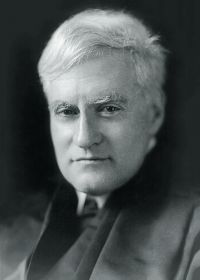 Benjamin N. Cardozo,
National Paper Products Co. v. Helvering Zellerbach Paper Co…
“ Notes ↑ 'Any corporation which has filed a return for a fiscal year ending in 1925 and paid or become liable for a tax computed under the Revenue Act of 1924, and is subject to additional tax for the same period under the Revenue Act of 1926, must file a new return covering such additional tax on or before May 15, 1926. ”
Benjamin N. Cardozo,
Woolford Realty Company v. Rose…
“ By the express terms of the statute, section 240 (b) , the tax when computed is to be assessed, in the absence of agreement to the contrary, upon the respective affiliated corporations 'on the basis of the net income properly assignable to each.' 'The term 'taxpayer' includes any person * * * subject to a tax imposed by this Act.' Revenue Act of 1921, § 2 (9) , 42 Stat. 227. A corporation does not cease to be such a person by affiliating with another. ”
Stanley Forman Reed,
Douglas v. Commissioner of Internal Revenue…
“ In my opinion Article 23 (m) -10 (c) is not a reasonable exercise of the rule-making authority conferred by Section 23. By that section Congress provided: 'In computing net income there shall be allowed as deductions * * * a reasonable allowance for depletion * * * according to the peculiar conditions in each case * * * under rules and regulations to be prescribed by the Commissioner, with the approval of the Secretary.' Revenue Act of 1936, 49 Stat. ”
Frank Murphy, Neuberger v. Commissioner of Internal Revenue…
“ In computing gross income prior to the Revenue Act of 1932, subject to certain limitations a taxpayer was entitled to deduct the full amount of his losses from transactions in securities. Revenue Act of 1928, §§ 23 (e) , 23 (g) , 101 (b) , 113, 26 U.S.C.A. Int.Rev.Acts, pages 357, 371, 380. ”
Harlan F. Stone,
Commissioner of Internal Revenue v…
“ Moreover, the Tax Court concluded as a matter of law that the facts which it found, and which we have detailed, brought the case, for the tax year 1938, within the provisions of § 22 (a) of the Revenue Act of 1938, and of the interpretative Treasury Regulations 101, Art. 22 (a) -1 ”
Burnet v. Logan — Opinion of the Court
“ Revenue Act 1916, § 2, 39 Stat. 757, 758; Revenue Act 1918, c. 18, 40 Stat. 1057. Ordinarily, at least, a taxpayer may not deduct from gross receipts a supposed loss which in fact is represented by his outstanding note. ”
Hugo Black,
Helvering v. Winmill — Opinion of the Court
“ Respondent-in his 1932 income tax return-deducted from his gross income brokerage commissions paid and incurred in purchasing securities during that taxable year. Section 23 (a) of the Revenue Act of 1932, 26 U.S.C.A. § 23 (a) , allows as deductions 'All the ordinary and necessary expenses paid or incurred during the taxable year in carrying on any trade or business, including a reasonable allowance for salaries or other compensation for personal services actually rendered ”
Oliver Wendell Holmes, Jr., United States v. Kirby Lumber Company…
“ Article 545 (1) (c) of Regulations 69, under Revenue Act of 1926; Article 68 (1) (c) of Regulations 74, under Revenue Act of 1928. We see no reason why the Regulations should not be accepted as a correct statement of the law. ”
Frank Murphy, United States v. Seattle-First National Bank…
“ Congress did not see fit to amend or change these regulations until the Revenue Act of 1942, Sections 506 (b) (1) and (2) , c. 619, 56 Stat. 958, 26 U.S.C.A. Int.Rev.Code, §§ 1802, 3481. See Helvering v. ”
Stanley Forman Reed,
Douglas v. Commissioner of Internal Revenue…
“ We agree that these decisions held invalid a regulation like Art. 23 (m) -10 (c) which includes in income for a taxable year deductions allowed in prior years. The effect of the Commissioner's acquiescence is uncertain. Cf. C.B. XIII-2-IV. During the period of acquiescence, the regulation continued in existence and was republished n the edition of December 1, 1931, approved February 15, 1929, of Regulations 74 under the Revenue Act of 1928, Art. ”
Harlan F. Stone,
United States v. Anderson (269 U.S. 422…
“ The pertinent provisions of the statute are sections 10, 12 (a) , 13 (a) and (d) , and 300 of the Revenue Act of 1916, c. 463 (39 Stat. 756, 765, 767, 768, 770, 771, 780, 781 (Comp. St. § 6336j, 6336l, 6336m, 6336 1/4 a) ) . ”
Harlan F. Stone,
Helvering v. Morgan's Inc. — Opinion of the Court
“ The revenue acts since the Sixteenth Amendment have consistently assessed income taxes on the basis of annual accounting periods, either the calendar year or the different fiscal year which the taxpayer may adopt. ”
Ward Hunt, Tennessee v. Sneed — Opinion of the Court
“ Sect. 2 of the act provides 'that there shall be no other remedy, in any case of the collection of revenue, or attempt to collect revenue illegally, or attempt to collect revenue in funds only receivable by said officer under the law, the same being other or different funds than such as the tax-payer may tender, or claim the right to pay, than that above provided; and no writ for the prevention of the collection of any revenue claimed, or to hinder or delay the collection of the same, shall in any wise issue, either injunction, supersedeas, prohibition, or any other writ or process whatever ”
Robert H. Jackson, Commissioner of Internal Revenue v…
“ Prior to 1934, as now, personal holding companies were liable for the regular corporation income taxes under Title I of the Revenue Acts and they, like all other corporations, were subject to additional tax upon an accumulation of profits where there was present a purpose of avoiding surtaxes upon shareholders. ”
Harlan F. Stone,
Helvering v. Union Pacific Railroad Co…
“ There is no provision in either the 1918 or 1921 Revenue Acts specifically authorizing the deduction from gross income of commissions or discount paid or allowed by the taxpayer upon an issue of bonds. ”
Harlan F. Stone,
Hartley v. Commissioner of Internal Revenue…
“ The incorporation of the regulation in section 113 (a) (5) of the 1928 Act was intended to clarify, but not to change, the law. See Report of House Committee on Ways and Means, No. 2, 70th Cong., 1st Sess., p. 18; Report of Senate Committee on Finance, No. 960, 70th Cong., 1st Sess., p. 26; Report of Joint Committee on Internal Revenue Taxation, H.R. Doc. ”
Evans v. Gore — Opinion of the Court
“ Miller, 340-343; 1 Carson's Supreme Court, 6.↑ The tax condemned was levied under a provision, in a general revenue law, charging a tax of 2 per cent. 'upon all salaries and emoluments of office, created or held by or under the Constitution or laws of this commonwealth, and by or under any incorporation, institution or company incorporated by the said commonwealth, where such salaries or emoluments exceed two hundred dollars.' Act No. 232, § 2, Penn. Laws 1840, p. 613; Act No. ”
Harlan F. Stone,
Pacific Company v. Johnson — Opinion of the Court
“ The adoption of the taxing act, as recommended by the commission, may therefore be taken, as appellant contends, to evidence a definite and specific legislative purpose to levy a new type of franchise tax, measured by corporate net income, including the tax exempt income from federal and state bonds. ”
Charles Evans Hughes, Liverpool London Globe Insurance Company of New York v…
“ Board of Assessors, 121 La. 116, 46 So. 122, where open accounts arising on the sale of merchandise were the subject of the assessment, the court said: 'There can be no serious question but that the legislature has provided that credits due upon open accounts arising out of business done in this state by nonresidents shall be taxed. . . . The state imposes this tax because of her need of the revenue to be derived from it; she extends to the business the protection of her laws, and seeks to make the business bear its just proportion of the burden of taxation. ”
 William O. Douglas,
Lewyt Corporation v. Commissioner of Internal Revenue…
“ Primarily we have to consider § 122 of the Internal Revenue Code, which, to a limited degree, permits reflection of the fact that income in one year may, in the not uncommon fluctuation of business affairs, have been offset by losses incurred in subsequent or preceding years. ”
Hugo Black,
Commissioner of Internal Revenue v…
“ We have repeatedly held that in defining 'gross income' as broadly as it did in § 22 (a) Congress intended to 'tax all gains except those specifically exempted.' See, e.g., Commissioner of Internal Revenue v. ”
John Roberts, National Federation of Independent Business v… (2012 | noyear)
“ For taxpayers who do owe the payment, its amount is determined by such familiar factors as taxable income, number of dependents, and joint filing status. §§ 5000A (b) (3) , (c) (2) , (c) (4) . The requirement to pay is found in the Internal Revenue Code and enforced by the IRS, which—as we previously explained— [p564] must assess and collect it "in the same manner as taxes." Supra, at 545–546. This process yields the essential feature of any tax: It produces at least some revenue for the Government. United States v. ”
A Compilation of the Messages and Papers of the Presidents…
“ For the fiscal year ending June 30, 1869, it is estimated that the receipts will amount to $381,000,000 and that the expenditures will be $372,000,000, showing an excess of $9,000,000 in favor of the Government. The attention of Congress is earnestly invited to the necessity of a thorough revision of our revenue system. Our internal-revenue laws and impost system should be so adjusted as to bear most heavily on articles of luxury, leaving the necessaries of life as free from taxation as may be consistent with the real wants of the Government, economically administered. ”
William O. Douglas,
Rudolph v. United States — Dissent
“ It could not, I think, be seriously contended that a professional man, say a Senator or a Congressman, who attends a convention to read a paper or conduct a seminar with all expenses paid has received 'income' within the meaning of the Internal Revenue Code. Nor would it matter, I assume, that he took his wife and that her expenses were also paid. Income has the connotation of something other than the mere payment of expenses. ”
 Tom C. Clark,
American Automobile Association v…
“ The Code exacts its revenue from the individual member's dues which, no one disputes, constitute income. When their receipt as earned income is recognized ratably over two calendar years, without regard to correspondingly fixed individual expense or performance justification, but consistently with overall experience, their accounting doubtless presents a rather accurate image of the total financial structure, but fails to respect the criteria of annual tax accounting and may be rejected by the Commissioner. ”
Related terms
Authors who wrote about “Revenue Act”
 Adam SmithPortal:United States Congress
 Edmund Burkeby John Marshall HarlanWard HuntEdward Douglass WhiteDavid WalkerJames MonroeAndrew JohnsonPortal:Office of the Federal RegisterHarlan F. StoneHugo Black
 James Clark McReynoldsWilliam O. DouglasStanley Forman ReedOwen J. RobertsBenjamin N. CardozoFrank MurphyJohn RobertsCharles Evans Hughes
