Thomas Price
Definition and stakes
Quotes about “Thomas Price”

 Arnold Bennett,
The Price of Love
“ Thomas Batchgrew and Louis were already out in the hall. Half-way down the stairs stood Mrs. Maldon, supporting herself by the banisters and being supported by Mrs. Tams. She was wearing her pink peignoir with white frills at the neck and wrists. Her black hair was loose on her shoulders like the hair of a young girl. Her pallid and heavily seamed features with the deep shining eyes trembled gently, as if in response to a distant vibration. She gazed upon the two silent men with an expression that united benignancy with profound inquietude and sadness. ”
 William Jennings Bryan,
The Price of a Soul
“ Not only do I believe that a man can earn five hundred million, but I believe that men have earned it. I believe that Thomas Jefferson earned more than five hundred million. The service that he rendered to the world was of such great value that had he collected for it five hundred million of dollars, he would not have been overpaid. ”
Arnold Bennett,
The Price of Love
“ It seemed to her that the security of their whole future depended on her firmness and strong sagacity at that moment. She felt herself to be very wise and also, happily, very vigorous. But at the same time she was afflicted by a kind of despair at the thought that Louis had indeed been, and still was, ready to commit the disastrous folly of confiding money to Thomas Batchgrew for investment. And as Louis had had a flashing vision of the future, so did Rachel now have such a vision. ”
Arnold Bennett,
The Price of Love
“ Tams is sitting up with her." Rachel meant her tone to be a dignified reproof to Thomas Batchgrew for daring to assume even the possibility of her having left Mrs. Maldon to solitude. But she did not succeed, because she could not manage her tone. She desired intensely to be the self-possessed, mature woman, sure of her position and of her sagacity; but she could be nothing save the absurd, guilty, stammering, blushing little girl, shifting her feet and looking everywhere except boldly into Thomas Batchgrew's horrid eyes. ”
Arnold Bennett,
The Price of Love
“ A long automobile came slipping with noiseless stealth down the hill, and halted opposite the gate, in silence, for the engine had been stopped higher up. Mrs. Tams, intimidated by the august phenomenon, ceased to rub, and in alarm watched the great Thomas Batchgrew struggle unsuccessfully with the handle of the door that imprisoned him. Mrs. Tams was a born serf, and her nature was such that she wanted to apologize to Thomas Batchgrew for the naughtiness of the door. ”
Arnold Bennett,
The Price of Love
“ Thomas Batchgrew and Mrs. Tarns both abandoned the knocker. Rachel, pale as a lily, stern, with dilated eyes, stood before them. And Mr. Batchgrew realized, as he looked at her against the dark, hushed background of the stairs, that Mrs. Maldon was indeed ill. Mrs. Tams respectfully retired down the steps. A mightier than she, the young, naïve, ignorant girl, to whom she could have taught everything save possibly the art of washing cutlery, had relieved her of responsibility. ”
Arnold Bennett,
The Price of Love
“ Louis somehow glided from the enormous topic to the topic of the newest cinema—Rachel had never seen a cinema, except a very primitive one, years earlier—and old Batchgrew was mentioned, he being notoriously a cinema magnate. "I cannot stand that man," said Rachel with a candour that showed to what intimacy their talk had developed. Louis was delighted by the explosion, and they both fell violently upon Thomas Batchgrew and found intense pleasure in destroying him. And Louis was saying to himself, enthusiastically, "How well she understands human nature!" ”
Arnold Bennett,
The Price of Love
“ Maldon, he regarded her as a mere poor relic of an organism."At our age," Mrs. Maldon began, and paused as if collecting her thoughts."At our age! At our age!" he repeated, sharply deprecating the phrase."At our age," said Mrs. Maldon, with slow insistence, "we ought not to be hard on others. We ought to be thinking of our own sins."But, although Mrs. Maldon was perhaps the one person on earth whom he both respected and feared, Thomas Batchgrew listened to her injunction only with rough disdain. ”
 Irving Fisher,
The Purchasing Power of Money…
“ As prices rise, profits of business men, measured in money, will rise also, even if the costs of business were to rise in the same proportion. Thus, if a man who sold $10,000 of goods at a cost of $6000, thus clearing $4000, could get double prices at double cost, his profit would be double also, being $20,000—$12,000, which is $8000. Of course such a rise of prices would be purely nominal, as it would merely keep pace with the rise in price level. The business man would gain no advantage, for his larger money profits would buy no more than his former smaller money profits bought before. ”
 William Hone,
The Every-day Book and Table Book…
“ His last office was the corner of King-street, Covent-garden, from whence he was driven, by a run of ill-luck, into a private decampment.From that period, Price lived in obscurity. Though a perfect sycophant abroad, at home he was an absolute tyrant; nor could a prudent, virtuous woman, endowed with every qualification to render the marriage state happy, soften his brutal disposition, when the ample fortune he obtained with her had been squandered. Having a family of eight children to support, he turned his thoughts to fatal devices, and commenced to forge on the bank of England. ”
Arnold Bennett,
The Price of Love
“ On arrival he had greeted her with that tinge of deference which from an old man never fails to thrill a girl. Rachel's pride as a young married woman was tigerishly alert and hungry that evening. Thomas Batchgrew, little by little, tamed and fed it very judiciously at intervals, until at length it seemed to purr content around him like a cat. The phenomenon was remarkable, and the more so in that Rachel was convinced that, whereas she was as critical and inimical as ever, old Batchgrew had slightly improved. He behaved "heartily," and everybody appreciates such behaviour in the Five Towns. ”
Arnold Bennett,
The Price of Love
“ Tams in clearing the table was for Rachel a delicious background to the scene. The one flaw in it was her short skirt, which she had not had time to change. Louis had protested that it was entirely in order, and indeed admirably coquettish, but Rachel would have preferred a long train of soft drapery disposed with art round the front of her chair."What you want here is electricity," said Thomas Batchgrew, gazing at the incandescent gas; he could never miss a chance, and was never discouraged in the pursuit of his own advantage. ”
 Arthur Latham Perry,
Principles of Political Economy
“ If a title-deed or a mortgage is declared to be actual wealth by Political Economy, then the sooner it is consigned to the waste-basket, the better."This passage shows how the word, "wealth," tangles men up inextricably, who, by discarding it utterly, might have become clear thinkers and useful expositors. It also shows, that Professor Price never analyzed Valuables into their three kinds, never thoroughly mastered in a preliminary way the Idea that underlies Economics, never precisely understood what Money is, and certainly never found out the radical nature of Credit. ”
William Hone,
The Every-day Book and Table Book…
“ He lived then at Paddington with his wife, whom he went to nightly; and at lodgings, near Portland-place, he daily visited her aunt, where the implements for his undertakings were concealed. His next and chief object was a negociator, and he procured one in the following manner.Previous to the drawing of the lottery for the year 1780, Price put an advertisement into the “Daily Advertiser” for a servant who had been used to live with a single gentleman, and the direction was to “C. C. Marlborough-street coffee-house, Broad-street, Carnaby-market.” ”
Arthur Latham Perry,
Principles of Political Economy
“ It follows, consequently, that there is likely to be a general rise of prices whenever there is an extension of credit for the purpose of purchasing; indeed, when money only is used to buy with, there can not be a general rise of prices, because while more money may be spent on some things, and they rise in price, there would be less money for other things, and they would rather fall in price; but when credit is used freely in addition, and increased purchases go on in all departments at once, there is apt to be a rise of prices as to all commodities and a universal spirit of speculation. ”
Warren Bert Kimberly, History of West Australia (1897)
“ Price married in June, 1888, the daughter of Mr. Brown, who for some time occupied important positions in the Ports Department at Fremantle. Throughout his somewhat varied career Mr. Price has proved a business man of resource and enterprise. Of a shrewd temperament, he is thoroughly straightforward in all his dealings, and possesses those excellent social qualities which tend to win him friends whereever he may go. No matter what position the vagaries of life have cast him into he has met them all bravely. A general favourite, there is no one that knows him but wishes him well. ”
Irving Fisher,
The Purchasing Power of Money…
“ It is amazing how tenaciously many people cling to the mistaken idea that an individual price, though expressed in money, may be determined wholly without reference to money. Others, more open-minded but almost equally confused, see the necessity of including the quantity of money among the causes determining prices, but in the careless spirit of eclecticism simply jumble it in with a miscellaneous collection of influences affecting prices, with no regard for their mutual relations. It should be clearly recognized that price levels must be studied independently of individual prices. ”
Irving Fisher,
The Purchasing Power of Money…
“ Thus currency expands when prices are low and contracts when prices are high, and such expansion and contraction tend to lower the high prices and raise the low prices, thus working toward mutual equality. We see then that, so far from its being true that high prices cause increased supply of money, it is true that money avoids the place and time of high prices and seeks the place and time of low prices, thereby mitigating the inequality of price levels. ”
Benjamin M. Anderson, The Value of Money
“ Second, Professor Fisher has no absolute value in his scheme. By the value of money he means merely its pur [Pg 156] chasing power, and by its purchasing power he means nothing more than the fact that it does purchase: the purchasing power of money is defined as the reciprocal of the level of prices, "so that the study of the purchasing power of money is identical with the study of price levels." (Loc. cit., p. 14.) In this, again, Professor Fisher is absolutely true to the spirit and logic of the quantity theory doctrine. ”
Irving Fisher,
Stabilizing the Dollar
(1920)
“ The evil is not one of average well-being but one of its distribution, and the question remains: Who has got the benefit of this increased production? Some incomes change less than others and some do not change at all. It is in this inequality—an inequality in the change of individual incomes—that the chief evil of general price movements is to be found. If, for each of us, the rise of income were to keep up with the rise in the cost of living, then the high cost of living would have no real meaning. The rise would be merely on paper. ”
 William Wells Brown,
Narrative of William W. Brown, a Fugitive Slave
(1848)
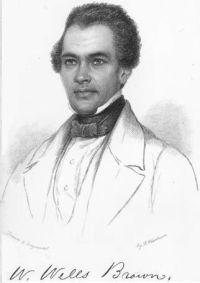
“ But I cannot accept of Mr. Price's offer to become a purchaser of my body and soul. God made me as free as he did Enoch Price, and Mr. Price shall never receive a dollar from me, or my friends with my consent. ”
William Russell, Recollections of a Policeman
“ To that princely felony, Old Patch, as will be seen in the sequel, added smaller misdemeanors which one would think were far beneath his notice, except to convince himself and his mistress of the unbounded facility of his genius for fraud.At that period the affluent public were saddled with a tax on plate, and many experiments were made to evade it. Among others one was invented by a Mr. Charles Price, a stock-jobber and lottery-office keeper, which, for a time, puzzled the tax-gatherer. Mr. Charles Price lived in great style, gave splendid dinners, and did everything on the grandest scale. ”
Irving Fisher,
The Purchasing Power of Money…
“ It is so unimportant that even if its rate of growth there were prodigious, it would still be a relatively insignificant price-raising factor. We may therefore be certain, humanly speaking, that outside of the United States the increase of prices is even more largely due to the growth of money (gold) than in the United States. ”
 George Howard Earle, Jr.,
The Uncertainty of the Act
(1920)
“ There is not a line to be found in these cases under the Act to show the slightest recognition of the definitely established truth, that high prices always have been, and always will be, the forerunner of low prices; that freemen in a free market, with its inducements to gain the higher rewards, strive, invent and compete, so that every temporary rise in price insures not merely a return to the old price, but to a lower one, and finally to the fair and equitable exchange of all commodities, measured by the labor relatively involved. ”
Winston Churchill, Coniston — Complete
“ Price makes a specialty of orators and oratory; and will hold forth at the drop of a hat in Jonah Winch's store or anywhere else. Who is Mr. Price? He is a tall, sallow young man of eight and twenty, with a wedge-shaped face, a bachelor and a Methodist, who farms in a small way on the southern slope, and saves his money. He has become almost insupportable since they have named him for Moderator. Get Mr. Sam Price into court. Here is a man who assuredly knows who they are: if we are, not much mistaken, he is their mouthpiece. ”
Irving Fisher,
Stabilizing the Dollar
(1920)
“ On the other hand, if once we deliberately choose a price level after reference to an expert and impartial commission and then keep that level unchanged we shall give it a right to exist. The verdict will soon be generally accepted. Any unadjusted factors will gradually make the needed changes. Business will be rid of the handicap of uncertainty as to what the dollar is. In particular, wages will rise to recover the purchasing power lost in the losing race with the high cost of living. ”
Irving Fisher,
The Purchasing Power of Money…
“ VIII.68 The legitimacy of separating the study of price levels from that of prices will be clearly recognized, when it is seen that individual prices cannot be fully determined by supply and demand, money cost of production, etc., without surreptitiously introducing the price level itself. We can scarcely overemphasize the fact that the "supply and demand" or the "cost of production" of goods in terms of money do not and cannot completely determine prices. Each phrase, fully expressed, already implies money. There is always hidden somewhere the assumption of a general price level. ”
Irving Fisher,
The Purchasing Power of Money…
“ VIII.61 We conclude that the hypothesis of a doubled price level acting as an independent cause controlling the other factors in the equation of exchange and uncontrolled by them is untenable. Any attempt to maintain artificially high prices must result, as we have seen, not in adjusting the other elements in the equation of exchange to suit these high prices, but on the contrary in arousing their antagonism. Gold will go abroad and into the melting pot, will be produced less and consumed more until its scarcity as money will pull down the prices. ”
Irving Fisher,
Stabilizing the Dollar
(1920)
“ The truth is, most explanations of the general rise in prices are mere graspings at the first straw in sight that seems to offer any explanation. People unconsciously pick out some particular cases with which they happen to be familiar and drag them before the public. A middleman or a trust raises prices, a firm announces a rise because of the demands of labor unions, a crop failure raises the price of a cereal,—and immediately some one hails the event as a representative cause of the high cost of living. ”