Abiogenesis

Definition and stakes

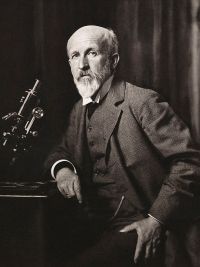
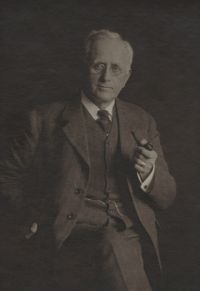
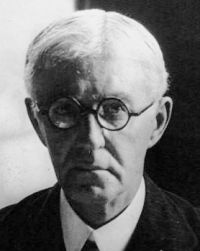
Portrait of Peter Chalmers Mitchell Peter Chalmers Mitchell,  1911 Encyclopædia Britannica (1911)

“ ABIOGENESIS, in biology, the term, equivalent to the older terms “spontaneous generation,” Generatio aequivoca, Generatio primaria, and of more recent terms such as archegenesis and archebiosis, for the theory according to which fully formed living organisms sometimes arise from not-living matter. Aristotle explicitly taught abiogenesis, and laid it down as an observed fact that some animals spring from putrid matter, that plant-lice arise from the dew which falls on plants, that fleas are developed from putrid matter, and so forth. ”
Source: Wikisource

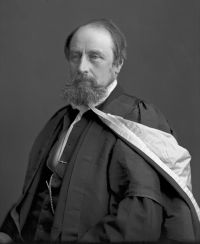
Thomas Roscoe Rede Stebbing,  Essays on Darwinism

“ NOTE ON THE HYPOTHESIS OF SPONTANEOUS GENERATION.
Presuming that there is not a particle of evidence as yet established in favour of the supposition known as the doctrine of abiogenesis, it does not follow that no such evidence ever will, or ever can, be forthcoming. The advancement of science is continually doing away with harsh, abrupt outlines, and revealing the softest shades of transition in the varied scenery of nature. Between organic and inorganic matter, between the inert and the living mass, the line of separation has been hitherto, to our minds, the hardest and sharpest of all.
”
Source: Gutenberg

Portrait of Peter Chalmers Mitchell Peter Chalmers Mitchell,  1911 Encyclopædia Britannica (1911)

“ As knowledge of microscopic forms of life increased, so the apparent possibilities of abiogenesis increased, and it became a tempting hypothesis that whilst the higher forms of life arose only by generation from their kind, there was a perpetual abiogenetic fount by which the first steps in the evolution of living organisms continued to arise, under suitable conditions, from inorganic matter. ”
Source: Wikisource

Get perspective with Kwize: daily news enlightened by great literature