Spontaneous generation, a discredited scientific theory, suggested that living organisms could arise from non-living matter, a belief based on ancient observations of maggots appearing on decaying flesh or mice in stored grain. Aristotle formalized this idea, while later scientists such as Redi and Pasteur refuted it through meticulous experimentation.
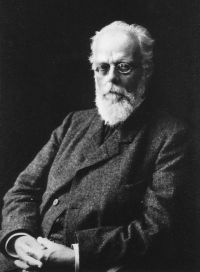
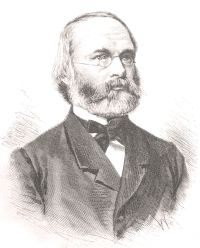
Although no longer accepted, the theory influenced discussions about the origins of life, connecting early beliefs with contemporary research on abiogenesis. Writers from antiquity through the 19th century, including Stebbing and Haeckel, wrestled with its implications, highlighting its lasting impact on biological thought until empirical findings redirected attention toward evolutionary and molecular processes.
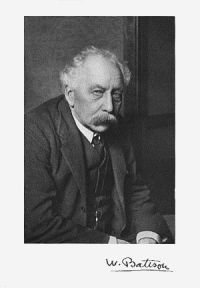 William Bateson,
Problems of Genetics
William Bateson,
Problems of Genetics