Acetic acid

Definition and stakes

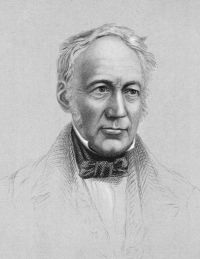
William Cecil Dampier Whetham,  1911 Encyclopædia Britannica (1911)

“ Some acetic acid is formed, and this process will go on till the solutions of the two acids are isohydric: that is, till the dissociated hydrogen ions are in equilibrium with both. In order that this should hold, we have seen that a considerable quantity of acetic acid must be present, so that a corresponding amount of the salt will be decomposed, the quantity being greater the less the acid is dissociated. This “replacement” of a “weak” acid by a “strong” one is a matter of common observation in the chemical laboratory. ”

Source: Wikisource

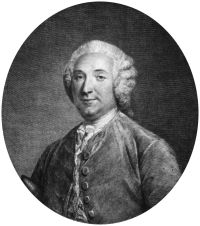
Portrait of John Ayrton Paris John Ayrton Paris,  Pharmacologia

“ Chemical Composition. Acetic Acid more largely diluted than that in vinegar, with very minute portions of uncombined mucilage and extractive. Solvent Powers. It is capable of dissolving all those vegetable principles which are soluble in water, and in some cases, as in Squill, Colchicum, and in several Aromatics and Narcotics, its acid appears to extend its solvent powers; at the same time it often modifies or diminishes the medicinal virtues of the substances, as for instance those of Narcotics ”
Source: Gutenberg

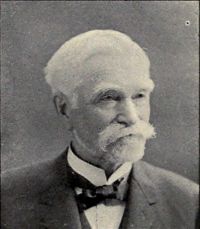
C. Beringer,  A Text-book of Assaying: For the Use of Those Connected with Mines

“ It is almost always used in those cases where mineral acids are objectionable. To convert, for example, a solution of a substance in hydrochloric acid into a solution of the same in acetic acid, alkali should be added in excess and then acetic acid. Many compounds are insoluble in acetic acid, which are soluble in mineral acids, such as ferric phosphate, ferric arsenate, zinc sulphide, calcium oxalate, &c., so that the use of acetic acid is valuable in some separations. The commercial acid is strong enough for most purposes, and is used without dilution. ”
Source: Gutenberg

Get perspective with Kwize: daily news enlightened by great literature