Altered state of consciousness

Definition and stakes

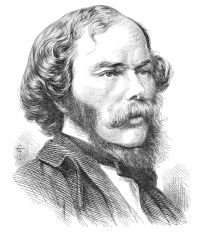
Portrait of James Mill James Mill Analysis of the Phenomena of the Human Mind

A sudden change in consciousness is produced—a change that is incisive in its commencement, and, when the hand is removed, equally incisive in its termination. In the midst of the continuous feeling of muscular tension, vaguely rising and falling in intensity, there all at once occurs a distinct feeling of another kind. This feeling, beginning and ending abruptly, constitutes a definite state of consciousness; becomes, as it were, a mark in consciousness. By similar experiences other such marks are produced
Source: Gutenberg

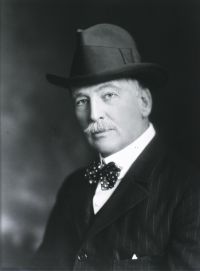
Portrait of Morton Prince Morton Prince The unconscious (1921)

We have also seen that it is not only these mental experiences which occupied the focus of our attention that leave their counterpart in neurograms, but those as well of which we are only partially aware—absent-minded thoughts and acts and sensations and perceptions which never entered our awareness at all—subconscious or coconscious ideas as they are called. Finally, we have seen that the mental experiences of every state, normal, artificial, or pathological, whatever may be the state of the personal consciousness, are subject to the same principle of conservation.
Source: Gutenberg

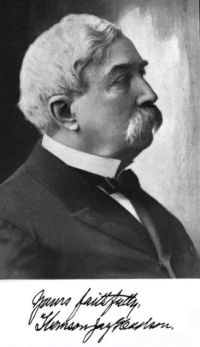
Portrait of Thomson Jay Hudson Thomson Jay Hudson The Law of Psychic Phenomena

The evidence on this point shows that the mind frequently contains whole systems of knowledge, which, though in our normal state they have faded into absolute oblivion, may, in certain abnormal states—as madness, febrile delirium, somnambulism, catalepsy, etc.—flash out into luminous consciousness, and even throw into the shade of unconsciousness those other systems by which they had, for a long period, been eclipsed, and even extinguished.
Source: Gutenberg

Get perspective with Kwize: daily news enlightened by great literature