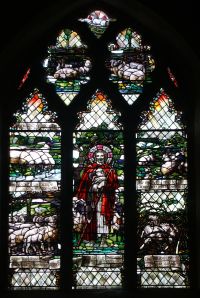
Art glass

Definition and stakes

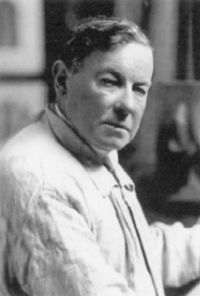
Portrait of Christopher Whall Christopher Whall,  Stained Glass Work: A text-book for students and workers in glass

“ For no one, I suppose, ever took his first batch of painted glass out of the kiln without disappointment and without wondering what use there is in such an art. For the painting when it went in was grey, and silvery, and sharp, and crisp, and firm, and brilliant. Now all is altered; all the relations of light and shade are altered; the sharpness of every brush-mark is gone, and everything is not only "washed out" to half its depth, but blurred at that. Even if you could get it, by a second painting, to look exactly as it was at first, you think: "What a waste of life! ”
Source: Gutenberg

Lewis F. Day,  Windows: A Book About Stained & Painted Glass

“ The certain thing is that, if we want the quality of glass in all its purity and translucency, we have to sacrifice to it something of the light and shade, the relief, the atmospheric effect, the subtlety of realistic colour, which we are accustomed nowadays to look for in a picture. Happy the men who could contentedly pursue their work undisturbed by the thought that there were effects to be obtained in art beyond what it was possible for them to get. ”
Source: Gutenberg

Lewis Foreman Day,  1911 Encyclopædia Britannica, Volume 12… (1911)

“ Of late years each country has been learning so much from the others that the newest effort is very much in one direction. It seems to be agreed that the art of the window-maker begins with glazing, that the all-needful thing is beautiful glass, that painting may be reduced to a minimum, and on occasion (thanks to new developments in the making of glass) dispensed with altogether. A tendency has developed itself in the direction not merely of mosaic, but of carrying the glazier’s art farther than has been done before and rendering landscapes and even figure subjects in unpainted glass. ”
Source: Wikisource

Get perspective with Kwize: daily news enlightened by great literature