Atomic spectrum

Definition and stakes

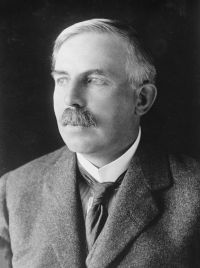
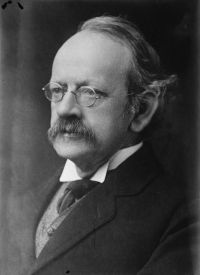
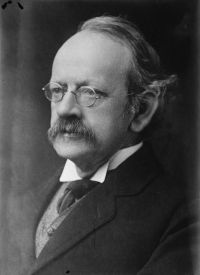
Portrait of J. J. Thomson J. J. Thomson,  Romanes Lecture: The Atomic Theory (1914)

“ By means of the electric spectrum we can prove in a very direct and striking way some of the fundamental truths of the Atomic Theory. For example, when we form the electric spectrum of a mixture of gases, such as the air, we get a limited number of sharply-divided streams, which show no tendency to merge into each other. This shows that the gas contains only a few kinds of particles, and that all the particles of one kind have exactly the same mass, for if there had been any variation in the masses the streams would have been fuzzy. This shows that all the atoms of an element are alike ”
Source: Wikisource

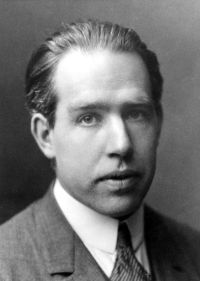
Portrait of Niels Bohr Niels Bohr,  The Theory of Spectra and Atomic Constitution…

“ These difficulties become especially apparent when we consider the spectra of the elements. In fact, the difficulties are here so obvious that it would be a waste of time to discuss them in detail. It is evident that systems like the nuclear atom, if based upon the usual mechanical and electrodynamical conceptions, would not even possess sufficient stability to give a spectrum consisting of sharp lines. ”
Source: Gutenberg

Portrait of Niels Bohr Niels Bohr,  The Theory of Spectra and Atomic Constitution…

“ We shall commence by considering the simplest atom conceivable, namely, an atom consisting of a nucleus and one electron. If the charge on the nucleus corresponds to that of a single electron and the system consequently is neutral we have a hydrogen atom. Those developments of the quantum theory which have made possible its application to atomic structure started with the interpretation of the well-known simple spectrum emitted by hydrogen. This spectrum consists of a series of lines, the frequencies of which are given by the extremely simple Balmer formula where and are integers. ”
Source: Gutenberg

Get perspective with Kwize: daily news enlightened by great literature