Bass (music)

Definition and stakes

Various,  Graham's Magazine, Vol. XX, No… (1842)

“ The high, squeaking tones of the violins and flutes, and the growling ground bass of the bassoon are all that I can hear; they follow each other up and down in octaves, which tear the ear, until, at last, like one who is seized with a burning pain, I cry out involuntarily,
“What mad music! Those detestable octaves!”—Near me some one mutters.
“Cursed Fate! Here is another octave-hunter!” I look up and perceive now for the first time that imperceptibly to me a man has taken a place at the same table, who is looking intently at me, and from whom I cannot take my eyes away again.
”

Source: Gutenberg

A Dictionary of Music and Musicians (1900)

“ If a very low bass found a note rather high, he may have howled it as he best could, or it would perhaps itself have cracked up into falsetto, or he will have gone down instinctively to the octave below, or remained where he was until the melody came again within his reach—ears being not yet critically cultivated. Even now, towards the end of the 19th century, it is not at all unusual to hear amongst a congregation basses singing the air of a hymn below the actual bass part, or soprani singing in the tenor-compass for convenience sake. ”
Source: Wikisource

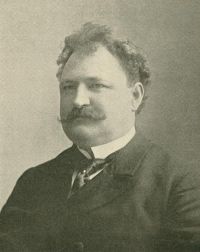
Portrait of André Pirro André Pirro,  Johann Sebastian Bach: The Organist and His Works for the Organ

“ The basso continuo of certain organists, who have fallen asleep over their pedals, soon becomes an intolerable nuisance for the audience. We should go wild at a performance of a symphony in which the double-basses played uninterruptedly from the first note to the last. Plain-song itself, thus interpreted, loses its eloquence; although the apparent monotony of its design, closely confined within the limits of an octave, would, above all, seem to be better adapted than any other form of music to a continuous bass. ”
Source: Gutenberg

Get perspective with Kwize: daily news enlightened by great literature