Bipedalism

Definition and stakes

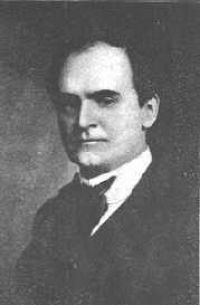
Portrait of James Bell Pettigrew James Bell Pettigrew,  Animal Locomotion; or, walking…

“ As the body cannot advance without the extremities, so the extremities cannot advance without the body. The double rolling movement is necessary to continuity of motion. If there was only one movement there would be dead points or halts in walking and running, similar to what occur in leaping. The continuity of movement necessary to progression in some bipeds (man for instance) is further secured by a pendulum movement in the arms as well as in the legs, the right arm swinging before the body when the right leg swings behind it, and the converse. ”
Source: Gutenberg

George C. Comstock,  A Text-Book of Astronomy

“ The first law of motion.—"Every body continues in its state of rest or of uniform motion in a straight line except in so far as it may be compelled by force to change that state." A gust of wind, a stone, a careless movement of the rider may turn the bicycle to the right or the left, but unless some disturbing force is applied it will go straight ahead, and if all resistance to its motion could be removed it would go always at the speed given it by the last power applied, swerving neither to the one hand nor the other. ”
Source: Gutenberg

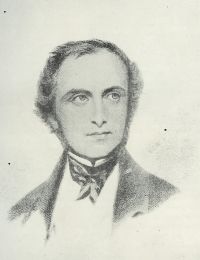
Portrait of John Stuart Mill John Stuart Mill,  A System of Logic, Ratiocinative and Inductive

“ The permanency of the effect is now only the permanency of a series of changes. The second foot, or inch, or mile of motion is not the mere prolonged duration of the first foot, or inch, or mile, but another fact which succeeds, and which may in some respects be very unlike the former, since it carries the body through a different region of space. Now, the original projectile force which set the body moving is the remote cause of all its motion, however long continued, but the proximate cause of no motion except that which took place at the first instant. ”
Source: Gutenberg

Get perspective with Kwize: daily news enlightened by great literature