“ The boiling point may be defined as the temperature at which bubbles of vapor are formed within the liquid. These bubbles increase the surface at which evaporation can take place in the liquid, and the principal reason why rapid application of heat to a liquid does not raise its temperature above the boiling point is that as more heat is applied more bubbles form so that the increase of evaporating surface supplies a correspondingly greater surface for cooling. The variation of the boiling temperature with changing pressure may be shown by partly filling a strong 7/8-in. ”
Boiling point
Definition and stakes
The concept of "boiling point" includes both a scientific phenomenon and a metaphor for increasing tension. In physics, it refers to the temperature at which a liquid changes into vapor, a process affected by atmospheric pressure, as explained by authors such as Enrico Angelo Lodovico Negretti and Edwin Giles Fulton. Metaphorically, the 2021 film Boiling Point examines this duality, portraying a high-pressure restaurant kitchen where personal and professional challenges reach a crucial limit.
Through its single-take storytelling, the film reflects the physical boiling point, showing how mounting tensions—among staff, patrons, and internal struggles—lead to a peak of disorder and eventual resolution. The theme therefore combines scientific accuracy with human drama, demonstrating how both actual and symbolic "boiling points" are shaped by external forces and internal limits.
Quotes about “boiling point”
Enrico Angelo Lodovico Negretti, A Treatise on Meteorological Instruments
“ In the case of water, we commonly state the boiling-point to be 212° F.; but it is only so at the level of the sea, under the mean pressure of the atmosphere, represented, in the latitude of London, by a column of 29·905 inches of mercury, at a temperature of 32° F., and when the water is fresh and does not contain any matter chemically dissolved in it. When steam is generated and confined in a boiler, the pressure upon the boiling water may be several times greater than that of the atmosphere. Experimentally it has been found, that if the pressure in the boiler be 25 lbs. ”
Various, Harper's New Monthly Magazine, Vol…
“ Bagges."Well," resumed Harry; "so the boiling point of water depends on the degree of force which the air, or what-not, is pressing on its surface with. The higher the spot on which you boil your water, the lower the point it boils at. Therefore, water boiling at the top of a mountain is not so hot as water boiling at the mountain's base. The boiling point of water on the summit of Mont Blanc, is as low as one hundred and eighty-four degrees. So, if water must be at two hundred and twelve degrees, to make good tea, don't choose too high a hill to build a temperance hall on. ”

Related terms
Authors who wrote about “boiling point”
W. Mattieu WilliamsEnrico Angelo Lodovico Negretti Fannie FarmerEdwin Giles FultonCarlotta C. GreerWoman's Institute of Domestic Arts and SciencesJohn Cargill BroughRobert Kemp PhilpVariousN. HawkinsBertha May ClarkChautauqua InstitutionThomas D. CopeGeorge Percival MudgeWillis Luther Moore
 Joshua Rose
 Hugh Longbourne CallendarPowell MillingtonA. B. Simpson
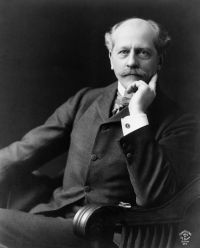 Percival Lowell
Fannie FarmerEdwin Giles FultonCarlotta C. GreerWoman's Institute of Domestic Arts and SciencesJohn Cargill BroughRobert Kemp PhilpVariousN. HawkinsBertha May ClarkChautauqua InstitutionThomas D. CopeGeorge Percival MudgeWillis Luther MooreJoshua RoseHugh Longbourne CallendarPowell MillingtonA. B. SimpsonPercival Lowell