“ The function of nerves is to carry impulses—like telegraph wires. The functions of brains is something else.” But, confronted with such awesome experimental difficulties, with no comprehensive mathematical theory in sight, we are largely limited otherwise to verbal discourses, rationales and theorizing, a hopelessly clumsy tool for the development of an adequate understanding of brain function. ”
Brain function
Definition and stakes
The theme of “brain function” has been addressed by authors such as Claude Bernard, Herbert Wildon Carr, William James, Wayland Richardson Benedict and David Ackerman Kyle. It is often associated with terms like mind, physiology, thought, consciousness and system.
Quotes about “brain function”
Various, Popular Science Monthly (1911)
“ Science has taught us that these mental traits are an expression of the functions of the nervous system, and in order to understand them properly, they should be studied as the quantitative and qualitative measure of the individual capacity of the brain. No intelligent person to-day questions the fact that the more marked anomalies of cerebral function, as seen in idiocy, imbecility and the various forms of psychoses, can be analyzed and correctly interpreted only by those who have had the requisite special training and experience in connection with the study of the brain. ”
Charlotte M. Mason, Parents and children (1897)
“ Every impression of sense upon the brain, every current of molecular activity from one to another part of the brain, every cerebral action which passes into muscular movement, leaves behind it some modification of the nerve elements concerned in its function, some after-effect, or, so to speak, memory of itself in them which renders its reproduction an easier matter, the more easy the more often it has been repeated, and makes it impossible to say that, however trivial, it shall not under some circumstances recur. ”
Herbert Wildon Carr, Why the Mind Seems to Be, and yet Cannot Be… (1914)
“ And it seems impossible to doubt that it is the brain that produces the mind and not the mind that produces the brain, because the brain is an organ that develops continually throughout life and performs a multitude of other functions besides that of turning the excitation of its cells and fibres into sensations and perceptions, a function that seems to be intermittent and only called into activity at definite times and in special circumstances. ”
Herbert Wildon Carr, Why the Mind Seems to Be, and yet Cannot Be… (1914)
“ It is part of a complete nervous system and it is only a part of the brain that is concerned in mental process. A nervous system or something that closely corresponds to it seems to be a necessary acquirement of every living organism that moves freely, and its structure, however complex it may be in its higher development, is built up of a simple arrangement of cells and fibres that receive and transmit movement. Its function is to receive a stimulus and to transmit it to a centre where a responsive movement is prepared. ”
Joseph Payne and Clifford Allbutt, 1911 Encyclopædia Britannica (1911)
“ The results of these experimental researches by many inquirers into the constitution of the brain have transformed our conceptions of cerebral physiology, and thrown a flood of light on the diseases of the brain. Not only so, but this mapping of the brain in areas of function now often enables the clinical physician to determine the position of disease ”
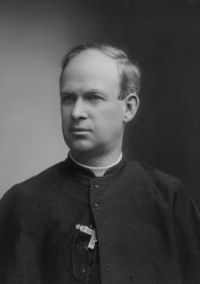
“ It must be remembered, also, that the brain is not only an organ of mental function. It is likewise the center of the entire nervous system, and its volume, therefore, must correspond with the size and number of nerve trunks under its control. In man, as in animals, the brain elements are to a great extent but sensori-motor delegates whose function is the regulation and government of every part of the body. ”
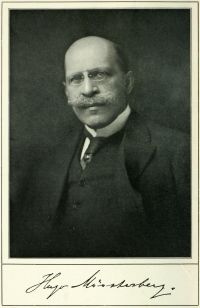 Hugo Münsterberg,
Psychotherapy
“ What else can be the brain's function in the midst of nature than the transforming of impressions into expressions, stimuli into actions? It is the great apparatus by which the organism steadily adjusts itself to the surroundings. There would be no use whatever biologically in a brain which had connections with the sense organs, but which had no connections with the muscular system, and on the other hand, a brain which had motor nerves and muscular adjustment would be entirely useless if it had not sensory nerves and sense organs connected with it. ”
Sepharial, How to Read the Crystal; or, Crystal and Seer
“ The function of the brain—which must be regarded as the bulbous root of a nervous plant whose branches grow downwards—is twofold; to affect, and to be affected. In its active or positive condition it affects the whole of the vital and muscular processes in the man, finding expression in vital action. ”
Sir P. Chalmers Mitchell, Thomas Henry Huxley; A Sketch Of His Life And Work
“ Surely no one who is cognisant of the facts of the case, nowadays, doubts that the roots of psychology lie in the physiology of the nervous system. What we call the operations of the mind are the functions of the brain, and the materials of consciousness are products of cerebral activity. ”
 Thomas Henry Huxley,
Science and Culture, and Other Essays
“ If the brutes have consciousness and no souls, then it is clear that, in them, consciousness is a direct function of material changes; while, if they possess immaterial subjects of consciousness, or souls, then, as consciousness is brought into existence only as the consequence of molecular motion of the brain, it follows that it is an indirect product of material changes. The soul stands related to the body as the bell of a clock to the works, and consciousness answers to the sound which the bell gives out when it is struck. ”
 George Fielding Blandford,
Popular Science Monthly
(1872)
“ Also, we shall observe the same individual under the various conditions of hunger and repletion, of sleep or want of sleep, of cold or heat, of health or disease. And we shall see how all the phenomena, which our inductive observation can collect, agree or disagree with the laws laid down by those who have by experiment investigated the physiology of the nervous system. From one method—dissection of the actual brain—we shall not learn much. When the action is over and the force departed, the actual structure teaches us little about the working. ”
Charlotte M. Mason, Parents and children (1897)
“ There is no more interesting subject of inquiry open just now than that of the interaction between the thoughts of the mind and the configuration of the brain. The fair conclusion appears to be that each is greatly the cause of the other; that the character of the persistent thoughts actually shapes the cerebrum, while on the configuration of this organ depends in turn the manner of thoughts we think. Now, thought is, for the most part, automatic. We think, without intention or effort, as we have been accustomed to think, just as we walk or write without any conscious arrangement of muscles. ”
Rufus Osgood Mason, Popular Science Monthly (1875)
“ We may, however, notice here that, as in his nervous organization, no distinctly new parts are discoverable, but only general growth and development, and especially vast increase in the size and working capacity of the cerebrum, together with improved lines of communication between the different parts of the brain, so in the psychical manifestations which this enlarged and better-developed brain exhibits, no faculties are discovered beyond what these various developments in structure render possible. Does man possess intelligence? ”
Various, Popular Science Monthly (1902)
“ The experiences which we receive from the external world through our sense-organs and sense-centers in the brain are transformed into ideas by other brain-centers, and these are combined into inferences by association. These inferences are both inductive and deductive, processes which have equal value. Other complicated brain operations, the formation of chains of reasoning, abstraction and conception, imagination, consciousness, thought and philosophy, are all functions of the ganglionic cells of the cerebral cortex. ”
Eliza Burt Gamble, The Sexes in Science and History
“ We have seen that the nervous system not only regulates most of the existing functions of the body, but that it has indirectly influenced the development of various bodily structures and certain mental qualities, and that these powers of mind depend on the development of the brain. ”
Charlotte Marie Mason, Home Education (Mason) — Part I: Some Preliminary Considerations
“ Authorities differ as to how far it is possible to localise the functions of the brain; but this at least seems pretty clear--that none of the functions of mind are performed without real activity in the mass of grey and white nervous matter named 'the brain.' Now, this is not a matter for the physiologist alone, but for every mother and father of a family ”
Claude Bernard, Popular Science Monthly (1873)
“ Every one has long known that, without the brain, intelligence is not possible, but experiment has discovered exactly the part that is played by each portion of the organ. It teaches us that consciousness, or intelligence properly so called, resides in the cerebral lobes, while the lower portions of the brain contain nervous centres destined for organic functions of a lower kind. ”
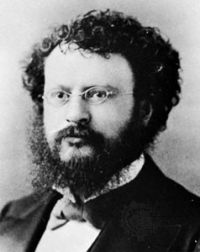 John Fiske,
The Destiny of Man, Viewed in the Light of His Origin
“ It is not even correct to say that thought goes on in the brain. What goes on in the brain is an amazingly complex series of molecular movements, with which thought and feeling are in some unknown way correlated, not as effects or as causes, but as concomitants. So much is clear, but cerebral physiology says nothing about another life. Indeed, why should it? The last place in the world to which I should go for information about a state of things in which 110thought and feeling can exist in the absence of a cerebrum would be cerebral physiology! ”
William James, Are We Automata?
“ And to answer this question, we must know, first, the natural defects of the brain, and secondly, the peculiar powers of its mental correlate. Since consciousness is presumably at its minimum in creatures whose nervous system is simple, and at its maximum in the hypertrophied cerebrum of man, the natural inference is that, as an organe de perfectionnement, it is most needed where the nervous system is highly evolved ;' and the form our first question takes is: What are the defects characteristic of highly evolved nervous centres? ”
 William Isaac Thomas,
The American Journal of Sociology…
(1896)
“ Functionally, also, the importance of the brain has been unduly emphasized by certain anthropologists. There is far less direct connection between intelligence and brain mass and form than was at one time presumed. It is true that the cerebral lobes are the seat of consciousness; but the brain is no more essential to intelligence than is the circulation, or digestion, or the liver. Intelligence is the mediation of action, and all organs and tissues which cooperate in forming an association, are equally important with the brain. ”
Herbert Wildon Carr, Why the Mind Seems to Be, and yet Cannot Be… (1914)
“ And the second is that the consciousness which arises in connection with cerebral process is not consciousness of cerebral process but of something which is altogether independent of cerebral process, something existing in a different space, it may be thousands or millions of miles away from the brain, and something existing at a different time, it may be ages before or even after the present moment at which the cerebral process takes place. ”
Ray Vaughn Pierce, The People's Common Sense Medical Adviser in Plain English
“ Let us hear what the two leading nervous physiologists, of this country, have to say upon this point:'The brain is not, strictly speaking, the organ of the mind, for this statement would imply that the mind exists as a force, independent of the brain; but the mind is produced by the brain substance; and intellectual force, if we may term the intellect a force, can be produced only by the transmutation of a certain amount of matter ”
 John Stuart Mill,
A System of Logic, Ratiocinative and Inductive
“ The physiology, however, of the brain and nervous system is in a state of such rapid advance, and is continually bringing forth such new and interesting results, that if there be really a connection between mental peculiarities and any varieties cognizable by our senses in the structure of the cerebral and nervous apparatus, the nature of that connection is now in a fair way of being found out. ”
Claude Bernard, Popular Science Monthly (1873)
“ With respect to the organic or physico-chemical conditions of its activity, the brain, then, presents nothing exceptional. If we turn to experiments made upon it by physiologists, we shall find that they have succeeded in analyzing cerebral phenomena in the same way as those of all the other organs. The experimental process usually employed to determine the functions of organs consists in removing them or in destroying them either gradually or suddenly, so as to determine the uses of the organ according to the special disturbances thus caused in vital phenomena. ”
Mary F. Porter, Applied Psychology for Nurses
“ So the brain in man is “the one immediate bodily condition of the mental operations.” Take away all the brain and man’s body is a useless mass of protoplasm.The brain’s varied and intricate nerve connections with all parts of the body, through nerves branching from the main trunks in the spinal cord, we shall not discuss, for you know them through your study of anatomy. For the purpose of our psychology we need consider only two of the main divisions of the brain—the cerebrum, which includes what we call the right and left hemispheres, and the cerebellum. ”
D. Kerfoot Shute, A first book in organic evolution (1899)
“ The use of the brain along chosen lines will, on well-known physiological principles, increase its organization and therefore its power for manifesting psychic phenomena. These two factors will continue to act and react in the future as they have in the past, increased psychical activity enlarging the brain, and the more highly organized brain augmenting the psychic phenomena. What is true of the mind in general is also true of its varied manifestations. ”
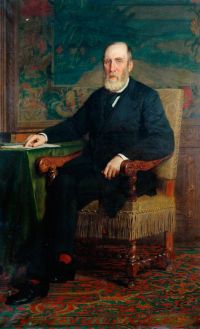 S. Laing,
A Modern Zoroastrian
“ In the case of the higher functions involving thought, the upper part of the brain, which performs these functions, seems to be a sort of duplex machine, so that we have two brains capable of thinking, just as we have two eyes capable of seeing. It is a remarkable fact that the areas of the brain which are appropriated to the lowest and most instinctive functions, which appear first, lie lowest, and as the functions rise the position of their nerve-centres rises with them. ”
Ray Vaughn Pierce, The People's Common Sense Medical Adviser in Plain English
“ Although we cannot follow the movements of individuals in a battle, yet we may predict the result of the combat; and thus, we judge of the functions of the brain without the ability to reveal the actions of one of the organic molecules of which it is composed. We aim to give a general, reasonable, and popular description of cerebral functions and their bearing upon health and disease. ”
David Ackerman Kyle, Stirring Science Stories (1941-02-19)
“ Recovering the paper, he read for the last time those words which he had copied. "All the functions of man are controlled by the brain, yet less than a fourth of the brain tissues are used. Size has no importance relative to brain capacity, which exists solely because of synapses among the neurons, more simply explained as connections among the different cells. Thus, the more of these connections, the more brain capacity and proportionately the more intelligence is produced." ”
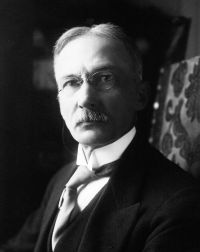 James Mark Baldwin,
The Story of the Mind
“ It is used especially upon the brain. Pieces of the brain, great or small—indeed, practically the whole brain mass—may be removed in many animals without destroying life. Either of the cerebral hemispheres entire, together with large portions of the other, may be taken from the human brain without much effect upon the vital processes, considered as a whole; the actual results being the loss of certain mental functions, such as sight, hearing, power of movement of particular limbs, etc., according to the location of the part which is removed. ”
Mary F. Porter, Applied Psychology for Nurses
“ It is the lower or vegetative brain that may still exist and keep life intact when the functions of the cerebrum are destroyed. We can say, then, of the brain as a whole that it is the organ of the mind, the sine qua non of the mind, the apparatus for the registration of sense impressions. ”
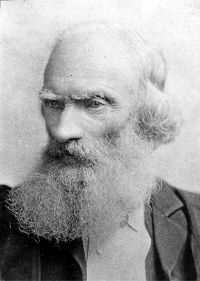 Sir Daniel Wilson,
The lost Atlantis, and other ethnographic studies
“ Hence the data thus far accumulated in evidence of the actual structure, size, and weight, of the human brain fall far short of what is requisite for a solution of many questions in reference to the relations between cerebration and mental activity. From time to time men of science have sought by example, as well as by precept, to lessen such impediments to scientific research. ”
Related terms
Authors who wrote about “brain function”
Claude BernardHerbert Wildon CarrWilliam JamesWayland Richardson BenedictDavid Ackerman KyleCalvin CutterFrederick Gymer Parsons and Charles Scott SherringtonMary F. PorterCharlotte M. MasonJames Mark BaldwinThomas Henry HuxleyRay Vaughn PierceAnna M. Galbraith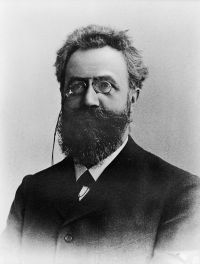 Hermann EbbinghausAndrew WilsonGeorge Fielding Blandford
 George Washington CrileJoseph Le Conte
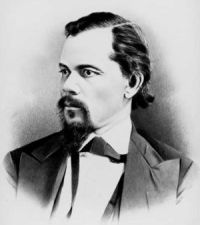 Paschal Beverly RandolphAlbert F. Blaisdell
James Mark BaldwinThomas Henry HuxleyRay Vaughn PierceAnna M. GalbraithHermann EbbinghausAndrew WilsonGeorge Fielding BlandfordGeorge Washington CrileJoseph Le ContePaschal Beverly RandolphAlbert F. Blaisdell