Calcium chloride

Definition and stakes

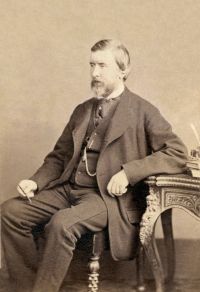
Dmitry Ivanovich Mendeleyev,  The Principles of Chemistry, Volume I

“ It is evident that the calcium chloride employed for absorbing the water should be free from lime or other alkalis in order that it may not retain carbonic anhydride. Such calcium chloride may be prepared in the following manner: A perfectly neutral solution of calcium chloride is prepared from lime and hydrochloric acid; it is then carefully evaporated first on a water-bath and then on a sand-bath. When the solution attains a certain strength a scum is formed, which solidifies at the surface. ”
Source: Gutenberg

Various,  Encyclopaedia Britannica, 11th Edition…

“ Calcium chloride, CaCl2, occurs in many natural waters, and as a by-product in the manufacture of carbonic acid (carbon dioxide) , and potassium chlorate. Aqueous solutions deposit crystals containing 2, 4 or 6 molecules of water. Anhydrous calcium chloride, prepared by heating the hydrate to 200° (preferably in a current of hydrochloric acid gas, which prevents the formation of any oxychloride) , is very hygroscopic, and is used as a desiccating agent. It fuses at 723°. It combines with gaseous ammonia and forms crystalline compounds with certain alcohols. ”
Source: Gutenberg

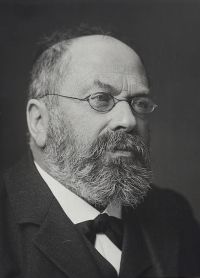
Portrait of Georg Lunge Georg Lunge,  1911 Encyclopædia Britannica, Volume 1… (1911)

“ Here the free hydrochloric acid is converted into calcium chloride, and at the same time any ferric chloride present is converted into insoluble ferric hydroxide: 2FeCl3+3CaCO3+3H2O=2Fe (OH) 3+3CaCl2+3CO2. The sulphuric acid present is mostly precipitated as calcium sulphate. The mud thus formed is settled out, and the clear liquor, which is now quite neutral and contains both manganese and calcium chlorides, is mixed with cream of lime and treated by a strong current of air, produced by a blowing-engine. This is done in a tall iron cylinder, say 9 ft. wide and 30 ft. ”
Source: Wikisource

Get perspective with Kwize: daily news enlightened by great literature