Chemical stability

Definition and stakes

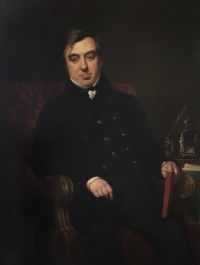
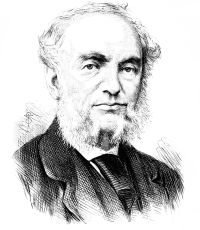
Portrait of Herbert Spencer Herbert Spencer,  The Principles of Biology — Chapter I.1 (1898)

“ In chemical stability these triatomic compounds, considered as a group, are in a marked degree below the diatomic ones. The various sugars and kindred bodies, decompose at no very high temperatures. The oils and fats also are readily carbonized by heat. Resinous and gummy substances are easily made to render up some of their constituents. And the alcohols, with their allies, have no great power of resisting decomposition. These bodies, formed by the union of oxygen, hydrogen, and carbon, are also, as a class, chemically inactive. Formic and acetic are doubtless energetic acids ”
Source: Wikisource

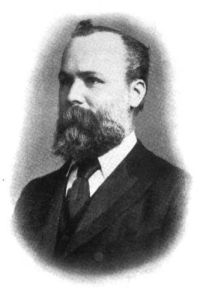
Dmitry Ivanovich Mendeleyev,  The Principles of Chemistry, Volume I

“ Thus in ozone and hydrogen peroxide we see examples of very unstable, easily decomposable (by time, spontaneously, and on contact) substances, full of the energy necessary for change, [28 bis] capable of being easily reconstituted (in this case decomposing with the evolution of heat) ; they are therefore examples of unstable chemical equilibria. If a substance exists, it signifies that it already presents a certain form of equilibrium between those elements of which it is built up. But [214] chemical, like mechanical, equilibria exhibit different degrees of stability or solidity. ”
Source: Gutenberg

Get perspective with Kwize: daily news enlightened by great literature