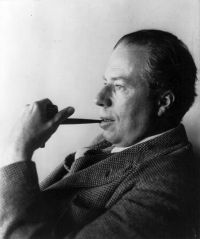
 Christopher Morley,
Parnassus on Wheels
Christopher Morley,
Parnassus on Wheels
“ "Oh, silly woman! Leave your stove, your pots and pans and chores, even if only for one day! Come out and see the sun in the sky and the river in the distance!" ”
Chores include routine tasks vital to everyday life, often mirroring societal roles and personal responsibilities. Authors have examined this theme from diverse angles: Christopher Morley criticizes domestic duties, while Charles Dudley Warner contrasts agricultural work with the carefree spirit of youth.
Solon Robinson connects chores to the decline of society, and John Armstrong views them as ethical obligations. Epictetus and Alphonsus Liguori elevate such tasks to philosophical duties, highlighting self-control and self-sacrifice. These viewpoints illustrate chores as both everyday necessities and symbols of life’s ongoing commitments.
Christopher Morley,
Parnassus on Wheels
“ "Oh, silly woman! Leave your stove, your pots and pans and chores, even if only for one day! Come out and see the sun in the sky and the river in the distance!" ”
 Charles Dudley Warner,
Being a Boy
Charles Dudley Warner,
Being a Boy
“ There are so many bright spots in the life of a farm-boy, that I sometimes think I should like to live the life over again; I should almost be willing to be a girl if it were not for the chores. There is a great comfort to a boy in the amount of work he can get rid of doing. It is sometimes astonishing how slow he can go on an errand,—he who leads the school in a race. The world is new and interesting to him, and there is so much to take his attention off, when he is sent to do anything. ”
Solon Robinson, Hot corn: Life Scenes in New York Illustrated
“ What do you see?—poverty, filth, and rags; starvation, misery, crime—on that bed is my dying boy—that is nothing. Let him die, I am glad of it—the priest has made it all right with him. Now, look in that bed, rum-selling, licensing whelps that you are—that is worse than the dying boy in the other—see what we have bought with our money paid to your excise office. See what a mother is sunk to by rum. Yes, I do drink it—why do your eyes ask the question? I do drink, and will again. What else have I got to live for? ”
John Armstrong, The Pastor in his Closet — Friday
“ Teach me so to give unto the hungry, and the thirsty, and the stranger, and the naked, and the widow, and the fatherless, and the captive, as though I saw Thee an hungered, and thirsty, and naked, and sick, and in prison ”
 Pedro Fernandes de Queirós,
The Voyages of Pedro Fernandez de Quiros…
Pedro Fernandes de Queirós,
The Voyages of Pedro Fernandez de Quiros…
“ The look-out man went down between decks to see the hospital and the sick women, who, when they beheld him, cried out: “What do you bring us to eat? Oh, give us food, for we are mad with hunger and thirst.” ”
duchesse de Louise Henriette Charlotte Philippine de Durfort Duras, Prison Journals During the French Revolution
“ I shared all her sorrow, and our hearts bled for each other. Her situation was terrible, and awakened anew my still fresh grief. We frequently talked together of our revered parents; and we were only roused from our stunned condition by misfortunes more recent than our own, which urged us to comfort those who were suffering from them. The indispensable duty of preparing food is a real, though wretched, distraction when the heart is aching. ”
 Ida M. Tarbell,
The Rising of the Tide: The Story of Sabinsport
Ida M. Tarbell,
The Rising of the Tide: The Story of Sabinsport
“ From daylight to dark they went from one group to another, cleansing and dressing wounds, changing straw often stiff with blood and filth, fumigating garments, letting in fresh air, furnishing nourishing food, doing a thousand little things to improve the conditions and to simplify the care of the stricken groups. ”
Baroness Emmuska Orczy Orczy, By the gods beloved (1921)
“ The dinners you do not eat, the bed you don’t sleep in, the fresh air you do not breathe, all will have their revenge upon you for your studied neglect. Look here! you say you want to do another two years’ work; I say your health will not stand the strain if you do. ”
 Epictetus,
 the Discourses as reported by Arrian…
(1928)
Epictetus,
Epictetus, the Discourses as reported by Arrian…
(1928)
“ How ought we to bear our illnesses? When the need arises for each separate judgement, we ought to have it ready; at lunch our judgements about lunch, at the bath our judgements about a bath, in bed our judgements about a bed. ”
 Alphonsus Liguori,
Sermons for all the Sundays in the year…
(1882)
Alphonsus Liguori,
Sermons for all the Sundays in the year…
(1882)
“ Go into the hospitals, and listen to the shrieks of so many young men, who, in punishment of their impurities, are obliged to submit to the severest treatment and to the most painful operations, and who, if they escape death, are, according to the divine threat, feeble, and subject to the most excruciating pain for the remainder of their lives. ”
Eliza Poor Donner Houghton, The Expedition of the Donner Party and its Tragic Fate
“ I told her how, in case of sickness, one neighbor would slip over and cook the family breakfast for the sick woman, others would drop in later, wash the dishes, and put the house in order; and so by turns and shares, the washing, ironing, and mending would be done, and by the time the sick woman would be up and around, she would have no neglected work to discourage her. ”
Edwin Lester Arnold, Lieut. Gullivar Jones: His Vacation (1905)
“ I will tell you so much as this, madam—that what I am like to die of now is hunger, plain, unvarnished hunger, so, in Heaven's name, get out what you have and let me fall-to, for my last meal was yesterday morning. ”
 Henry M. Stanley,
In Darkest Africa, Vol. 1; or, The Quest…
Henry M. Stanley,
In Darkest Africa, Vol. 1; or, The Quest…
“ Rigid discipline, daily burdens, and endless marching into regions of which they were perfectly ignorant, never seemed to gall our men much when their stomachs were pampered, and abundant provender for their digestive organs were provided; but even hanging unto death was only a temporary damper to their inclination to excessive mischief when pinched with hunger. ”
Barbara Kay, Elizabeth, Her Folks
“ But Mother she got to reading a book that said housework was a good cure for sickness. About sweeping bein' good for the spine, and washing bein' good for the stomick, and housecleaning a good thing for the figger. ”
 E. Heinrich Kisch,
The sexual life of woman in its physiological…
E. Heinrich Kisch,
The sexual life of woman in its physiological…
“ The ever-renewed question, ‘what must be cooked for dinner to-day,’ the perpetually recurring necessity for scouring and sweeping and dusting and washing-up—these are the continual dropping which slowly but surely wears away soul and body. ”
 Benedict of Nursia,
Select Historical Documents of the Middle Ages
(1892)
Benedict of Nursia,
Select Historical Documents of the Middle Ages
(1892)
“ The use of baths shall be offered to the sick as often as it is necessary: to the healthy, and especially to youths, it shall not be so readily conceded. But also the eating of flesh shall be allowed to the sick, and alto- gether to the feeble, for their rehabilitation. But when they have grown better, they shall all, in the usual manner, abstain from flesh. The abbot, moreover, shall take the greatest care lest the sick are neglected by the cellarer or by the servitors: for whatever fault is committed by the disciples rebounds upon him. ”
Paul Ambroise Bigandet, The Life or Legend of Gaudama, the Buddha of the Burmese…
“ But in truth our body is like a patient that requires the constant attendance of the physician. We must feed it, refresh it, wash it, clothe it, &c., to save it from hunger, thirst, dirt, and cold. What is all that but a sad and constant proof that we are slaves to pain? ”
Eliza Ann Youmans, Popular Science Monthly (1879)
“ Add to this labor lessons to prepare in the evenings, a constant feeling of inanition, especially during winter, cold feet and thin clothing, with no object in the world in my lessons to interest me, and it may well be conceived how the state of sin and misery brought on man by the fall was to me a palpable, undeniable, experienced reality. A few explanations will throw light on the causes of these sufferings. Too much cerebral action, and a close, ill-aired bedroom, with three besides myself in it, made me in the morning low, listless, irritable, and without appetite. ”
 George Augustus Sala,
Twice round the clock; or, The hours of the day and night in London
(1862)
George Augustus Sala,
Twice round the clock; or, The hours of the day and night in London
(1862)
“ A change at nurse, the death of a parent—one out of the fifty thousand accidents that beset life—might have thrown you into the sink of misery and want, foulness and crime, in which these creatures were reared, and you might have been here to-day, not gazing on the spectacle with a complacent pity, but trundled with manacles on your wrists into this moving pest-house, whose half-way house is the jail, and whose bourne is the gallows. ”
 Walter Bradford Cannon,
Bodily changes in pain, hunger…
(1915)
Walter Bradford Cannon,
Bodily changes in pain, hunger…
(1915)
“ On the theory that hunger is a manifestation of bodily need, are we to suppose that, in the course of starvation, the body is mysteriously not in need after the third day, and that therefore the sensation of hunger disappears? ”
 Eleanor Hallowell Abbott,
The White Linen Nurse
Eleanor Hallowell Abbott,
The White Linen Nurse
“ Strenuous, nerve-racking, heart-breaking surgical days—broken maritally only by the pleasant, soft-worded greeting at the gate, or the practical, homely appeal of good food cooked with heart as well as hands, or the tingling, inciting masculine consciousness of there being a woman's—blush in the house! ”
Tiruvalluvar, Tirukural — Chapter 23 (1886)
“ Whose soul delights with hungry men to share his meal, The hand of hunger's sickness sore shall never feel. The fiery disease of hunger shall never touch him who habitually distributes his food to others. ”
Patrick Walker, Life and prophecies of that faithful minister of God's word… (1812)
“ I have seen when meal was all sold in markets, women clapping their hands, and tearing the clothes off their heads, crying, "How shall we go home and see our children die in hunger? they have got no meat these two days, and we have nothing to give them." ”
 Fanny Kemble,
Journal of a Residence on a Georgian Plantation…
Fanny Kemble,
Journal of a Residence on a Georgian Plantation…
“ And here, in their hour of sickness and suffering, lay those whose health and strength are spent in unrequited labour for us—those who, perhaps even yesterday, were being urged onto their unpaid task—those whose husbands, fathers, brothers and sons, were even at that hour sweating over the earth, whose produce was to buy for us all the luxuries which health can revel in, all the comforts which can alleviate sickness. ”
 Amelia E. Barr,
Playing With Fire
Amelia E. Barr,
Playing With Fire
“ It was necessary for you to spend ten years in the House of Pain and Suffering and Death; necessary for you to know how to cure the sick and to heal the wounded, in order to prepare you to receive the sacred mystery in that horrible pit, and make you fit for the work you have yet to do. ”
 Israel Zangwill,
The Model of Sorrow
(1902)
Israel Zangwill,
The Model of Sorrow
(1902)
“ So we tried to sleep, but hunger would not permit it, but demanded his due. Hunger, you old fool, why don't you let us sleep? But he refused to be talked over. So we passed the night. When day came, the little children began to cry: 'Father, let us go. We will beg bread in the streets. We die of hunger. ”
John Brown, Health: Five Lay Sermons to Working-People
“ But if a poor man takes fever, or breaks his leg, or falls into a consumption, his wife and children soon want food and clothes: and many a time do I see on the streets poor, careworn men, dying by inches of consumption, going to and from their work, when, poor fellows, they should be in their beds ”
Various, The Catholic World, Vol. 08, October…
“ Food and warm clothing and beds were here ready for the half-starved and half-drowned families that were arriving continually—poor, despairing people who had most of them lost their little all, and some of them a father, or husband, or child. ”
Richard Heath, The English Peasant (1893)
“ One must see the children eating bread and butter for dinner, and drinking the hot wash they call tea; one must note the bleared eyes, the scrofulous skin, the ulcerated legs, the rheumatic agonized bodies,—one must see these things and a hundred others for oneself to realize the depth of their miserable poverty. ”
 Adam Smith,
The Essays of Adam Smith
Adam Smith,
The Essays of Adam Smith
“ The disposition of body which is habitual to a man in health, makes his stomach easily keep time, if I may be allowed so coarse an expression, with the one, and not with the other. 27 We can sympathize with the distress which excessive hunger occasions when we read the description of it in the journal of a siege, or of a sea voyage. We imagine ourselves in the situation of the sufferers, and thence readily conceive the grief, the fear, and consternation, which must necessarily distract them. ”
 Julia S. Wheelock,
The boys in white
(1870)
Julia S. Wheelock,
The boys in white
(1870)
“ To the untold suffering experienced from broken bones and shattered limbs, is added that of hunger, many having eaten nothing for three and four [Pg 192] days previous to their arrival here; and thus they are dying not only of wounds, but of starvation. ”
William Gray Elmslie, Professor W. G. Elmslie, D.D.: Memoir and Sermons
“ Nursing at the sick bed, doing tasks that are repulsive, planning, with all kinds of material medicaments, and helps, and reliefs, to ease bodily pain. Now, it is easily possible for a coarse heart and poor bodily eyes to be in the midst of all that is sacred, and secular too, and to call it all common, and poor, and mean. ”
Max Duncker, The History of Antiquity, Vol. 5…
“ On turning over in bed, sneezing, the discharge of natural or sexual functions, kindling a light, approaching water or fire, special prayers are uttered, and the sum of daily duties is increased on many occasions in family life—at the time of a birth, or death, or festivals, and when impurities have been incurred. ”
 Charles Kingsley,
Sanitary and Social Lectures and Essays
Charles Kingsley,
Sanitary and Social Lectures and Essays
“ From ill-filled lungs, which signify ill-repaired blood, arise year by year an amount not merely of disease, but of folly, temper, laziness, intemperance, madness, and, let me tell you fairly, crime—the sum of which will never be known till that great day when men shall be called to account for all deeds done in the body, whether they be good or evil. ”
 Mary Baker G. Eddy,
Science and Health
(1881)
Mary Baker G. Eddy,
Science and Health
(1881)
“ It is proverbial that as long as you read a medical work you will be sick; and the sedulous housewife of homœopathy, searching Jahr, ever ready with pellet and powder to put you into a sweat, to move the bowels, or to produce sleep, is sowing the seed of sickness by day and by night; and her household will follow her example, and reap the reward of leaning on matter that proves a broken reed. ”
W. G. Miller, Thirty Years in the Itinerancy
“ Repeatedly, when riding through the country to visit the sick and bury the dead, I found flags of distress hung out over the dwellings of sick families, where not one was able to bring a pail of water, or provide a morsel of food. ”
James Galloway Cowan, Plain Sermons, preached at Archbishop Tenison's Chapel…
“ Does the promise of food to-morrow fill the hungry to-day? Does the sight of the physician’s prescription on the instant stay the pain and progress of inflammation? Will a drowning man float till by and by a rope is brought and thrown to him? ”
Walter Bradford Cannon,
Bodily changes in pain, hunger…
(1915)
“ We eat because dinner is announced, because by eating we avoid unpleasant consequences, and because food is placed before us in delectable form and with tempting tastes and odors. Under less easy circumstances, however, the body needs are supplied through the much stronger and more insistent demands of hunger. ”
 Harriet Beecher Stowe,
The Pearl of Orr's Island: A Story of the Coast of Maine
Harriet Beecher Stowe,
The Pearl of Orr's Island: A Story of the Coast of Maine
“ Many a human being had been ushered into life under their auspices,—trotted, chirruped in babyhood on their knees, clothed by their handiwork in garments gradually enlarging from year to year, watched by them in the last sickness, and finally arrayed for the long repose by their hands. ”
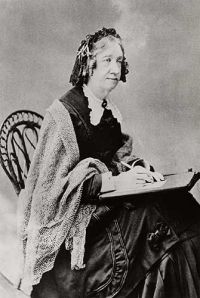 Catharine Esther Beecher,
American Woman's Home: Or, Principles of Domestic Science…
Catharine Esther Beecher,
American Woman's Home: Or, Principles of Domestic Science…
“ But care must be taken to determine between, the crying of pain or uneasiness, and the call for food; and the practice of giving an infant food, to stop its cries, is often the means of increasing its sufferings. ”
Henry William Fuller, Advice to medical students (1857)
“ And if it be necessary to observe propriety of conduct towards the dead, how careful should you be in your behaviour to the living—your poor, sick, suffering fellow-creatures, at whose bedside you are permitted to watch the ravages of disease, and to contemplate the approach of death. ”
 Henry Edward Manning,
The Eternal Priesthood
(1884)
Henry Edward Manning,
The Eternal Priesthood
(1884)
“ Even unto this hour we both hunger and thirst, and are naked, and are buffeted, and have no fixed abode. And we labour, working with our own hands; we are reviled, and we bless; we are persecuted, and we suffer it. ”
Louis Philippe McCarty, Health, Happiness, and Longevity
“ In short, the whole number of diseases that beset the human family can be cured by care, cleanliness, regularity, fresh air, cold water used internally, and by compress, proper clothing, right food, regular exercise, an even disposition, a clear conscience, intelligent and agreeable associates, and a reasonable amount of time. ”
 T. S. Arthur,
All's for the Best
T. S. Arthur,
All's for the Best
“ The mere natural acts of feeding the hungry and giving water to the thirsty, of visiting the sick, and those who lie in prison, of clothing the naked and entertaining strangers, will not save us in our last day, if we have neglected the higher duties involved in the divine admonition. ”
 Brigham Young,
Journal of Discourses — Volume 12…
Brigham Young,
Journal of Discourses — Volume 12…
“ Why you will not live half your days; you will come short of it, as much as the wicked. Is this true? It is verily true. You get up in the morning and have your cup of tea, your fried ham, your cold beef and mince pies, and everything you can possibly cram into the stomach, until you surfeit the system and lay the foundation for disease and early death. Says the mother—"Do eat, my little daughter, you are sick; take a piece of pie, toast, or meat, or drink a little tea or coffee ”
Solon Robinson, Hot corn: Life Scenes in New York Illustrated
“ Sad, harrowing as these scenes of wretchedness and misery are, they must be laid open to the gaze of the world. "Wounds must be seen to be healed." Weak nerves tremble at the idea that physicians cut and carve the dead, talking, aye laughing, as freely over the quiet heart and still nerves in the dissecting-room, as the butcher over his beef upon the market house block; yet without the dissecting of one and butchering of the other, how should the maimed be [321] healed, or meat-eating multitude be fed? So let us on with our panorama of scenes from life in New York. ”
 Lucius Annaeus Seneca,
Seneca's Morals of a Happy Life…
Lucius Annaeus Seneca,
Seneca's Morals of a Happy Life…
“ As for the calamities of hunger and thirst, inward ulcers, scorching fevers, tormenting fits of the stone, I look upon these miseries to be at least as grievous as any of the rest; only they do not so much affect the fancy, because they lie out of sight. ”
