Common interest
Definition and stakes
Quotes about “common interest”
John Percival, Sermons at Rugby
“ But all our common life is somehow the outcome of our separate individual lives—of your life and mine. Therefore how important it is in the common interest that each of us should look above all things to his own life and its character, for this will determine his contribution to the life of his society. ”
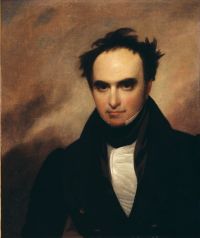 Daniel Webster,
Select Speeches of Daniel Webster…
Daniel Webster,
Select Speeches of Daniel Webster…
“ Let us remind them that we are all embarked together, with a common interest and a common fate. And let us, without rebuke or unkindness, beseech them to consider what the good of the whole requires, what is best for them and for us. ”
 James Harrington,
The Commonwealth of Oceana
James Harrington,
The Commonwealth of Oceana
“ Mankind then must either be less just than the creature, or acknowledge also his common interest to be common right. And if reason be nothing else but interest, and the interest of mankind be the right interest, then the reason of mankind must be right reason. Now compute well; for if the interest of popular government come the nearest to the interest of mankind, then the reason of popular government must come the nearest to right reason. ”
 Wilhelm Roscher,
Principles of Political Economy…
Wilhelm Roscher,
Principles of Political Economy…
“ As, in the structure of the world, the apparently opposing tendencies of the centrifugal and centripetal forces produce the harmony of the spheres, so, in the social life of man, self-interest and conscience produce in him the feeling for the common good.108 This sentiment of the common interest is the foundation on which rise in successive gradation, the life of the family, of the community, of the nation and of humanity, the last of which should be coincident with the life of the Church. ”
 Thomas Paine,
The Writings of Thomas Paine, Complete
Thomas Paine,
The Writings of Thomas Paine, Complete
“ The instant formal government is abolished, society begins to act: a general association takes place, and common interest produces common security. ”
 Woodrow Wilson,
The social center a means of common understanding
(1894)
Woodrow Wilson,
The social center a means of common understanding
(1894)
“ It is necessary that such portions of the community should be linked with the other portions; it is necessary that simple means should be found by which by an interchange of points of view we may get together, for the whole process of modern life, the whole process of modern politics, is a process by which we must exclude misunderstandings, exclude hostilities, exclude deadly rivalries, make men understand other men’s interests, bring all men into common counsel, and so discover what is the common interest. ”
 David Hume,
Philosophical Works, v. 2 (of 4…
David Hume,
Philosophical Works, v. 2 (of 4…
“ It is only a general sense of common interest; which sense all the members of the society express to one another, and which induces them to regulate their conduct by certain rules. I observe, that it will be for my interest to leave another in the possession of his goods, provided he will act in the same manner with regard to me. He is sensible of a like interest in the regulation of his conduct. When this common sense of interest is mutually expressed, and is known to both, it produces a suitable resolution and behaviour. ”
John Palmer Gavit, Americans by Choice
“ It is wholesome that groups of folk, coming together spontaneously about a nucleus of common interest, should consider together and act together, in regard to such public matters as they think concern them. ”
Thomas Paine,
The Writings of Thomas Paine, Complete
“ The landholder, the farmer, the manufacturer, the merchant, the tradesman, and every occupation, prospers by the aid which each receives from the other, and from the whole. Common interest regulates their concerns, and forms their law; and the laws which common usage ordains, have a greater influence than the laws of government. In fine, society performs for itself almost everything which is ascribed to government. ”
 Ralph Barton Perry,
The Moral Economy
Ralph Barton Perry,
The Moral Economy
“ Every interest is compelled to recognize other interests, on the one hand as parts of its environment, and on the other hand as partners in the general enterprise of life. Thus there is evolved the moral idea, or principle of action, according to which interest allies itself with interest in order to be free-handed and powerful against the common hereditary enemy, the heavy inertia and the incessant wear of the cosmos. Through morality a plurality of interests becomes an economy, or community of interests. ”
 Thomas Hill Green,
Lectures on the Principles of Political Obligation
Thomas Hill Green,
Lectures on the Principles of Political Obligation
“ And it is the interest of men in a common good, the desire on the part of each which he thinks of others as sharing, for a good which he conceives to be equally good for them, that transforms mere 'potentia' into what may fitly be called 'jus,' i.e. a power claiming recognition as exercised or capable of being exercised for the common good. ”
 Edmund Burke,
The Works of the Right Honourable Edmund Burke…
Edmund Burke,
The Works of the Right Honourable Edmund Burke…
“ This spirit of the body predominates equally in all its parts; by which the members must consider themselves as having a common interest, and that common interest separated both from that of the country which sent them out and from that of the country in which they act. ”
James Hayden Tufts, The Ethics of Coöperation
“ Whether originally suggested by some leader of thought or action, or whether a composite of many suggestions in the give and take of discussion or in experiences of common need, it is weighed and adopted as a common end. It is not the work or possession of leaders alone, but embodies in varying degrees the work and active interest of all. ”
 Carl Schurz,
Speeches, correspondence and political papers of Carl Schurz
(1913)
Carl Schurz,
Speeches, correspondence and political papers of Carl Schurz
(1913)
“ The exigencies of life render it necessary that the different elements and forms of society should coöperate together for common interests. They strengthen the desire for social order, they quicken the spirit of organization. ”
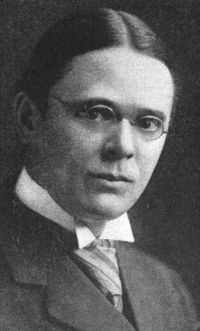 Roscoe Pound,
The Harvard Classics Vol. 51
(1914)
Roscoe Pound,
The Harvard Classics Vol. 51
(1914)
“ Moreover there are public interests, or claims which the organized political society may make, and social interests, or claims of society at large. Ultimately all interests, individual and public, are secured and maintained because of a social interest in so doing. But this does not mean that individual interests, the details of which the nineteenth century worked out so well, are to be ignored. ”
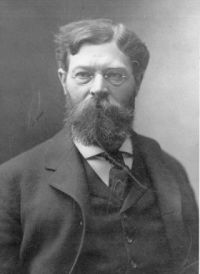 William De Witt Hyde,
Practical Ethics
William De Witt Hyde,
Practical Ethics
“ Here the recognition of a common good, a commonwealth in which each person has an equal worth with every other, is the only satisfactory solution. "Be a person, and [3] respect the personality of others," is the duty in this sphere. ”
Thomas Hill Green,
Lectures on the Principles of Political Obligation
“ They depend for their existence, indeed, on society, a society of men who recognise each other as ἴσοι καὶ ὅμοιοι, as capable of a common well-being, but not on society's having assumed the form of a state. ”
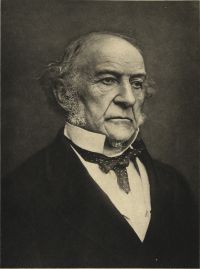 William Ewart Gladstone,
Prose Masterpieces from Modern Essayists…
(1891)
William Ewart Gladstone,
Prose Masterpieces from Modern Essayists…
(1891)
“ Questions affecting individuals, again, or small interests, or classes, excite here a greater interest, and occupy a larger share of time, than, perhaps, in any other community. In no country, I may add, are the interests of persons or classes so favored when they compete with those of the public ”
Francis B. Pearson, The Reconstructed School
“ They are drawn together in closer sympathy and good-will; artificial barriers disappear; and they all become interested in the common good. Their interests, purposes, and activities become unified, and life becomes better and richer. ”
 William Graham Sumner,
What Social Classes Owe to Each Other
(1883)
William Graham Sumner,
What Social Classes Owe to Each Other
(1883)
“ These persons are united by community of interest into a group, or class, or interest, and, when interests come to be adjusted, the interests of this group will undoubtedly be limited by those of other groups. ”
 John Henry Newman,
The Idea of a University Defined and Illustrated
John Henry Newman,
The Idea of a University Defined and Illustrated
“ The specific duties of that calling are exalted at the cost of those free and independent tastes and virtues which come in to sustain the common relations of society, and raise the individual in them. ”
John Rae, Contemporary Socialism
“ Many other social forces, national character, ideas, customs—the whole inherited ethos of the people—individual peculiarities, love of power, sense of fair dealing, public opinion, conscience, local ties, family connections, civil legislation—all exercise upon industrial affairs as real an influence as personal interest, and, furthermore, they exercise an influence of precisely the same kind. They all operate ethically, through human will, judgment, motives, and in this respect one of them has no advantage over another. ”
Archibald B. D. Alexander, Christianity and Ethics: A Handbook of Christian Ethics
“ The reduction of all aims to a common level, the equalising of social conditions, the direction and control of all private interests and personal endeavours, are to be means to one end—the material good of the community. ”
George W. Bell, Mr. Oseba's Last Discovery
“ Then society, as a whole, having an interest in each of its members, and a stake in the proceeds, must be the arbiter in all industrial disputes, and the interested parties, being loyal members of the social compact, must yield obedience to the public will. ”
 Timothy Thomas Fortune,
Black and White: Land, Labor, and Politics in the South
(1884)
Timothy Thomas Fortune,
Black and White: Land, Labor, and Politics in the South
(1884)
“ These peoples have and exercise mutual confidence, esteem and appreciation of their common rights! These peoples dissolve into one people! The bare statement of the case condemns it as impracticable, illusory, in the extreme. And, yet, these two peoples, so different in character, in education and material condition, were turned loose to enjoy the same benefits in common—to be one! ”
Ralph Barton Perry,
The Moral Economy
“ The reciprocity of interests, represents that rudimentary form of morality in which interests enter only into an external relation, through which they secure an exchange of benefits without abandoning their independence. In the incorporation of interests, elementary interests are unified through a purpose which subordinates and regulates them. The fraternity of interests, is that organization in which the rational or personal unit of interest is recognized as final, and respected wherever it is met. ”
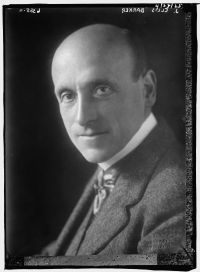 J. Ellis Barker,
British Socialism
J. Ellis Barker,
British Socialism
“ It insists on a moral regeneration of society of the most complete and searching kind in order to make a lasting foundation for the political and social changes we many of us long to see." [1211] "Convey it in what spirit we may, an appeal to class interest is an appeal to personal interest. ”
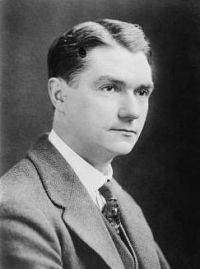 John Drinkwater,
Victorian Poetry
(1924)
John Drinkwater,
Victorian Poetry
(1924)
“ The common opinion, even the common critical opinion of some authority, that has been expressed in recent years about the Idylls of the King is a striking instance of this lack of balance and generosity. ”
Ralph Barton Perry,
The Moral Economy
“ The fulfilment of a simple isolated interest is good, but only the fulfilment of an organization of interests is morally good. Such goodness appears in the realization of an individual's systematic purpose or in the well-being of a community. ”
“ I regard utility as the ultimate appeal on all ethical questions; but it must be utility in the largest sense, grounded on the permanent interests of man as a progressive being. Those interests, I contend, authorise the subjection of individual spontaneity to external control, only in respect to [Pg 20] those actions of each, which concern the interest of other people. ”
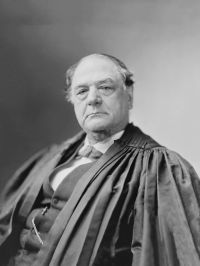 Noah Haynes Swayne,
Murray v. Lardner — Opinion of the Court
Noah Haynes Swayne,
Murray v. Lardner — Opinion of the Court
“ The interest of the community at large in the subject is deep-rooted and wide-branching. It ramifies in every direction, and its fruits enter daily into the affairs of persons in all conditions of life. ”
B. G. Jefferis and J. L. Nichols, Searchlights on Health — Social Duties (1919)
“ In other words, as a return for what you wish to have society do for you, what can you do for society? This is a very important question—more important to you than to society. The question is, whether you will be a member of society by right, or by courtesy. If you have so mean a spirit as to be content to be a beneficiary of society—to receive favors and to confer none—you have no business in the society to which you aspire. ”
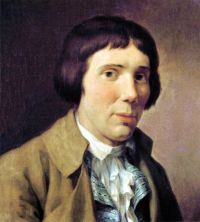 Karl Philipp Moritz,
Travels, chiefly on Foot, through several parts of England in 1782…
Karl Philipp Moritz,
Travels, chiefly on Foot, through several parts of England in 1782…
“ Yes, depend on it, my friend, when you here see how, in the happy country, the lowest and meanest member of society thus unequivocally testifies the interest which he takes in everything of a public nature; when you see how even women and children bear a part in the great concerns of their country ”
 Sarah Stickney Ellis,
The Daughters of England
(1842)
Sarah Stickney Ellis,
The Daughters of England
(1842)
“ How much is left undone, for the sake of society! But let us pause a moment, and ask what society is. Is it a community of tried and trusted friends, united together by the ties of perfect love? Listen to the remarks of those, even of your own family, who return from the evening party, or the morning call. Is it a community of beings with whom mind is all in all, and intellectual improvement the purpose for which they meet? Observe the preparations that are made—the dress, the furniture, the food, the expense that is lavished upon these. ”
Various, The Monist, Vol. 1, 1890-1891
“ The great importance of this idea consists in the fact that it expresses the common and permanent interests of individuals simultaneously and successively existing, in opposition to the interests of single individuals, or of a smaller group, or of a limited period of time. ”
 François Guizot,
Democracy in France. January 1849
François Guizot,
Democracy in France. January 1849
“ In the vast and complicated and ever-moving society of our days, general interests and principles, the sentiments of the masses, and the combinations of parties, have the entire possession and direction of public life. The private affections are ties too delicate to exercise any powerful influence over the conflicts of that pitiless field. ”
Herbert Croly, The Promise of American Life — Chapter VII (1909)
“ The virile democrat in pursuing his own interest "under the law" is contributing effectively to the interest of society, while the social interest consists precisely in the promotion of these individual interests, in so far as they can be equally exercised. ”
 Jeremy Bentham,
An Introduction to the Principles of Morals and Legislation…
(1780)
Jeremy Bentham,
An Introduction to the Principles of Morals and Legislation…
(1780)
“ It is in vain to talk of the interest of the community, without understanding what is the interest of the individual. ”
George Thomas Daly, Catholic Problems in Western Canada
“ Few make up their minds; they are made up for them.The common opinion which reflects the mind of the great majority, embodies the prevailing idea, the universal sentiment, and directs the common action is called. ”
Joseph Butler, Whole Works of Joseph Butler — Sermons 5 and 6 (1850)
“ Every man is to be considered in two capacities, the private and public; as designed to pursue his own interest, and likewise to contribute to the good of others. ”
 Helen H. Gardener,
Facts and Fictions of Life
Helen H. Gardener,
Facts and Fictions of Life
“ The question is, then, what is best for society as it is and as it is likely to be? What is best for society as it is now? Who is benefited or who harmed by the continuance of a loathesome relationship? Is the State and are the people interested in refusing to allow two people to correct a mistake once made? Is it for the good of anyone to make mistakes perpetual? I repeat that it is a question in economics and morals. ”
 Ralph Waldo Emerson,
Letters and social aims
(1875)
Ralph Waldo Emerson,
Letters and social aims
(1875)
“ These are the bases of civil and polite society; namely, manners, conversation, lucrative labor, and public action, whether political, or in the leading of social institutions. We have much to regret, much to [Pg 95] mend, in our society; but I believe that with all liberal and hopeful men there is a firm faith in the beneficent results which we really enjoy; that intelligence, manly enterprise, good education, virtuous life, and elegant manners have been and are found here, and, we hope, in the next generation will still more abound. ”
 Theodore Parker,
The Collected Works of Theodore Parker
(1863)
Theodore Parker,
The Collected Works of Theodore Parker
(1863)
“ Shall the people all be comfortable, engaged in honest work, which enriches while it elevates; or shall a part be the poorest of the world that a few may be idle and rich? It is a question of political morality. Shall the government be a commonwealth where all are citizens, or an aristocracy where man owns his brother man? ”
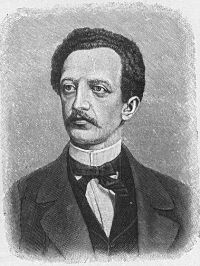 Ferdinand Lassalle,
The Working Man's Programme
(1884)
Ferdinand Lassalle,
The Working Man's Programme
(1884)
“ We have now seen, gentlemen, two periods of the world, each of which is dominated by the ruling idea of a particular class of the community which impresses its own principle on all the social arrangements of its time. ”
 John Stuart Mill,
Principles of Political Economy
(1871)
John Stuart Mill,
Principles of Political Economy
(1871)
“ But if public spirit, generous sentiments, or true justice and equality are desired, association, not isolation, of interests, is the school in which these excellences are nurtured. The aim of improvement should be not solely to place human beings in a condition in which they will be able to do without one another, but to enable them to work with or for one another in relations not involving dependence. ”
Lux Mundi: A Series of Studies in the Religion of the Incarnation…
“ Let us put on one side political life, local and national interests, all that sphere of mixed social relations, which is so imperfect, so full of fierce passions, of strife, envy, and ambition, so productive of distractions and entanglements. ”
Francis X. Hennessy, Citizen or Subject? (1923)
“ The great and paramount purpose was to unite this mass of wealth and power, for the protection of the humblest individual; his rights, civil and political, his interests and prosperity, are the sole end ”
Related terms
Authors who wrote about “common interest”
Ralph Barton PerryWilliam De Witt HydeWilliam Hazlitt John DeweyJohn Stuart MillWilliam Graham SumnerThomas Hill Green
 Jean-Jacques RousseauThomas PaineDavid HumeJohn Palmer GavitWoodrow WilsonJames HarringtonWilhelm RoscherDaniel WebsterEdmund BurkeJohn PercivalRoscoe PoundCarl SchurzJames Hayden Tufts