“ The problems that hedge about continuation schools are many, but it is clear that they will be regarded by educationists and by at least some employers as above all else training for citizenship based upon the vocation to which the boy or girl may be devoting himself or herself in working hours. The narrowness of the daily occupation, divorced as it is from the whole spirit and intent of apprenticeship, will be broadened directly the consideration of daily work is placed in the continuation school both on a higher plane and in a complete setting. ”
Continuation school
Definition and stakes
The theme of “continuation school” has been addressed by authors such as Evelyn Dewey, Randolph Silliman Bourne, Adoniram Judson Ladd, Arthur Henry Chamberlain and Francis B. Pearson. It is often associated with terms like teacher, curriculum, education, pupil and student.
Quotes about “continuation school”
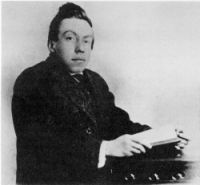 Randolph Silliman Bourne,
Education and living
(1917)
“ The groping and desiring spirit of youth is going indomitably to resist your most thoughtful schemes until you have a school [Pg 214] which from the earliest years, by its freedom, its expressive life, its broad communal and personal excitements, its contact with real things, provides a child-life which meets these inner needs. Our best American public schools already begin to show that such a child-community life is not at all impossible. Until we achieve it generally, our continuation school will be one of the stop-gaps, and a lusty warning of what we have failed to achieve. ”
Charlotte M. Mason, An Essay Towards a Philosophy of Education…
“ I have put the case for Continuation Schools as strongly as may be, but there is a more excellent way. In these days of high wages it may well happen that parents will be willing to let their children remain at school until the end of their seventeenth year, in which case they will be able to go on with the ‘secondary education’ which they have begun at the age of six and we shall see a new thing in the world. ”
Sigmund Engel, The Elements of Child-protection
“ The most important of all means of caring for young persons after they leave school, and one which supports and reinforces all the others we have enumerated, is the continuation school. 1. Owing to the defective character of public elementary education, it is necessary that it should be supplemented by continuing the child’s education when it has passed the age of obligatory school attendance. 2. Before the child enters a free life, what it has learned at school, much of which will already have been forgotten, requires to be retaught ”
Various, Popular Science Monthly (1911)
“ But they receive their real social background by the legal obligation of the employer to give to every boy the opportunity to attend these school classes. Compared with the general elementary school, the continuation school is professional, while the other is a humanistic school. On the other hand, compared with the real technical schools both lower and higher, it combines the technical instruction with general education. ”
Sigmund Engel, The Elements of Child-protection
“ To make attendance at a continuation school obligatory is an unmistakable tendency of evolution.The Tendency of Evolution.—The public elementary school becomes continually more uniform in character; it tends, that is to say, to become the common school for all children of a certain age, irrespective of the wealth or position of their parents, and to lay the foundation upon which will build all middle and higher educational institutions. ”
Mrs. S. A. Barnett, Practicable Socialism, New Series
“ Our labourers have not this intelligence because the boy’s mind, just opened at school, has been allowed to close; he has been taken away from learning just when it was becoming interesting. The obvious remedy is compulsory continuation schools, and these have been recommended again and again by investigators and committees. ”
1911 Encyclopædia Britannica (1911)
“ A similar solution of the continuation school problem has recently commended itself to the consultative committee Supplementary courses.of the Board of Education for England. Admission to the higher primary schools in France is only accorded to those who have obtained the elementary school leaving certificate, certificat d’études primaires. A feature of importance for continuation work in rural districts is the provision made for boarding scholars in attendance at these schools. ”
Various, Encyclopaedia Britannica, 11th Edition…
“ The schools are brought into close relation with trades, not only for purposes of curriculum, but also with a view to considering the exigencies and meeting the convenience of employers with respect to hours of attendance. (4) The discipline of the continuation school is extended to supervision out of school hours. “Visits to dancing-halls and all such exhibitions as are dangerous to uprightness and purity are forbidden to scholars of continuation schools.” ”
Joshua Girling Fitch and William Garnett, 1911 Encyclopædia Britannica (1911)
“ As subsidiary to their main work, some of them have established junior continuation schools, with a view to provide suitable instruction for scholars who have left the public elementary schools and are not yet prepared to enter the technical and trade classes. ”
Charles Hubbard Judd, Introduction to the scientific study of education
“ Continuation courses for adults are intended to carry on the schooling of people who for some reason or other have found it necessary to stop ordinary school work. In many cases continuation classes are conducted at night in what is commonly known as night school. Here there are two types of courses, one designed to give training in the conventional academic subjects, the other to give greater efficiency in the practical occupational life of the student. ”
Mrs. S. A. Barnett, Practicable Socialism, New Series
“ Continuation schools have greatly developed during late years. They are more frequent, they offer teaching which is more attractive and more adapted to the social needs of the neighbourhoods in which they have been opened. ”
Alexander Darroch, The Children: Some Educational Problems
“ Again, we require to make better provision for the technical training of our workmen. By a system of Evening Continuation Schools having as their aim the instruction of the youth in the arts underlying or subsidiary to his particular calling, we might do much to amend this defect. Moreover, the Evening Continuation Schools might play a much more important part than they now do in the securing of the future moral and civic efficiency of the individual and of the nation. ”
Evelyn Dewey, Schools of to-morrow
“ The pupils do not look forward to the last four years of school with dread of a hard and useless grind, they look at it as a continuation of their school life, getting harder from year to year as their own ability increases. And especially they regard this period as an189 opportunity to get training whose immediate value they can see. The arguments of the school to persuade the pupils to stay in school are practical, telling arguments, things the children can see. ”
Arthur Henry Chamberlain, The Condition and Tendencies of Technical Education in Germany
“ Certain definite relations between the primary and continuation schools must be observed; those coming into the latter with an inadequate underschool knowledge must be looked after; provision must be made for students of lesser as well as of more mature years ”
Francis B. Pearson, The Vitalized School
“ The studies are adapted to the boy and not the boy to the studies. No boy need discontinue school to find on the outside something that is congenial, for, within the school, he may find work that represents life in all its phases. ”
Various, The Continental Monthly, Vol. 6…
“ Nor is this the only reform which is needed in the education of our youth. The phrase 'completing one's education' is used to-day with utter looseness, and applied to that period when the youth leaves the school or college for the busy walks of life. ”
 H. G. Wells,
Mankind in the Making
“ And without deciding between these alternatives, we may note here for our present purpose, that the conception of a general upward prolongation of schooling beyond adolescence, as distinguished from a specific upward prolongation into professional training, is necessary to the complete presentation of the school and college scheme in the modern state. There has always been a tendency to utilize the gathering together of children in schools for purposes irrelevant to schooling proper, but of some real or fancied benefit. ”
Willis Fletcher Johnson, "My country, 'tis of thee!"
“ But, to come back to original facts, why does it take seven or eight years to impart a common, a very common, school course which any bright boy or girl of fifteen years could master alone and unaided in a quarter of the time? ”
F. P. O'Brien, The High School Failures
“ The existence of such a situation testifies to a sort of deep-seated faith in the dependence of the pupil's educational salvation on the successful repetition of some particular school subject. It shows no recognition that the duty of the school is to give each pupil the type of training best suited to his individual endowments and limitations, and at the same time in keeping with the needs of society. ”
John Kline, Student Success Act ( HR5 ; 113th Congress… (2013)
“ To help such children succeed in school, meet the State academic standards that all children are expected to meet, and graduate from high school prepared for postsecondary education and the workforce without the need for remediation. ”
Giovanni Gentile, The Reform of Education
“ It should be our purpose to construct, not to destroy. The school, this glorious inheritance of human experiences, this ever-glowing hearth where the human spirit kindles and sublimates life as an object of constant criticism and of undying love, may be transformed, but cannot be destroyed. Let the school live, and let us cling to the teacher and maintain his authority, which limits the spontaneity and the liberty of the pupil. ”
M. Alderton Pink, Procrustes; or, the future of English education (1927)
“ The fact is that the ordinary secondary school is attempting—unsuccessfully, of course—to give the same treatment to pupils of various types who, owing to lack of sufficiently varied provision for higher education, now find themselves herded together. ”
John S. Hart, In the School-Room: Chapters in the Philosophy of Education
“ The exit from the curriculum of the College or School, is, in truth, only the entrance into a more extended course. When your studies are nominally ended, they have really only begun. The longer you live, the more will you understand that the period of school-going is not the only, or even the main time of learning. The more thoroughly you have been taught here, the more certainly will you be a learner hereafter. I want no better test of the character of a school than the extent to which the idea prevails among its pupils and alumni, that it is a place for "finishing" one's studies. ”
Giovanni Gentile, The Reform of Education
“ The school, like every other form of education, develops; and as it grows, it constantly changes its content, which again is nothing else than the content that the spirit gives to itself at every moment of its concrete development.It would be just as irrational to expect a school to map out with precision the limits and the scope of a pupil’s culture. ”
Thomas R. Cole, Learning to Be a Schoolmaster
“ The schools are making strenuous efforts to give each individual pupil a chance to adjust himself to a vocation. The junior high school organization, classification of pupils according to ability, tests and measurements, and vocational guidance are all means to this end. The schoolmaster of tomorrow must realize that there is much good in the education of the past, but that the changing conditions in our social and industrial life must be met with similar readjustments in the program of education. ”
Thomas E. Sanders, Twenty Talks to Teachers (1908)
“ Keep pupils in school longer. Hundreds of pupils are kept in school and do good work because of their desire and their parents’ desire that they graduate. The desire for a diploma may not be the highest motive for an education, but so far all of our best institutions have found it necessary to hold to the custom. ”
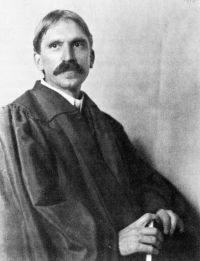 John Dewey,
The School and Society — The School and Social Progress
(1899)
“ If we were to conceive our educational end and aim in a less exclusive way, if we were to introduce into educational processes the activities which appeal to those whose dominant interest is to do and to make, we should find the hold of the school upon its members to be more vital, more prolonged, containing more of culture. But why should I make this labored presentation? The obvious fact is that our social life has undergone a thorough and radical change. If our education is to have any meaning for life, it must pass through an equally complete transformation. ”
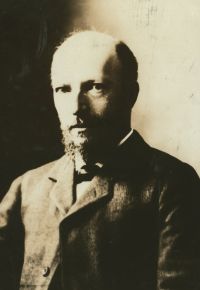 Felix Adler,
The Punishment of Children
“ But is it not possible to have schools in which every subject taught shall be made interesting to the scholars, in which the ways of knowledge shall become the ways of pleasantness, in which there shall be sufficient variety in the program of lessons to keep the minds of the pupils constantly fresh and vigorous, in which the pupils shall not be rewarded by being dismissed at an earlier hour than usual from the school, but in which possibly they shall consider it reward to be allowed to remain longer than usual? ”
 Boyd Winchester,
The Swiss Republic
(1891)
“ It is not contemplated to swing too far the pendulum of school reform, or to present a panacea. It is proposed to supplement the older scholastic culture with that which will make it take a firmer hold upon men’s minds, and will bring the school into closer harmony with the time-spirit. ”
 George S. Boutwell,
Thoughts on Educational Topics and Institutions
“ The struggle should be perpetual and in the right direction. First, elevate your common schools so that the education there may be a sufficient basis for a course of training here. If the Normal School and the public schools shall each and all do their duty, candidates for admission will be so well qualified in the branches required, that the art of teaching will be the only art taught here. ”
 Alice Mabel Bacon,
Japanese Girls and Women
“ There are many difficulties which lie in the way of the new schools that must be met, studied, and overcome. One of them is the one already referred to, the problem of how best to combine the new and the old in the school curriculum. That the old learning and literature, the old politeness and sweetness of manner, must not be given up or made little of, is evident to every right-minded student of the matter. ”
George S. Boutwell,
Thoughts on Educational Topics and Institutions
“ The academy and college take young men from the district and high schools, and furnish them with additional aids for the business of life; but the Normal School is truly the helper of the common schools. It receives its pupils from them, fits these pupils for teachers, and sends them back to superintend where a few months before they were scholars. ”
Randolph Silliman Bourne,
Education and living
(1917)
“ If the American college is to have a part in that new educational movement which is beginning to make the school not merely a preparation for life but life itself, interested in what has meaning to the student at his particular age and situation, it will have to recast some of its most cherished practices and ideals. ”
Charles H. Ham, Mind and Hand: Manual Training the Chief Factor in Education (1900)
“ We ventured to hope that such an example, having once been set, would not be without effect upon the common-school system at large, and that the extension of our work would proceed by the natural course of the ‘survival of what is fittest.’ It was decided, therefore, that the twenty-five graduates from the kindergarten should be invited to remain with us, that a complete school should be instituted, and that a teacher should be at once appointed to take in hand the instruction of the lowest class. ”
 Walter Pater,
Miscellaneous Studies; a series of essays
“ He seemed, in short, to harmonise by their combination in himself all the various qualities proper to a large and varied community of youths of nineteen or twenty, to which, when actually present there, he was felt from hour to hour to be indispensable. In fact school habits and standards had survived in a world not so different from that of school for those who are faithful to its type. ”
Karl Wilson Gehrkens, Essentials in Conducting (1919)
“ These desirable changes have not taken place in all schools by any means, but the results of their introduction have been so significant that a constantly increasing number of schools are adopting them; and public school education is to mean infinitely more in the future than it has in the past because we are seeing the necessity of looking at things through the eyes of the pupil, and especially from the standpoint of his life outside of and after leaving the school. ”
Francis B. Pearson, The Reconstructed School
“ Only so will its products be young men and women who need no leading strings, who can find their way about through the labyrinth of life and not be abashed. They are the ones to whom we must look for leadership in all the enterprises of life, for they have learned how to initiate work and carry it through to success. That school will win distinction which makes initiative one of its big goals and is diligent in causing the activities of the pupils to reach upward toward the achievement of this end. ”
Related terms
Authors who wrote about “continuation school”
Evelyn DeweyRandolph Silliman BourneAdoniram Judson LaddArthur Henry ChamberlainFrancis B. PearsonGeorge S. BoutwellCharles Hubbard JuddThomas E. Sanders Francisco Ferrer GuardiaM. Alderton Pink
 Alec WaughLevi SeeleySigmund EngelThomas R. ColeBessie Louise PierceCharles H. Ham
 William Torrey Harris
 Scott NearingF. P. O'Brien
 Ellen Key
Randolph Silliman BourneAdoniram Judson LaddArthur Henry ChamberlainFrancis B. PearsonGeorge S. BoutwellCharles Hubbard JuddThomas E. SandersFrancisco Ferrer GuardiaM. Alderton PinkAlec WaughLevi SeeleySigmund EngelThomas R. ColeBessie Louise PierceCharles H. HamWilliam Torrey HarrisScott NearingF. P. O'BrienEllen Key