Crêpe (fabric)

Definition and stakes

Various,  Encyclopaedia Britannica, 11th Edition…

“ There are two distinct varieties of the textile—soft, Canton or Oriental crape, and hard or crisped crape. The wavy appearance of Canton crape results from the peculiar manner in which the weft is prepared, the yarn from two bobbins being twisted together in the reverse way. The fabric when woven is smooth and even, having no crêpé appearance, but when the gum is subsequently extracted by boiling it at once becomes soft, and the weft, losing its twist, gives the fabric the waved structure which constitutes its distinguishing feature. ”

Source: Gutenberg

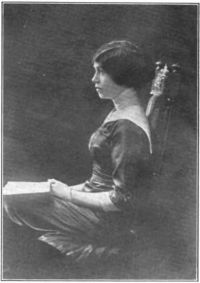
Portrait of Lillian Eichler Watson Lillian Eichler Watson,  Book of Etiquette, Volume II

“ For the mornings there must be several crisp, demure little frocks that are easy to launder. Bright colors match bright skies, and wide sashes are most becoming. For afternoon wear, frocks of taffeta, silk and organdie are suggested—colorful little frocks made with a regard for easy packing and attractiveness. Canton crêpe is a lovely material, especially when it is of pale apricot or Nile green—and it does not crush as easily as taffeta or organdie. A delightful frock for Southern wear is hand-sewn voile in a soft old rose shade. With it may be worn a large-brimmed straw hat of old rose. ”
Source: Gutenberg

A Book of Distinctive Interiors

“ If plain colored over-draperies are desired for the windows these may be made from cheese-cloth which has been dyed to the desired shade, matching the color of the flower in the wall paper. It is not a difficult matter for the amateur to do.
There are now made some very attractive cotton crepes showing a variety of floral and other patterns. Some of these are beautiful in color and good in design, and, with plain tinted walls, a room in [75] which the curtains and slip covers for cushions and pillows are made from this fabric is very attractive.
”
Source: Gutenberg

Get perspective with Kwize: daily news enlightened by great literature