Egg cell

Definition and stakes

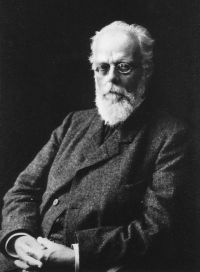
Portrait of August Weismann August Weismann,  Essays Upon Heredity and Kindred Biological Problems

“ We know, on the other hand, that when its growth is complete, after the formation of yolk and membranes, the egg contains germ-plasm, for it is capable of developing into an embryo. We have therefore, as it were, two natures in a single cell, which become manifest one after the other, and which, according to our fundamental conception, can only be explained by the presence of two different idioplasms, which control the egg-cell one after the other, and determine its processes of development. ”
Source: Gutenberg

Portrait of August Weismann August Weismann,  Essays Upon Heredity and Kindred Biological Problems

“ But the egg-cell of most animals, at any rate during the period of growth, is by no means an indifferent cell of the most primitive type. At such a period its cell-body has to perform quite peculiar and specific functions; it has to secrete nutritive substances of a certain chemical nature and physical constitution, and to store up this food-material in such a manner that it may be at the disposal of the embryo during its development. In most cases the egg-cell also forms membranes which are often characteristic of particular species of animals. ”
Source: Gutenberg

Various,  Popular Science Monthly (1908)

“ From a microscopic egg cell that shows but few differences in its various parts, grows up the adult body with its manifold organs; hairs and muscles, bones and lungs, these are not present as such in the egg cell, yet they gradually arise out of it and in the order of their use. The problem is: is such development regulated by energies of the egg cell, or by the operation of new stimuli and energies as the development proceeds? The marvel is the astounding precision of the process in spite of its complexity. ”
Source: Wikisource

Get perspective with Kwize: daily news enlightened by great literature