Expectorant

Definition and stakes

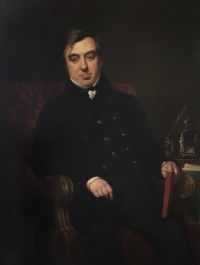
Portrait of John Ayrton Paris John Ayrton Paris,  Pharmacologia

“ According to the dose, and circumstances under which it is administered, it proves expectorant, diuretic, emetic, or purgative; as an expectorant, it can never be employed where pulmonary inflammation exists, for in such cases, instead of promoting, it will check any excretion from the lungs; its combination with a diaphoretic will frequently increase its powers, and generally be a measure of judicious caution. ”
Source: Gutenberg

Council on Pharmacy and Chemistry,  The Propaganda for Reform in Proprietary Medicines…

“ In the booklet it is further stated that the therapeutic action of the preparation is primarily that of a “stimulating expectorant” and secondarily as a “sedative expectorant”; that “its antiseptic action in the respiratory tract is prompt”; that it “is an effectual cardiac tonic where the tone of the heart muscle is impaired by fever”; that “in acute pulmonary conditions it effectively improves the respiratory action and allays cerebral irritation due to fever and toxins”; that it acts “as a vital stimulant and nerve sedative” ”
Source: Gutenberg

Portrait of John Ayrton Paris John Ayrton Paris,  Pharmacologia

“ This preparation certainly possesses considerable powers as an expectorant; especially if allowed to pass slowly over the fauces, as when applied in the form of a linctus, (Form: 135,) which by stimulating the top of the trachea may possibly act, by a kind of “contiguous sympathy,” upon the pulmonary structure, [596] and thereby increase the activity of the exhalant vessels, and so dilute the mucus contained in the follicles as to cause it to be poured out in a less viscid form, and consequently in a state to be more easily brought up by expectoration. ”
Source: Gutenberg

Get perspective with Kwize: daily news enlightened by great literature