“ for while every one well knows himself to be fallible, few think it necessary to take any precautions against their own fallibility, or admit the supposition that any opinion, of which they feel very certain, may be one of the examples of the error to which they acknowledge themselves to be liable. Absolute princes, or others who are accustomed to unlimited deference, usually feel this complete confidence in their own opinions on nearly all subjects. ”
Fallibility
Definition and stakes
The theme of “fallibility” has been addressed by authors such as John Stuart Mill, Henry Watterson, M. Valentine and Charlotte M. Mason. It is often associated with terms like fallacy, error, opinion, infallibility and truth.
Quotes about “fallibility”
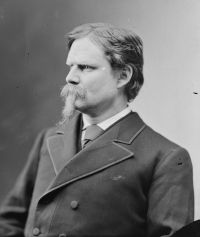 Henry Watterson,
Marse Henry: An Autobiography…
Henry Watterson,
Marse Henry: An Autobiography…
“ This is merely to note the mortal fallibility of man, most fallible when herded in groups and prone to do in the aggregate what he would hesitate to do when left to himself and his individual accountability. ”
M. Valentine, Theoretical Ethics
“ The reality of a faculty is not disproved by its fallibility. Finiteness, limitation and consequent incompetence to exclude mistake or only partial discernment, are no reason for denying the existence of any faculty within the range of its given action and real discriminations. The very errors that appear in its action are at once evidence of its existence and proof of limitations which harmonize it with the aggregate human psychology. ”
Charlotte M. Mason, An Essay Towards a Philosophy of Education…
“ We know, too, and this other certainty must be pressed home to them, that reason, so far from being infallible, is most exceedingly fallible, persuadable, open to influence on this side and that; but is all the same a faithful servant, able to prove whatsoever notion is received by the will. Once we are convinced of the fallibility of our own reason we are able to detect the fallacies in the reasoning of our opponents and are not liable to be carried away by every wind of doctrine. ”
 Samuel Taylor Coleridge,
Aids to Reflection; and, The Confessions of an Inquiring Spirit
Samuel Taylor Coleridge,
Aids to Reflection; and, The Confessions of an Inquiring Spirit
“ Whatever the doctrine of infallible dictation may be in itself, in their hands it is to the last degree nugatory, and to be paralleled only by the Romish tenet of Infallibility,—in the existence of which all agree, but where, and in whom, it exists stat adhuc sub lite. Every sentence found in a canonical Book, rightly interpreted, contains the dictum of an infallible Mind;—but what the right interpretation is,—or whether the very words now extant are corrupt or genuine—must be determined by the industry and understanding of fallible, and alas! ”
Various, The Catholic World, Vol. 11, April…
“ A dumb infallibility that cannot find its voice for centuries, even to contradict the potent and ostentatious error that takes its name in vain—is that the sort of divine authority to which human reason will willingly go into captivity? ”
M. Valentine, Theoretical Ethics
“ Fifthly, we must add that the reality of this faculty, as an essential endowment of the human soul, by no means involves infallibility in its action. No one of the human faculties is, in all its range and the application of its data, absolutely infallible, incapable of error or of being misled. ”
 F. H. Bradley,
Appearance and Reality — Chapter XXVII
(1893)
F. H. Bradley,
Appearance and Reality — Chapter XXVII
(1893)
“ In theory you cannot indulge with consistency in an ultimate doubt. You are forced, willingly or not, at a certain point to assume infallibility. For, otherwise, how could you proceed to judge at all? ”
Various, Donahoe's Magazine, Volume 15, No…
“ And I shall now go on to state what are the real difficulties and burdens to me, as to many other Catholics perhaps, in this doctrine of infallibility; always premising that ten thousand difficulties do not make one doubt. ”
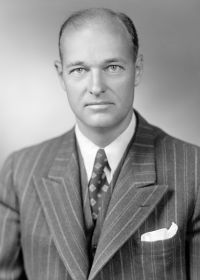 George F. Kennan,
The Sources of Soviet Conduct
(1947)
George F. Kennan,
The Sources of Soviet Conduct
(1947)
“ Perfect discipline requires recognition of infallibility. Infallibility requires the observance of discipline. ”
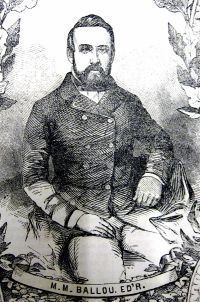 Maturin M. Ballou,
Pearls of Thought
Maturin M. Ballou,
Pearls of Thought
“ Failure.—But screw your courage to the sticking-place, and we'll not fail!—Shakespeare.Albeit failure in any cause produces a correspondent misery in the soul, yet it is, in a sense, the highway to success, inasmuch as every discovery of what is false leads us to seek earnestly after what is true, and every fresh experience points out some form of error which we shall afterward carefully eschew.—Keats.Every failure is a step to success; every detection of what is false directs us toward what is true; every trial exhausts some tempting form of error. ”
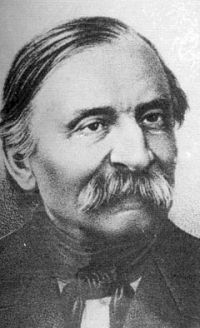 János Kriza,
The Folk-tales of the Magyars
(1889)
János Kriza,
The Folk-tales of the Magyars
(1889)
“ To this they all agreed, and search was made; and soon they found Falsehood, whom they instantly tore to pieces, coiled up her bowels into knots, burnt her, and dispersed her ashes to the winds. But even her dust was so malignant that it was carried all over the world; and that is the reason that wherever men exist there Falsehood must be. ”
Wilhelmina Stitch, Where sunlight falls (1929)
“ If Fate should bring a nasty shock, if Life should give the real hard knock, if everything should go awry—it's Failure urges us to try. 'Tis Failure says, "I won't give in. I have a second chance to win." ”
St. George William Joseph Stock, Deductive Logic
“ Whenever in the course of our reasoning we are involved in error, either the conclusion follows from the premisses or it does not. If it does not, the fault must lie in the process of reasoning, and we have then what is called a Logical Fallacy. If, on the other hand, the conclusion does follow from the premisses, the fault must lie in the premisses themselves, and we then have what is called a Material Fallacy. ”
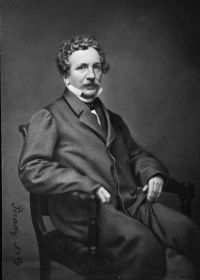 G. P. R. James,
Forest Days: A Romance of Old Times
G. P. R. James,
Forest Days: A Romance of Old Times
“ For the first time in life, I shall soil my soul with an untruth--I shall take a false oath--I shall be defeated, disgraced, with the judgment of God pronouncing that I am perjured, and die, leaving a stained and blackened name behind.--And yet, to withdraw the charge is impossible! ”
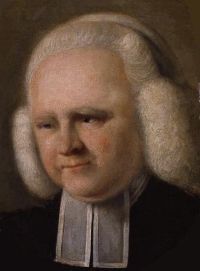 George Whitefield,
The works of the Reverend George Whitefield…
(1771)
George Whitefield,
The works of the Reverend George Whitefield…
(1771)
“ It must be confessed, that through the corruption of our depraved nature, and that power, which self-will has, since the Fall, usurped in the soul, we must necessarily break through a great many obstacles. ”
Tiruvalluvar, Tirukural — Chapter 38 (1886)
“ The fate that loss ordains makes wise men's wisdom foolishness; The fate that gain bestows with ampler powers will wisdom bless. An adverse fate produces folly, and a prosperous fate produces enlarged knowledge. ”
 Samuel Johnson,
The Works of Samuel Johnson, LL.D. in Nine Volumes…
Samuel Johnson,
The Works of Samuel Johnson, LL.D. in Nine Volumes…
“ So deeply is this fallacy rooted in the heart, and so strongly guarded by hope and fear against the approach of reason, that neither science nor experience can shake it, and we act as if life were without end, though we see and confess its uncertainty and shortness. ”
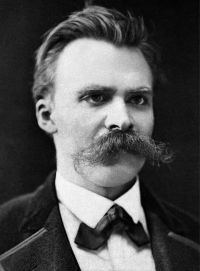 Friedrich Wilhelm Nietzsche,
The Joyful Wisdom ("La Gaya Scienza"…
Friedrich Wilhelm Nietzsche,
The Joyful Wisdom ("La Gaya Scienza"…
“ Fallacy, Fallacy.—He cannot rule himself; therefore that woman concludes that it will be easy to rule him, and throws out her lines to catch him;—the poor creature, who in a short time will be his slave. ”
Barnette Miller, Leigh Hunt's Relations with Byron…
“ His chief fallacy lay in the failure to recognize evil as an inherent force in human nature and to acknowledge sect and state, to which he attributed the origin of all error, as inventions of man’s ingenuity. ”
G. A. Johnston, An Introduction to Ethics, for Training Colleges… (1915)
“ When I judge that in so far as in me lies I shall realise a certain end, the endeavour to realise that end becomes ipso facto an integral part of the conception of myself. Failure to realise it is regarded as my failure, my defeat. ”
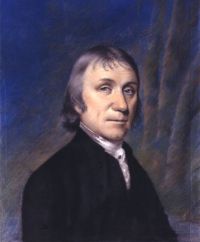 Joseph Priestley,
Essay on the First Principles of Government…
(1771)
Joseph Priestley,
Essay on the First Principles of Government…
(1771)
“ It is for the interest of truth that every thing be viewed in fair and open day light, and it can only be some sinister purpose that is favoured by darkness or concealment of any kind. My sentiments may be fallacious, but if no body were allowed to write against me, how could that fallacy be made to appear? ”
 Ralph Waldo Emerson,
Compensation
(1841)
Ralph Waldo Emerson,
Compensation
(1841)
“ The fallacy lay in the immense concession, that the bad are successful; that justice is not done now. The blindness of the preacher consisted in deferring to the base estimate of the market of what constitutes a manly success, instead of confronting and convicting the world from the truth; announcing the presence of the soul; the omnipotence of the will: and so establishing the standard of good and ill, of success and falsehood. ”
Daniel Wright Kittredge, The Memoirs of a Failure: with an Account of the Man and His Manuscript (1908)
“ But this time it seems I was mistaken.“I take it that you are a failure in your native land,” quoth the ruler, “for those who are failures are usually ‘bored’, to use your tongue. Is it not so, thou parasite of the warm ocean land?”“True it is, O Excelsior,” I replied, “but my failure is due not to me; it is the fault of——” Here he cut me short with an interruption:“Those who are failures,” quoth he, “ever place the cause of their failure upon others, while those who attain success always accredit it to themselves.” ”
 John Wesley Powell,
Truth and Error — Chapter XXIII.
(1898)
John Wesley Powell,
Truth and Error — Chapter XXIII.
(1898)
“ Fallacies of reflection are fallacies of time and cause, and they may be classed as misreflections and myths. The misreflections are a fourth group of illusions and the myths a fourth group of delusions. ”
 John Stuart Mill,
Autobiography
John Stuart Mill,
Autobiography
“ From that time I drew, in my own mind, a clear distinction between the doctrine of circumstances and Fatalism; discarding altogether the misleading word Necessity. The theory, which I now for the first time rightly apprehended, ceased altogether to be discouraging; and, besides the relief to my spirits, I no longer suffered under the burden—so heavy to one who aims at being a reformer in opinions—of thinking one doctrine true and the contrary doctrine morally beneficial. ”
Robert Forbes, The Lyon in Mourning, Vol. 1
“ But one who reads with a little care will easily see the fallacy. What occasion has a Prince who has learnt the secret of corrupting the fountain of all laws to disturb the ordinary course of justice? ”
Eliza Allen Southall, A Brief Memoir with Portions of the Diary…
“ How easy, comparatively, to let any want go unsatisfied, rather than that imperious reason which urges its claim with so many good pretences, which tells us truth will always bear investigation, and that if we cannot explain by our small faculties experiences in which the highest mysteries are involved, the experiences must have been fallacious! ”
John Wesley Powell,
Truth and Error — Chapter XVIII.
(1898)
“ So many judgments have been found fallacious by every individual in the race of men, and fallacious judgments have led to such dire disasters, and have been repeated so often in matters of profound moment, as well as in matters of superficial consequence, that there has grown up a habit of mind by which incongruity of judgments is taken as a signal that danger lurks in the way. ”
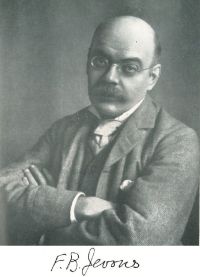 F. B. Jevons,
The Idea of God in Early Religions
F. B. Jevons,
The Idea of God in Early Religions
“ So too we may admit—we have no choice but to admit—that there are spiritual fallacies, as well as fallacies of logic. Of such are the petitions which are in form prayers, just as logical fallacies are, in form, arguments. They may be addressed to the being worshipped, as fallacies are addressed to the reason; and eventually their fallacious nature may become evident even to the reason of man. ”
 Marie Corelli,
Ardath: The Story of a Dead Self
Marie Corelli,
Ardath: The Story of a Dead Self
“ Everywhere signs of weakness, cowardice, compromise, hesitation, vacillation, incompetency, and everywhere, in thoughtful minds, the keen sense of a Fate advancing like the giant in the seven-leagued boots, at huge strides every day. ”
William James, The Will to Believe and Other Essays in Popular Philosophy… (1897)
“ Now, I say that these theorizers are guilty of precisely the same fallacy as he who should ascribe the death of his friend to the dinner with thirteen, or the fall of the sparrow to the milky way. Like the dog in the fable, who drops his real bone to snatch at its image, they drop the real causes to snatch at others, which from no possible human point of view are available or attainable. ”
 Meredith Nicholson,
The provincial American and other papers
(1913)
Meredith Nicholson,
The provincial American and other papers
(1913)
“ Imagine my bewilderment when I found that a case which is likely to prove weak before one infallible judge may be shifted with little trouble to another, equally infallible, but with views known to be friendly to the cause in question. ”
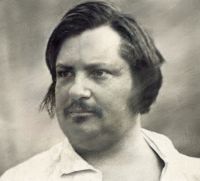 Honoré de Balzac,
A Daughter of Eve
(1895)
Honoré de Balzac,
A Daughter of Eve
(1895)
“ The idea of failure in the face of the world and that society he had so lately entered and meant to rule, of leaving the chariot of the countess and becoming once more a muddied pedestrian, was more than he could bear. ”
Anonymous, John Ronge; The Holy Coat of Treves…
“ If my point has not been gained, and all parties have not been equally satisfied, it has arisen from a fallacy in the plan, not from premeditated carelessness on my part, which alone would be culpable. ”
 George Grote,
Plato and the Other Companions of Sokrates…
George Grote,
Plato and the Other Companions of Sokrates…
“ To expose fallacy or inconsistency, was found to be both an easier process, and a more appreciable display of ingenuity, than the discovery and establishment of truth in such manner as to command assent. ”
William James, Psychology: Briefer Course
“ The so-called 'fallacy of the senses,' of which the ancient sceptics made so much account, is not fallacy of the senses proper, but rather of the intellect, which interprets wrongly what the senses give. ”
 William Shakespeare,
King Henry the Fifth
William Shakespeare,
King Henry the Fifth
“ Take heed, lest by nice and subtle sophistry you burthen your knowing soul, or knowingly burthen your soul, with the guilt of advancing a false title, or of maintaining, by specious fallacies, a claim which, if shown in its native and true colours, would appear to be false. ”
John Wesley Powell,
Truth and Error — Chapter XX.
(1898)
“ The fallacy of being struck is a fallacy of sensation, but the fallacy of having pain is a fallacy of feeling. Similar cases are often witnessed on the frontier, where men experience an adventurous life. ”
John Wesley Powell,
Truth and Error — Chapter XIX.
(1898)
“ Judgments of reflection seem to be especially subject to error and as such to be compounded into false concepts and to be long entertained as such. In the act of making the judgment there must be judgments of bodies impinging on one another, leading to judgments of apprehension. ”
 David Graham Phillips,
The Grain of Dust: A Novel
David Graham Phillips,
The Grain of Dust: A Novel
“ Of these hallucinations the most grotesque is that the weak can come together, can pass a law to curb the strong, can set one of their number to enforce it, may then disperse with no occasion further to trouble about the strong. ”
graf Leo Tolstoy, The Kingdom of God is Within You…
“ And the most surprising part of all is that human lethargy is so profound that men credit these theories, although the whole structure of life, and every stage in human progress, demonstrate their fallacy. ”
John Stuart Mill,
A System of Logic, Ratiocinative and Inductive
(1881)
“ In attempting to establish certain general distinctions which shall mark out from one another the various kinds of Fallacious Evidence, we propose to ourselves an altogether different aim from that of several eminent thinkers, who have given, under the name of Political or other Fallacies, a mere enumeration of a certain number of erroneous opinions ”
John Wesley Powell,
Truth and Error — Chapter IX.
(1898)
“ When the characteristics which belong to a kind and make it a kind were considered as the attributes of distinct entities, called essences, then the name was considered to be one of these essential attributes or properties by which the class was designated. Thus a fallacy was made to breed a fallacy, and the two fallacies grew up together and are often connected, and how can you dispel the fallacy of essence without dispelling the fallacy of inherent name? Thus a pair of ghosts stalk the world together, and fight each other’s battles. ”
 Mary Baker Eddy,
Science and Health with Key to the Scriptures
(1906)
Mary Baker Eddy,
Science and Health with Key to the Scriptures
(1906)
“ Self-destroying error; a kingdom divided against itself, which cannot stand; material knowledge, The higher false knowledge builds on the basis of evidence obtained from the five corporeal senses, the more confusion ensues, and the more certain is the downfall of its structure. ”
John Stuart Mill,
A System of Logic, Ratiocinative and Inductive
(1881)
“ For every property, therefore, in facts, or in our mode of considering facts, which leads us to believe that they are habitually conjoined when they are not, or that they are not when in reality they are, there is a corresponding kind of Fallacy; and an enumeration of fallacies would consist in a specification of those properties in facts, and those peculiarities in our mode of considering them, which give rise to this erroneous opinion. ”
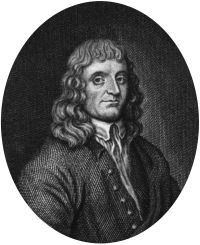 Richard Gilpin,
Dæmonologia Sacra; or, A Treatise of Satan's Temptations
Richard Gilpin,
Dæmonologia Sacra; or, A Treatise of Satan's Temptations
“ First, Naturally to error rather than truths. The corruption of our nature is general, and doth not only dispose the will and affections to practical iniquities, but doth also incline the understanding to error and misapprehension. ”
William Mathews, Words; Their Use and Abuse
“ A popular fallacy, which is partly verbal, is the notion, so tenaciously held by many, that exposure to hardship, and even want, in youth, is the cause of the bodily vigor of those men who have lived to a good age in countries with a rocky soil and a bleak climate. What is more natural, it is argued, than that hardships should harden the constitution? ”
