Function (biology)

Definition and stakes

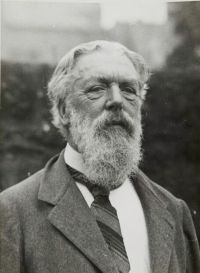
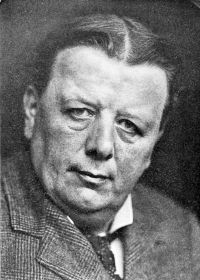
Portrait of Herbert Spencer Herbert Spencer,  The Principles of Biology, Volume 1…

“ There is an ensemble of vital phenomena presented by each organism in the course of its growth, development, and decay; and there is an ensemble of vital phenomena presented by the organic world as a whole. Neither of these can be properly dealt with apart from the other. But the last of them may be separately treated more conveniently than the first. What interpretation we put on the facts of structure and function in each living body, depends entirely on our conception of the mode in which living bodies in general have originated. ”
Source: Gutenberg

Portrait of Herbert Spencer Herbert Spencer,  The Principles of Biology — Chapter II.8 (1898)

“ For if an organism A, has, by any peculiar habit or condition of life, been modified into the form A′, it follows that all the functions of A′, reproductive function included, must be in some degree different from the functions of A. An organism being a combination of rhythmically-acting parts in moving equilibrium, the action and structure of any one part cannot be altered without causing alterations of action and structure in all the rest ”
Source: Wikisource

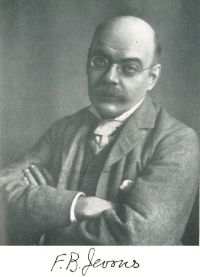
Portrait of F. B. Jevons F. B. Jevons,  Evolution

“ We learn most truly what a thing is from observing what it becomes, what use it subserves, what end it answers, what purpose it fulfils—in a word, when we know not its mechanical but its final cause. In biology, knowledge of an organ means knowledge of its function—that is, of its purpose; and evolutional biology also teaches that function is the cause of the organ.
It is by observing what a thing becomes that we learn the part it may hereafter play in the general scheme of things, and come to know its real nature, and estimate it at its real value.
”
Source: Gutenberg

Get perspective with Kwize: daily news enlightened by great literature