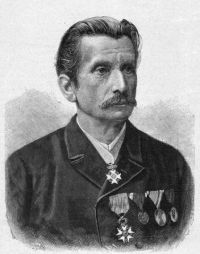
 Leopold von Sacher-Masoch,
Venus in Furs
(1870)
Leopold von Sacher-Masoch,
Venus in Furs
(1870)
“ "Perhaps, even a 'Venus in Furs.' Watch out, I have a large, very large fur, with which I could cover you up entirely, and I have a mind to catch you in it as in a net." ”
Leopold von Sacher-Masoch,
Venus in Furs
(1870)
“ "Perhaps, even a 'Venus in Furs.' Watch out, I have a large, very large fur, with which I could cover you up entirely, and I have a mind to catch you in it as in a net." ”
Arno Erdman Schmidt, The Accomplished Muskrat Trapper…
“ Though the condition of the pelt is an important factor in determining the value of furs, the fur on fur side is of much more importance, also more difficult to grade and assort intelligently. The quality of the fur bespeaks the real value of the skin. ”
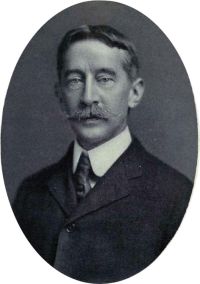 George Bird Grinnell,
Jack the Young Trapper: An Eastern Boy's Fur Hunting in the Rocky Mountains
George Bird Grinnell,
Jack the Young Trapper: An Eastern Boy's Fur Hunting in the Rocky Mountains
“ There were seen the roots of the long hairs sticking up through a sort of fur or down, such as may be seen next to the skin of an elk or a deer when it is shedding its winter coat."There," said Hugh, "do you see that fur that grows next to the skin? Most animals in this cold climate develop that during the winter, and you can see that it's almost like the fur on the otter, the beaver, or the muskrat. It must keep out the cold in great shape." ”
Various, Short Stories: A Magazine of Fact and Fiction…
“ There is a dark stream crawling through the fur, meandering and choosing its crooked way like a little brook in the summer grasses, and it creeps on and on lazily toward the polished hearth. It will run on until the flames drink it ... ”
M. M. Backus, Fur and the Fur Trade (1879)
“ Of the fur-bearers, those that seek their food in water have their finest but shortest fur on the belly, and longer fur upon the back; while those that avoid the rivers have their longest and finest fur upon the back, and their bellies clothed with fine, long, flowing overhair. ”
The Yellow Fairy Book (1894)
“ See, I have had a fur cloak made for each of us, and if we put them on I shall not feel the heat so much nor you the cold.’ So they put on the fur cloaks, and set out cheerfully on their way, and for the first time in their lives quite happy in each other’s company. ”
James Johonnot, Friends in Feathers and Fur, and Other Neighbors…
“ We find that he has a coat of fine fur, which he always keeps clean, and a long tail that has no hair. He has whiskers like the cat; sharp claws, so that he can run up the side of a house, or climb anything that is a little rough; and eyes that can see in the night.4. He has large ears, so that he can hear the faintest sound; and short legs, so that he can creep into the smallest hole. ”
Various, The Century Illustrated Monthly Magazine…
“ Every few minutes something furry, like the hallucination of a gigantic mouse, would scurry across our path, or a great creaky croak would be hurled at our heads from the groaning branches above. And, with every fresh horror, I got closer to the heels of the human animal in front of me, until I was in danger of having my nose skinned by the barrel of the gun, or stepping on the protruding heels of his heavy boots, into which his faded overalls were stuffed. ”
 William Henry Giles Kingston,
The Western World
William Henry Giles Kingston,
The Western World
“ When the fur is used for robes, or similar purposes, the black tuft at the end of the tail is sewn on at regular distances to the skin, giving to the ermine fur the appearance we are all familiar with. ”
 Robert Armitage Sterndale,
Natural History of the Mammalia of India and Ceylon
Robert Armitage Sterndale,
Natural History of the Mammalia of India and Ceylon
“ The fur is of two kinds, one long and coarse, but the other, or under fur, is beautifully soft and close, and is the ordinary sealskin of commerce. The roots of the coarse hair go deeper into the skin than those of the under fur, so the furrier takes advantage of this by thinning the skin down to the coarse roots, cutting them free, and then the hairs are easily removed, leaving the soft fur attached to the skin. ”
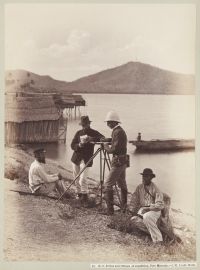 Henry Ogg Forbes,
A Hand-book to the Primates — Cebinae
(1894)
Henry Ogg Forbes,
A Hand-book to the Primates — Cebinae
(1894)
“ Characters.—Entirely black; fur silky, and longer on the head and tail than on the body; fur on top of head directed from behind forwards, falling over the forehead, meeting the backwardly directed hairs of the forehead and forming a tuft. Face black, the upper part naked; chin with stiff black hairs mixed with a few white ones. Ears oval and human-like in form, the upper part movable at will. ”
George W. Hunter, A Civic Biology, Presented in Problems
“ Fur.—The furs of many domesticated and wild animals are of importance. The Carnivora as a group are of much economic importance as the source of most of our fur. The fur seal fisheries alone amount to many millions of dollars annually. Otters, skunks, sables, weasels, foxes, and minks are of considerable importance as fur producers. Even cats are now used for fur, usually masquerading under some other name. The fur of the beaver, one of the largest of the rodents or gnawing mammals, is of considerable value, as are the coats of the chinchilla, muskrats, squirrels, and other rodents. ”
Rosalind Murray, The happy tree
“ She has a red leather coat, with fur up round her throat, and very big fur gauntlets, right up to her elbows. She always goes about in her car, even into the village. There is only room for two, and she sometimes takes one of the children. ”
William E. Austin, Principles and Practice of Fur Dressing and Fur Dyeing
“ Fur-bearing animals are mammals whose skins are used in the manufacture of fur garments and other fur wearing apparel. The skin, when it is removed from the animal is called a pelt, or sometimes, in the case of large animals, a hide. The pelt, after having been dressed and dyed, is called a fur, the skin part being referred to as the leather, [3] and the hair as the pelage. However, this terminology is not strictly adhered to in practise, and the various terms are often employed interchangeably. ”
Dorothy Furniss, Drawing For Beginners (1920)
“ It is easier, of course, to draw the breeds that have short and silky hair than those that are clothed in long plumes of fur, for then we can see the shape of their limbs, the symmetry of their bodies. A bull-terrier is easier to draw than a sky-terrier, a greyhound easier than a borzoi. ”
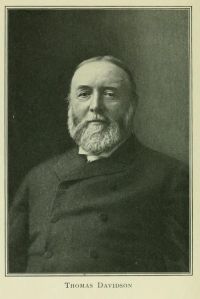 Thomas Davidson,
Chambers's Twentieth Century Dictionary 1908…
(1908)
Thomas Davidson,
Chambers's Twentieth Century Dictionary 1908…
(1908)
“ Fur, fur, n. the short, fine hair of certain animals: their skins with the fur prepared for garments: rabbits, hares, as opposed to partridges, pheasants (feathers) : (Milt.) kind or class, from the idea of particular furs being worn by way of distinction: a fur-like coating on the tongue, the interior of boilers, &c.—v.t. to line with fur: to cover with morbid fur-like matter:—pr.p. fur′ring ”
Walter Sutherland Parker, 1911 Encyclopædia Britannica (1911)
“ The fur differs from the overhair, in that it is soft, silky, curly, downy and barbed lengthwise, while the overhair is straight, smooth and comparatively rigid. These properties of fur constitute its essential value for felting purposes, and mark its difference from wool and silk; the first, after some slight preparation by the aid of hot water, readily unites its fibres into a strong and compact mass; the others can best be managed by spinning and weaving. ”
William E. Austin, Principles and Practice of Fur Dressing and Fur Dyeing
“ Pretty color, luster, thickness, softness, length, uniformity and regular fall of the hair are the chief points to be considered. While the leather part of the fur is of secondary importance in the evaluation of a fur, it must possess strength, lightness of weight, and when properly dressed, should be supple and have a certain firmness or ‘feel.’ The abundance or scarcity of a fur-bearing animal also determines the value of the fur. Furs which are always comparatively rare, such as silver fox, Russian sable, chinchilla, etc., are always highly prized. ”
F. L. Gillette, The Whitehouse Cookbook (1887)
“ Furs when taken out in the fall are often found to have a mussed, crushed-out appearance. They can be made to look like new, by following these simple directions: Wet the fur with a hair-brush, brushing up the wrong way of the fur. ”
May Kellogg Sullivan, A Woman who went to Alaska
“ At night I am in the habit of tossing my fur coat upon my bed for the warmth there is in it, as I am not the possessor of a fur robe, as all persons should be who winter here. Furs are the only things to keep the intense cold out in such weather as we are now having, but with some management I get along fairly well. ”
J. A. Costello, The Siwash, Their Life, Legends…
“ Quaint little fellows they are, with beady black eyes that see everything, and a shining coat of brown fur which they oil and comb every time they can find a warm sunny nook where the wind doesn’t blow too brisk. They are not very shy if left alone and can often be seen swimming about or perched on some snag smoothing their coat with a little black paw or huddled up until they look like a brown ball of fur as big as your two fists. ”
 Evariste Régis Huc,
Travels in Tartary, Thibet, and China during the years 1844-5-6…
Evariste Régis Huc,
Travels in Tartary, Thibet, and China during the years 1844-5-6…
“ By degrees the new hair shows itself, in the form of fine, soft, curling wool, which gradually becomes a long, thick fur, capable of resisting the extremest inclemency of the weather. The greatest delight of the animal is to walk in the teeth of the north wind, or to stand motionless on the summit of a bill, beaten by the storm and inhaling the icy wind. ”
Henry Hiram Riley, The Puddleford Papers; Or, Humors of the West
“ When the fur is good, in the winter, we jest went round with our ice-chisels and knocked their houses to pieces, when away they would go for their washes, as we used to call 'em, where we fastened 'em in and catch'd 'em. ”
Leopold von Sacher-Masoch,
Venus in Furs
(1870)
“ She had wrapped her marble-like body in a huge fur, and rolled herself up trembling like a cat. ”
Dorothy Furniss, Drawing For Beginners (1920)
“ The fur being short and unmarked will not conceal and confuse the structure to the same extent; moreover, the light will strike on the glossy coat and define the big bony shapes more sharply, the flanks, thigh, shoulder, head, and paws. Whether we sketch Pussy asleep or awake, reclining on a wall, or playing with a leaf, we cannot fail to notice his Fig. 36 Mufti the Catand Robin the Puma invariable grace. Never do you see an awkward or ungainly movement. Which fact alone should be an invaluable training for our pencil. ”
The Garnet Story Book: Tales of Cheer Both Old and New (1920)
“ My fur boots are as much a part of me as my beard. Lady, I am, indeed, a foreigner, as to society; I was born in no city, town, or village, but in a cave full of dry leaves and soft twigs. The truth is, I am not a man—but a Bear!”As he finished speaking he took off his comforter, coat, and cap—and sure enough a Bear he was, and one of the largest that was ever seen! ”
 Albert Bigelow Paine,
Hollow Tree Nights and Days
Albert Bigelow Paine,
Hollow Tree Nights and Days
“ My folks thought those great tails were handsome, especially our young people, who would walk about waving them and practise carrying them in new positions, and about once a week would do up the long, thick fur on them in little knots, tied with tough, twisted grass, which would make the hair curl and look very showy indeed. Even some of my ancestors who happened to get old acted in that foolish way, and when the fur got thin would wear some kind of false stuff, though any one but a blind person could always tell it. ”
William E. Austin, Principles and Practice of Fur Dressing and Fur Dyeing
“ In fact, an accurate knowledge of the nature and chief characteristics of furs in general, and of the individual classes, in particular, is almost indispensable to obtain the best results. The habits and habitats of the various fur-bearing animals are factors which largely determine the constitution of the fur, and the nature of the skin. There are as many different kinds of fur hair, with as many different kinds of skin bearing the hair, as there are classes of furs. ”
Richard Lydekker, Animal portraiture (1912)
“ Short-legged and stoutly built, it has relatively small, membranous ears, large brilliant eyes, a rather sharp muzzle, small toes, and short claws. The glossy, hairy fur is underlain by a thick woolly under-fur. ”
Walter Sutherland Parker, 1911 Encyclopædia Britannica (1911)
“ Quality and Colour.—The best fur is obtained by killing animals when the winter is at its height and the colder the season the better its quality and colour. Fur skins taken out of season are indifferent, and the hair is liable to shed itself freely ”
Various, The Mirror of Literature, Amusement…
“ You are exceedingly well made; your fur boasts of the delicate varieties of the tiger; your eyes are lively and pleasing; your velvet coat and tail are of enviable beauty; and your agility, gracefulness, and docility are, indeed, the admiration of all who behold you! Your moral qualities are not less estimable ”
William E. Austin, Principles and Practice of Fur Dressing and Fur Dyeing
“ A distinction which is made by fur dressers and dyers, and also by the fur trade in general, divides furs into those derived from domestic animals, particularly the various kinds of sheep, including also the goat species, and those obtained from other animals by trapping. ”
William E. Austin, Principles and Practice of Fur Dressing and Fur Dyeing
“ A cold winter generally produces fur of high quality and fine color, a mild winter may [4] cause the hair to be inferior. In all climates, animals found in dense woods, have fur which is deeper, silkier, thicker, and glossier than that of animals living in the open. Animals inhabiting inland lakes and rivers, have finer and softer hair than those living near the coast or land exposed to sea winds. In general, the hair of animals of the cold regions is short, fine, soft, and downy, while the hair of animals of warmer lands, is longer, stiffer, and harder. ”
 Richard von Krafft-Ebing,
Psychopathia Sexualis
(1892)
Richard von Krafft-Ebing,
Psychopathia Sexualis
(1892)
“ Fur is such an object of sexual interest for me that a man wearing fur that is effective (v. infra) makes a very unpleasant, repugnant, and disgusting impression on me; such as would be made on a normal person by a man in the costume and attire of a ballet-dancer. ”
E. N. Woodcock, Fifty Years a Hunter and Trapper
“ It is not a natural way for the fur on the animal to lay, pitching towards the head of the animal, and especially if there is any grease, blood, or other matter that would dry, causing the fur to stick out like the quills on a fretful porcupine. ”
 Don Marquis,
Danny's Own Story
Don Marquis,
Danny's Own Story
“ I'll be gosh-derned if I meddle. So fur as I can see that there perfessor ain't getting fur from what's coming to him, nohow. And as fur her, you got to let some people find out what they want fur theirselves. ”
 Julia McNair Wright,
Nature readers
(1891)
Julia McNair Wright,
Nature readers
(1891)
“ All the time that he is on land he maintains an absolute fast. In the water his food is fishes, crustaceans, and squids, [83] of which he eats enormous quantities.”“But the fur!” cries Catherine, “the fur! I see nothing on this beast like my lovely, soft, dark cloak. This creature is covered with coarse gray hair.”“Step a little closer, my Catherine, and let us examine into this important matter. The seal wears two coats: the outer one is this coarse, grizzly hair, the inner one is a short, close, soft, elastic, silky fur. ”
 Camille Flammarion,
Thunder and Lightning
Camille Flammarion,
Thunder and Lightning
“ Their fur or their plumage, which form an intrinsic part of their bodies, put them more or less in the situation of a man who, to protect himself from inclemency, should envelop himself in his hair, supposing this to be long enough and rich enough to cover him decently. ”
Worthington Hooker, The Child's Book of Nature
“ And it is curious, that if an animal with thick fur is taken from the cold country where he belongs to a warm climate, and kept there, his fur gradually loses its fineness and thickness, and becomes like hair. ”
Thomas S. Gowing, The Philosophy of Beards — Artistic (1875)
“ This view he supported by instancing, "that the bear, the rabbit, the cat, and the bird, are hideous to look upon when deprived of their hairy and feathery decorations: but the horse, the greyhound, and other animals so sparingly covered that the shape remains unaltered by the fur, are beautiful even in their naked forms." This argument, it seems to me, applies with greater force to the various ages of man. ”
Walter Sutherland Parker, 1911 Encyclopædia Britannica (1911)
“ The French influence upon the trade has been, and still is, primarily one of style and combination of colour, bad judgment in which will mar the beauty of the most valuable furs. It is a recognized law among high-class furriers that furs should be simply arranged, that is, that an article should consist of one fur or of two furs of a suitable contrast, to which lace may be in some cases added with advantage. ”
Chesla Clella Sherlock, Care and Management of Rabbits (1920)
“ In practically every rabbit show you attend now-a-days you will see an exhibition of furs made from the pelts of the domesticated rabbit. The American Blue rabbit makes a wonderful set of furs, and muffs that cannot be equalled. ”
 William A. Alcott,
The Young Mother: Management of Children in Regard to Health
William A. Alcott,
The Young Mother: Management of Children in Regard to Health
“ Their fur, on the approach of cold weather, not only becomes whiter, and therefore conducts the heat away from the body more slowly, but, as every dealer in furs well understands, it becomes softer and thicker. ”
Elmer Harry Kreps, Science of Trapping
“ The fur, or more properly speaking, the hair, is long and appears to be parted on the back as it hangs off to either side from a line down the center of the back. Each separate hair shows a number of colors and it is this which gives the animal the peculiar grizzled appearance. Although the animal is, as before stated, of a heavy build, the casual observer would scarcely credit the animal with the great strength which it really possesses, because of the apparently soft and flabby body, however, the strength of the animal is surprising. ”
