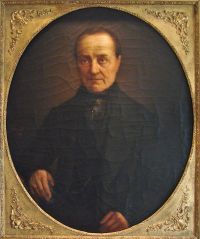
 Auguste Comte,
A General View of Positivism
Auguste Comte,
A General View of Positivism
“ There are three successive states of morality answering to the three principal stages of human life; the personal, the domestic, and the social stage. ”
The concept of human life includes the existence of Homo sapiens from birth to death, exploring its ethical, social, and existential aspects. Thinkers such as Auguste Comte associated morality with life’s phases, whereas William James underscored the significance of daily human experiences.
Leo Tolstoy tied labor to well-being, and Charles Henry Brent stressed interdependence. Robert Rainy pondered how to navigate life’s intricacies, and C. H. Herford concentrated on intellectual and ethical growth. These viewpoints together portray human life as a fusion of personal meaning and communal advancement, influenced by both individual and societal dynamics.
Auguste Comte,
A General View of Positivism
“ There are three successive states of morality answering to the three principal stages of human life; the personal, the domestic, and the social stage. ”
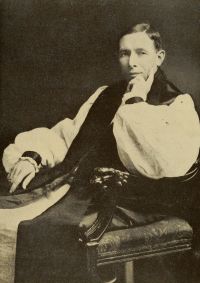 Charles Henry Brent,
With God in the World: A Series of Papers
Charles Henry Brent,
With God in the World: A Series of Papers
“ We are becoming more and more conscious of how close-wrought are the fibres of the human race; we recognize how the life of any one man affects the life of his fellows, and how the individual can gather into his own soul the sorrows and joys, the perplexities and aspirations of many people. ”
William James, Talks To Teachers On Psychology…
“ I understood that these things might be charming pastimes, but that one need seek in them no depth, whereas the life of the hard-working populace, of that multitude of human beings who really contribute to existence, appeared to me in its true light. I understood that there veritably is life, that the meaning which life there receives is the truth ”
 Robert Rainy,
The Expositor's Bible: The Epistle to the Philippians
Robert Rainy,
The Expositor's Bible: The Epistle to the Philippians
“ But how to take the right attitude and bear the right mind towards this various, manifold, engrossing, wonderful human life, as it unfolds for us here—how shall that be done? Some have tried to answer by amputating large sections of human experience. ”
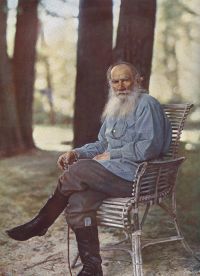 Leo Tolstoy,
My Religion
(1885, 2nd edition, 1889)
Leo Tolstoy,
My Religion
(1885, 2nd edition, 1889)
“ Work is the inevitable condition of human life, the true source of human welfare. ”
William James, The Varieties of Religious Experience (1902)
“ If we were to ask the question: “What is human life's chief concern?” one of the answers we should receive would be: “It is happiness.” How to gain, how to keep, how to recover happiness, is in fact for most men at all times the secret motive of all they do, and of all they are willing to endure. ”
 Brigham Young,
Journal of Discourses — Volume 7…
Brigham Young,
Journal of Discourses — Volume 7…
“ Whether I stand or walk, whether I labour or rest, lie down or rise up, in all my acts in life there is an object. I have something in view, you have something in view, and so has the whole human family, as also all intelligence of every grade. ”
 William Edward Hartpole Lecky,
The Map of Life
William Edward Hartpole Lecky,
The Map of Life
“ Yet the life which seems to be comparatively blameless has in truth wholly missed, while the other life, in spite of all its defects, has largely attained what should be the main object of a human life, the full development and useful employment of whatever powers we possess. ”
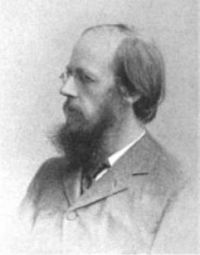 C. H. Herford,
Shakespeare's treatment of love & marriage…
(1921)
C. H. Herford,
Shakespeare's treatment of love & marriage…
(1921)
“ The other aspect is constructive; the building up of the intellectual and moral framework of a worthy human life, by setting forth the true nature of the universe, the history of life, and the development of man ”
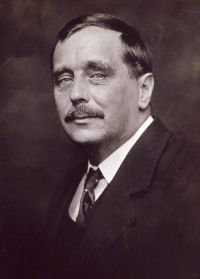 H. G. Wells,
The Salvaging of Civilization
H. G. Wells,
The Salvaging of Civilization
“ The answer to that Why, probes deep into the question of human motives.It must be because we are all creatures of our immediate surroundings, because our minds and energies are chiefly occupied by the affairs of every day, because we are all chiefly living our own lives, and very few of us, except by a kind of unconscious contribution, the life of mankind. ”
Alexander James Duffield, What I Know of the Labour Traffic (1884)
“ Prove to yourselves that you have made this spiritual and moral discovery, and that the discovery gives you a passionate delight and satisfaction; you will have brought in a new industrial era, you will have solved the mystery of social life and give an absolutely intelligible reason for the continuity of human endeavour. ”
William Edward Hartpole Lecky,
The Map of Life
“ These things lie deep in human nature and in the fundamental conditions of human life. The changes that are taking place, and which seem likely to strengthen in the future, lie chiefly in the importance attached to different qualities. ”
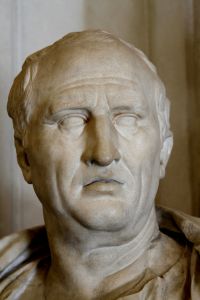 Marcus Tullius Cicero,
Cicero's Tusculan Disputations
(1888)
Marcus Tullius Cicero,
Cicero's Tusculan Disputations
(1888)
“ But human nature, when placed in a conspicuous point of view, gives us every argument for appeasing the mind, and, to make this the more distinct, the laws and conditions of life should be explained in our discourse. ”
H. G. Wells,
The Salvaging of Civilization
“ In the preceding papers I have, with some repetition and much stumbling, set out a fairly complete theory of what men and women have to do at the present time if human life is to go on hopefully to any great happiness and achievement in the days to come. Much of this material was first prepared to be delivered to a lecture audience, and I regret that ill-health has prevented a complete re-writing of these portions. ”
 Harriet Martineau,
How to Observe: Morals and Manners
Harriet Martineau,
How to Observe: Morals and Manners
“ The two considerations just mentioned must be subordinated to the grand one,—the only general one,—of the relative amount of human happiness. Every element of social life derives its importance from this great consideration. ”
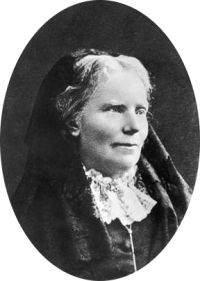 Elizabeth Blackwell,
Essays in medical sociology, Volume 2…
(1902)
Elizabeth Blackwell,
Essays in medical sociology, Volume 2…
(1902)
“ This principle is of very wide application.What produces the noblest human creature now in our nineteenth century? What inspires hope? What sustains us most bravely to fight the battle of life? What makes life most worth living?When we have ascertained these facts in the present, they will explain the past, and give the foundations of right for guidance in the future. ”
Thomas W. Shannon, Self Knowledge and Guide to Sex Instruction…
“ Money and pleasure more valuable than manhood.—We have seen what man has accomplished among the vegetables, fruits and domestic animals, now let us study his wisdom in the application of these agencies in the human family. When we study man in relation to the world about him, his physical, mental and moral possibilities, and from Revelation, we get a glimpse of what the human race ought to be. In both sacred and profane history we find some specimens of noble, ideal manhood. ”
The Forerunner, Volume 1 (1909-1910…
“ To them this question may be put: "Can you mention any form of life that merely 'is,' without doing anything?"Taken separately and physically, we are animals, genus homo; taken socially and psychically, we are, in varying degree, human; and our real history lies in the development of this human-ness. ”
 Josiah Royce,
The Religious Aspect of Philosophy
(1885)
Josiah Royce,
The Religious Aspect of Philosophy
(1885)
“ Find work for the life of the coming moral humanity which shall be so comprehensive and definite that each moment of every man’s life in that perfect state, however rich and manifold men’s lives may then be, can be and will be spent in the accomplishment of that one highest impersonal work. If such work is found and accepted, the goal of human progress will be in so far reached. ”
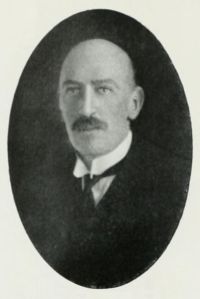 Maurice Baring,
Landmarks in Russian literature
(1910)
Maurice Baring,
Landmarks in Russian literature
(1910)
“ He shows us bits of the everyday life of human beings as we see it, and his pictures of ordinary human beings, rooted in certain circumstances, and engaged in certain avocations, reveal to us further glimpses of the life that is going on inside these people. ”
 John Ruskin,
Selections From the Works of John Ruskin
John Ruskin,
Selections From the Works of John Ruskin
“ But if you can fix some conception of a true human state of life to be striven for—life, good for all men, as for yourselves; if you can determine some honest and simple order of existence; following those trodden ways of wisdom, which are pleasantness, [228] and seeking her quiet and withdrawn paths, which are peace;—then, and so sanctifying wealth into "commonwealth," all your art, your literature, your daily labours, your domestic affection, and citizen's duty, will join and increase into one magnificent harmony. You will know then how to build, well enough; ”
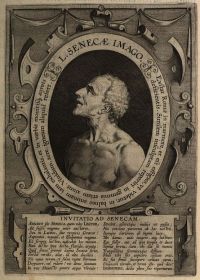 Lucius Annaeus Seneca,
Seneca's Morals of a Happy Life…
Lucius Annaeus Seneca,
Seneca's Morals of a Happy Life…
“ but he that lays down precepts for the governing of our lives and the moderating of our passions, obliges human nature not only in the present, but in all succeeding generations. ”
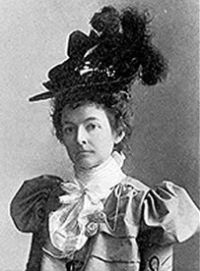 S. Frances Harrison,
Ringfield: A Novel
S. Frances Harrison,
Ringfield: A Novel
“ I have preached upon this—that to each individual man, woman and child, there comes—there must and will come a time, when material success, health, wealth and happiness are non-important, and when moral issues, when duty, character and conduct are the great essential facts of life to be met and grappled with. ”
 Sarah Stickney Ellis,
The Daughters of England
(1842)
Sarah Stickney Ellis,
The Daughters of England
(1842)
“ Each day of your life will prove that you have decided, and are acting upon the decision you make on this momentous point. Your conduct in society proves it, your behaviour in your family, every thought which occupies your mind, every wish you breathe, every plan you form, every pleasure you enjoy, every pain you suffer—all prove whether it is your object to live for yourself, or for others. Again, is it your aim to live for this world only, or for eternity? ”
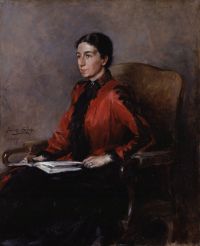 Mrs. Humphry Ward,
The History of David Grieve
Mrs. Humphry Ward,
The History of David Grieve
“ Around thee are the institutions, the ideals, the knowledge and beliefs, ethical or intellectual, in which that work, that life, have been so far fragmentarily and partially realised. Submit thyself and press forward. Thou knowest well what it means to be better: more pure, more loving, more self-denying. ”
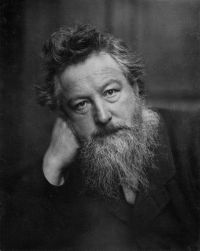 William Morris,
Signs of Change
William Morris,
Signs of Change
“ First, a healthy body; second, an active mind in sympathy with the past, the present, and the future; thirdly, occupation fit for a healthy body and an active mind; and fourthly, a beautiful world to live in.These are the conditions of life which the refined man of all ages has set before him as the thing above all others to be attained. ”
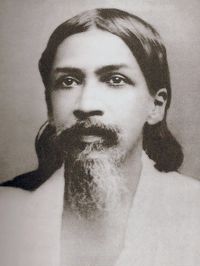 Aurobindo Ghose,
Essays On The Gita
(1922)
Aurobindo Ghose,
Essays On The Gita
(1922)
“ Nor did it conside- man primarily as a social being or the fullness of his social existence as the highest ideal, but rather as a spiritual being in process of formation and development and his social life, ethical law, play of temperament and exercise of function as means and stages of spiritual formation. ”
William James, Psychology: Briefer Course
“ Of all these wider, more potential selves, the potential social Me is the most interesting, by reason of certain apparent paradoxes to which it leads in conduct, and by reason of its connection with our moral and religious life. ”
Emory Adams Allen, The Golden Gems of Life; Or, Gathered Jewels for the Home Circle
“ Every claim of duty, the employment of each minute, the daily vexations or trials we are called upon to bear, the momentary decisions that must be made, the casual interview, the contact with sin or sorrow in every-day dress—all, these and many others as small and as constant, are the real opportunities of life. These we are continually embracing or neglecting, and out of them we are forming a character that is fast consolidating into the shape we gave it for good or for evil. ”
 Ralph Waldo Emerson,
Essays by Ralph Waldo Emerson
Ralph Waldo Emerson,
Essays by Ralph Waldo Emerson
“ Let them then become organs of the Holy Ghost; let them be lovers; let them behold truth; and their eyes are uplifted, their wrinkles smoothed, they are perfumed again with hope and power. This old age ought not to creep on a human mind. In nature every moment is new; the past is always swallowed and forgotten; the coming only is sacred. Nothing is secure but life, transition, the energizing spirit. No love can be bound by oath or covenant to secure it against a higher love. No truth so sublime but it may be trivial to-morrow in the light of new thoughts. ”
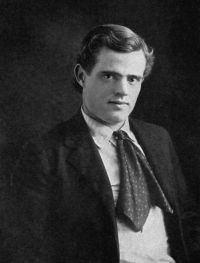 Jack London,
Revolution, and Other Essays
Jack London,
Revolution, and Other Essays
“ But my idea is that everybody ought, without fail, to know solidly what he is living for. Is it possible that a man is born to toil, accumulate money, build a house, beget children, and—die? No; life means something in itself. ”
William James, Talks To Teachers On Psychology…
“ Thy people,... when they have finished reaping one field, they begin to plough another; and, if the day were not enough, I have seen them plough by moonlight. What is their life to ours,—the life that is as naught to them? Blind that they are, they lose it all! But we live in the present. ”
Josiah Royce,
The World and the Individual, Second Series
(1901)
“ And nevertheless, your future and your past, your aspect of individuality, and of freedom, and the various aspects wherein you are dependent upon the rest of the world, your whole life of deeds, and your attainment of your individual goal through your deeds, — all these manifold facts that are yours and that constitute you, are present at once to the Absolute, — as facts in the world, as temporal contents eternally viewed, — as a process eternally finished, — but eternally finished precisely by virtue of the temporal sequence of your deeds. ”
Samuel Smiles, Self Help; with Illustrations of Conduct and Perseverance
“ The highest object of life we take to be, to form a manly character, and to work out the best development possible, of body and spirit—of mind, conscience, heart, and soul. This is the end: all else ought to be regarded but as the means. ”
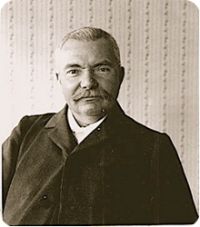 Charles Wagner,
The Simple Life
Charles Wagner,
The Simple Life
“ WHEN one passes in review the individual causes that disturb and complicate our social life, by whatever names they are designated, and their list would be long, they all lead back to one general cause, which is this: the confusion of the secondary with the essential. Material comfort, education, liberty, the whole of civilization—these things constitute the frame of the picture ”
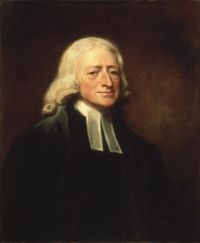 John Wesley,
The works of the Rev. John Wesley…
John Wesley,
The works of the Rev. John Wesley…
“ And in that day shall be discovered every inward working of every human soul: every appetite, passion, inclination, affection, with the various combinations of them, with every temper and disposition that constitute the whole complex character of each individual. ”
Josef Donat, The Freedom of Science
“ Without Knowledge of the Human Nature. “Varied, according to character, are the demands made by heart and mind,” assures us a representative of modern philosophy, “corresponding to them is the image of the world to which the individual turns by inner necessity. ”
J. D. Buck, The New Avatar and The Destiny of the Soul
“ Repetitions in the text seemed unavoidable for the reason, that at every phase of the subject I have continually to regard the Individual, and that aggregate called Society; the inner conscious life of one, and the associate elements and conditions regarding the many, and from different viewpoints. ”
William James, Talks To Teachers On Psychology…
“ I already said something of this in speaking of the constructive impulse, and I must not repeat myself. Moreover, you fully realize, I am sure, how important for life,—for the moral tone of life, quite apart from definite practical pursuits,—is this sense of readiness for emergencies which a man gains through early familiarity and acquaintance with the world of material things. ”
 Maria Montessori,
The Montessori Method
Maria Montessori,
The Montessori Method
“ But if we give a comprehensive glance to the moral progress of society, we shall see that little by little, the yoke is being made easier, in other words, we shall see that nature, or life, moves gradually toward triumph. ”
baron d' Paul Henri Thiry Holbach, The System of Nature, or, the Laws of the Moral and Physical World…
“ Let us, then, good humouredly consult reason, avail ourselves of experience, interrogate nature; we shall, perhaps, find what is requisite to be done, in order to labour efficaciously to the happiness of the human race. ”
Mosiah Hall, Parent and Child Volume III., Child Study and Training
“ Crowning these and transcending them in importance are the supreme sentiments and ideals of life, which cannot properly be regarded as habits; they are sympathy, love, faith, reverence for religious convictions, and the ideal of freedom or liberty.Society itself could not endure but for the stability which habits afford. ”
 Annie Payson Call,
Nerves and Common Sense
Annie Payson Call,
Nerves and Common Sense
“ And whether the life we are living is quiet and commonplace, or whether it is full of change and adventure, to be of the greatest and most permanent use, a life must have as its habitual background plain every-day common sense. ”
Thomas Davis, Thomas Davis, selections from his prose and poetry
“ The study of the thoughts and deeds of great men, the laws of human, and animal, and vegetable, and lifeless nature, the principles of fine and mechanical arts, and of morals, society, and religion—all directly give us nobler and greater desires, more wide and generous judgments, and more refined pleasures. ”
 Laurence Housman,
Ploughshare and Pruning-hook
(1919)
Laurence Housman,
Ploughshare and Pruning-hook
(1919)
“ And I shall hope, by and by, to show that you cannot be social without also being ornamental; it is the beginning of that connecting link which shall presently make men realise that life is one, and that all life is good. ”
W. Y. Sellar, The Roman Poets of the Augustan Age…
“ The forms which the highest spiritual life in an age or an individual assumes, the power of free and happy development which it obtains, or the limitations to which it has to submit, can, to a very considerable extent, be explained by reference, in the case of nations, to the political, social, and material circumstances of the age, and, in the case of the individual, to his early life and environment, his education and personal fortunes. ”
Various, Popular Science Monthly (1884)
“ On one of these occasions, when I felt myself falling from life, I saw a great black ocean like a rocky wall bounding the formless chaos into which I sank. As I watched in descending the long line of towering, tumultuous waves break against some invisible barrier, a sighing whisper by my side told me each tiny drop of spray was a human existence which in that passing instant had its birth, life, and death. ”
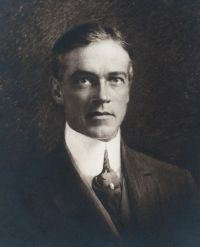 Victor Mapes,
Heart and Soul by Maveric Post
Victor Mapes,
Heart and Soul by Maveric Post
“ Down below them, is another question which is included in them all and which sooner or later must be faced by each and every one of us: "Why am I here on earth? Has my life any purpose in the great, everlasting scheme of things? What is that purpose?" ”
William Morris,
Signs of Change
“ We must begin to build up the ornamental part of life—its pleasures, bodily and mental, scientific and artistic, social and individual—on the basis of work undertaken willingly and cheerfully, with the consciousness of benefiting ourselves and our neighbours by it. ”
Ralph Waldo EmersonVarious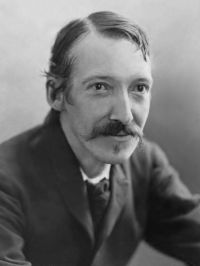 Robert Louis Stevenson
 Maurice Maeterlinck
 Arthur Schopenhauer
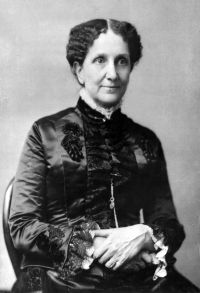 Mary Baker G. EddyH. G. WellsAuguste ComteWilliam Edward Hartpole Lecky
 Henry David ThoreauLeo Tolstoy
 Swami VivekanandaJosiah RoyceJohn Ruskin
 Michel de MontaigneWilliam Morris
 Charles Darwin
 John Stuart Mill