“ In a word, the most momentous conflict is not between health and sickness, development or degeneration, but between the two equally strong, healthy, and beautiful forms of life: the life of the soul or the life of the family.Many women, who see the necessity of deciding for one or the other, choose the former and thus avoid or limit their motherhood, since they believe themselves to have another, richer contribution to make to civilisation. But would not the race have gained more by the talents of which these gifted women might have been the mothers? ”
Key word
Definition and stakes
The theme of “key word” has been addressed by authors such as Brainerd Kellogg, Anna Marie Miles, Ellen Key, John Stuart Mill and William James. It is often associated with terms like language, thought, meaning, mind and grammar.
Quotes about “key word”
Anna Marie Miles, The Key to Peace
“ It seems that every person should open his heart and mind to the Word of God and accept Christ with an open mind and consider it the greatest privilege in this world to live for Christ, the Creator of all mankind. ”
Anna Marie Miles, The Key to Peace
“ Be careful to obey the Word of God, and do not let others influence you to do wrong. Be strong and courageous to stand for right and truth. Dear Grandson, there will be many in the world who will sneer at you for your stand for right. Some will persecute you, but don't let this influence you to let down your standard from God of what is right. God expects us to obey Him. Others might try to make you think that the way they have figured it out is right, but still we must obey the Lord. ”
 Ellen Key,
The Education of the Child
“ It is very easy to keep one's son from expressing his raw views, very easy to tear a daughter away from her book and to bring her to a tea-party by giving her unnecessary occupations; very easy by a scornful word to repress some powerful emotion. A thousand similar things occur every day in good families through the whole world. ”
Anna Marie Miles, The Key to Peace
“ Even as the natural seed changes soil into plants, so the living seed of the Word changes the character of the individual who comes in contact with it. For example, in the night of the Dark Ages when the Word of God was planted by the Holy Spirit in the hearts of chosen men, it brought forth the fruit of the Reformation. There was a rediscovery of the truth, that salvation is not by ritual or works, but by faith in Jesus as our Saviour. ”
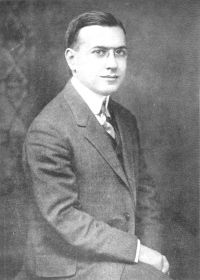 Earl Derr Biggers,
The house without a key
(1925)
“ No other word was spoken on the journey, and when they reached Dan's house, Barbara and Miss Minerva went immediately up-stairs. Jennison disappeared through a doorway at the left; evidently he knew his way about. Haku volunteered to show John Quincy his quarters, so he followed the Jap to the second floor.When his bags were unpacked, John Quincy went down-stairs again. Miss Minerva was waiting for him in the living-room. From beyond the bamboo curtain leading to the lanai came the sound of men's voices, mumbling and indistinct. ”
Anna Marie Miles, The Key to Peace
“ Don't let anyone destroy your faith in God, in the Bible, nor in what it teaches as being the Eternal Word of God. Guard this faith and live by it. It means your eternal destiny. Whether anyone says God's Word is true or false, it will still be true. Men's thoughts and ideas will never change God's Word.The next sin is uncleanness. The dictionary says that uncleanness means "morally impure, foul, filthy, unchaste and obscene." The Bible says, "God hath not called us unto uncleanness, but unto holiness." ”
Anna Marie Miles, The Key to Peace
“ In other words, we have listed what the Bible teaches about some things that are wrong, and what is right. As you said, the Bible is a big book and we can't find everything, unless we are familiar with it, so I trust these few things have been a help, as you study them. Remember that we need to have Jesus to help us daily to obey the Word of God and be ready to meet the Lord. First, it takes being saved from our sins, being filled with the Holy Spirit and praying and studying God's Word. It is a precious life when we are in the center of God's will. ”
Anna Marie Miles, The Key to Peace
“ We still must stay upon a firm foundation and find it in the Word for ourselves. There is a chain running through the Bible that links truth and it must not be broken, or it will not be truth. We are instructed in the Bible to "Study to shew thyself approved unto God, a workman that needeth not to be ashamed, rightly dividing the word of truth. ”
William James, The Principles of Psychology, Volume 1…
“ Again, when we use a common noun, such as man, in a universal sense, as signifying all possible men, we are fully aware of this intention on our part, and distinguish it carefully from our intention when we mean a certain group of men, or a solitary individual before us. In the chapter on Conception we shall see how important this difference of intention is. It casts its influence over the whole of the sentence, both before and after the spot in which the word man is used. ”
William Mathews, Words; Their Use and Abuse
“ In every relation of life, at every moment [3] of our active being, in every thing we think or do, it is on the meaning and inflection of a word that the direction of our thoughts, and the expression of our will, turn. The soundness of our reasonings, the clearness of our belief and of our judgment, the influence we exert upon others, and the manner in which we are impressed by our fellow-men,—all depend upon a knowledge of the value of words. ”
Samuel Johnson — Appreciations and Testimonia
“ His phraseology rolls ever in solemn and majestic periods, in which every substantive marches ceremoniously accompanied by its epithet; grand pompous words peal like an organ; every proposition is set forth balanced by a proposition of equal length; thought is developed with the compressed regularity and official splendour of a procession. ”
 Walter Pater,
Appreciations, with an Essay on Style
“ Possessed of an absolute belief that there exists but one way of expressing one thing, one word to call it by, one adjective to qualify, one verb to animate it, he gave himself to superhuman labour for the discovery, in every phrase, of that word, that verb, that epithet. ”
 William Blake,
Jerusalem. The Emanation of the Giant Albion
“ Every word and every letter is studied and put into its fit place: the terrific numbers are reserved for the terrific parts—the mild & gentle, for the mild & gentle parts, and the prosaic, for inferior parts: all are necessary to each other. ”
 John Stuart Mill,
Essays on some unsettled Questions of Political Economy
“ It therefore is of great importance that the words with which mankind are familiar, should be turned to the greatest possible advantage as instruments of thought; that one word should not be used as the sign of an idea which is already sufficiently expressed by another word ”
Anonymous, The fourth progressive reader (1871)
“ Of course, there must be a great diversity in the degrees of emphasis, from the slight to the vehement; but the general divisions which we have suggested will be quite sufficient for practical purposes—and we have no other in view.“Though in all properly constructed sentences, every word is useful and necessary, yet in every sentence the relative importance of the words must be different. Articles, Prepositions, Conjunctions, and Auxiliary Verbs, for example, are less important in their significations than the words which they introduce or connect—as Nouns, Verbs, Adjectives, and Adverbs. ”
 Samuel Taylor Coleridge,
Biographia Literaria
“ When two distinct meanings are confounded under one or more words,— (and such must be the case, as sure as our knowledge is progressive and of course imperfect) —erroneous consequences will be drawn, and what is true in one sense of the word will be affirmed as true in toto. ”
Anna Robertson Brown Lindsay, The Warriors
“ So each man goes to the dictionary. He takes a word here, a word there, common words that everybody knows. He puts them together: the result is a presentation of the life of man, and lays hold of his inmost spirit. ”
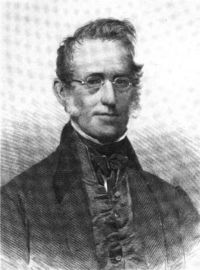 Goold Brown,
The Grammar of English Grammars
“ Through lack of such discernment, gross faults are very often committed. For neither to all ranks, fortunes, and ages, nor to every time, place, and auditory, can the same style either of language or of sentiment be adapted. In every part of a discourse, as in every part of life, we must consider what is suitable and decent; and this must be determined with reference both to the matter in question, and to the personal character of those who speak and those who hear."—CICERO, Orator ad Brutum. ”
Max Farrand, The Records of the Federal Convention of 1787 (1911)
“ To a mind naturally strong and capacious, enriched by much reading and the experience of many years, he added a manner of communicating his thoughts peculiarly his own—in which simplicity, beauty, and strength were equally conspicuous. ”
Brainerd Kellogg, Graded Lessons in English
“ COMPLEX SENTENCES. THE ADJECTIVE CLAUSE. +Hints for Oral Instruction+.—A word-modifier may sometimes be expanded into a phrase or into an expression that asserts.+T+.—A wise man will be honored. Expand wise into a phrase, and give me the sentence. +P+.—A man of wisdom will be honored. +T+.—Expand wise into an expression that asserts, join this to man, as a modifier, and then give me the entire sentence. +P+.—A man who is wise will be honored. ”
Charles A. McMurry, The Elements of General Method…
“ Every common noun, verb, adjective, adverb, and preposition is the name of a concept; for example, horse, beauty, to steal, running, over, early, yellow, grape, ocean, etc. To understand these concepts there must be somewhere a progress from the individual to the abstract, an induction from particulars to a general concept. ”
Victor Alvin Ketcham, The theory and practice of argumentation and debate
“ The clear conception outrunning the deductions of logic, the high purpose, the firm resolve, the dauntless spirit, speaking on the tongue, beaming from the eye, informing every feature, and urging the whole man onward, right onward to his object,—this, this is eloquence ”
Samuel Kirkham, English Grammar in Familiar Lectures
“ The principal parts of a simple sentence are the nominative or subject, the verb or attribute, or word that makes the affirmation, and the object, or thing affected by the action of the verb; as, "A wise man governs his passions." In this sentence, man is the subject ”
 Sir Walter Alexander Raleigh,
Style
“ In short, the third and greatest virtue of words is no other than the virtue that belongs to the weapons of thought,—a deep, wide, questioning thought that discovers analogies and pierces behind things to a half-perceived unity of law and essence. In the employ of keen insight, high feeling, and deep thinking, language comes by its own ”
Carl Gustav Jung, The American Journal of Psychology (1910)
“ As a rule it is well to follow up the critical words by indifferent words in order that the action of the first may be clearly distinguished. But one may also follow up one critical word by another, especially if one wishes to bring into relief the action of the second. ”
Henry Ware, Hints on extemporaneous preaching
“ To be compelled to shape the course of remark so as to suit a sentence which is by and by to come, or to introduce certain expressions which are waiting for their place, is a check to the natural current of thought. ”
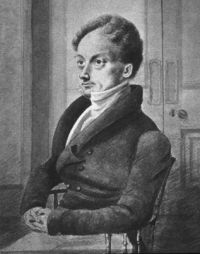 James Mill,
Analysis of the Phenomena of the Human Mind
“ It is only position that determines in each case how the word is to be understood; thus traditional convention assigns to ta fu the meaning of “a great man,” and to fu ta that of “the man is great.” Being habituated to the constant use of the verb is in such a case as the latter, we are apt to suppose that the expression derives its predicative force from its suggesting the verb of existence, which the mind instinctively and necessarily supplies for itself. ”
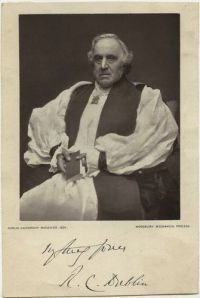 Richard Chenevix Trench,
A select glossary of English words used formerly in senses different from their present
(1890)
“ Once more, they should, if possible, be such as have a certain intrinsic worth and value of their own, independent of their value as illustrative of the point in language directly to be proved—some weight of thought, or beauty of expression, merit in short of one kind or other, that so the reader may be making a second gain by the way. ”
Joseph M. Bachelor, The Century Vocabulary Builder
“ Concrete Terms; General vs. Specific Terms>Abstract terms convey ideas; concrete terms call up pictures. If we say "Honesty is the best policy," we speak abstractly. Nobody can see or hear or touch the thing honesty or the thing policy; the apprehension of them must be purely intellectual. But if we say "The rat began to gnaw the rope," we speak concretely. Rat, gnaw, and rope are tangible, perceptible things; the words bring to us visions of particular objects and actions. ”
William James, Psychology: Briefer Course
“ Take a sentence of a dozen words, and take twelve men and tell to each one word. Then stand the men in a row or jam them in a bunch, and let each think of his word as intently as he will: nowhere will there be a consciousness of the whole sentence. ”
Thomas Frederick Tout , Dictionary of National Biography… (1912)
“ Though necessarily dealing with great masses of detail, general principles are wisely and impressively emphasised ; though constantly concerned with abstractions and tendencies, it has rightly been pronounced to be ’marvellously concrete.' Self-suppression, impartiality, accuracy, sympathy, sobriety of judgment, and sense of proportion stand out in every part of the great book. ”
Frank Edgar Farley, An Advanced English Grammar with Exercises
“ Verbs of choosing, calling, naming, making, and thinking may take two objects referring to the same person or thing.The first of these is the direct object, and the second, which completes the sense of the predicate, is called a predicate objective. We chose Oscar president. [Oscar is the direct object of chose; president is the predicate objective.] I call John my friend. They thought the man a coward. Make my house your home. The predicate objective is often called the complementary object or the objective attribute. It is classed as a complement. ”
Matthew Henry, Matthew Henry's Commentary on the Whole Bible… (1700s)
“ If thou canst, answer me. If thou hast so much strength and spirit left thee, and art not quite spent with the distemper and the dispute, set thy words in order, and they shall have their due consideration." Those that can speak reason will hear reason. ”
John Stuart Mill,
A System of Logic, Ratiocinative and Inductive
(1881)
“ But as we have no words by which to recall those former sensations, except the very word which we seek to define, or some other which, being exactly synonymous with it, requires definition as much, words can not unfold the signification of this class of names; and we are obliged to make a direct appeal to the personal experience of the individual whom we address. ”
 William Walker Atkinson,
A Series of Lessons in Raja Yoga
“ You will understand, of course, that there is no magic or virtue in the words themselves—that is, in the grouping of the letters forming the words, or the sounds of the words—the virtue resting in the idea of which the words are the expression. ”
 Josiah Royce,
The World and the Individual, First Series
(1899)
“ Our preference, however, for the objects of sense, for the pen, and the sun, as typical instances of objects of ideas, arises from the fact that in case of just these objects, it is especially easy, by observing, from without, the acts of the person who has these ideas, to form confident and, for common-sense purposes, relatively exact notions of the selection to which the internal meaning of the ideas has bound the maker of any given judgment about objects. ”
 Willard Van Orman Quine,
On What There Is
“ The useful ways in which people ordinarily talk or seem to talk about meanings boil down to two: the having of meanings, which is significance, and sameness of meaning, or synonymy. What is called giving the meaning of an utterance is simply the uttering of a synonym, couched, ordinarily, in clearer language than the original. ”
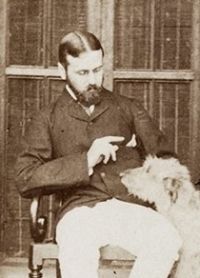 Walter Hillier,
The Chinese language and how to learn it
(1921)
“ If he wishes to express a thought out of the common, or a complex idea, he dives into his store of recollection and quotes a word or two from the sayings of some ancient sage which are suggestive rather than perspicuous. ”
Edwin Gordon Lawrence, How to Master the Spoken Word
“ This is a splendidly constructed sentence, and contains more information than many paragraphs made up of numerous sentences. It is because of the masterly arrangement of contrasts that so much is stated in so small a space.How are the contrasts to be brought out? By means of inflection and emphasis. The single contrast requires that when both members are positive the first should be given the rising inflection and the second the falling; as,The human mind is the brightest display of the power and skill of the Infinite mind with which we are acquainted. ”
Oliver Wendell Holmes, The Autocrat of the Breakfast-Table
“ You see, my friends, what immense conclusions, touching our lives, our fortunes, and our sacred honor, may be reached by means of very insignificant premises. This is eminently true of manners and forms of speech; a movement or a phrase often tells you all you want to know about a person. ”
Related terms
Authors who wrote about “key word”
Brainerd KelloggAnna Marie MilesEllen KeyJohn Stuart MillWilliam JamesJames MillSamuel Taylor ColeridgeWilliam MathewsWalter PaterEarl Derr BiggersAnonymousWilliam BlakeAnna Robertson Brown LindsaySamuel KirkhamCarl Gustav JungWalter HillierL. P. Meredith John of the CrossEdwin Gordon Lawrence
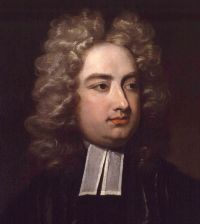 Jonathan Swift
Ellen KeyJohn Stuart MillWilliam JamesJames MillSamuel Taylor ColeridgeWilliam MathewsWalter PaterEarl Derr BiggersAnonymousWilliam BlakeAnna Robertson Brown LindsaySamuel KirkhamCarl Gustav JungWalter HillierL. P. MeredithJohn of the CrossEdwin Gordon LawrenceJonathan Swift