Laws of motion

Definition and stakes

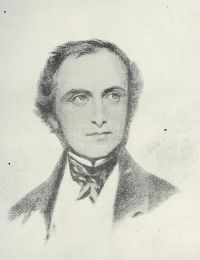
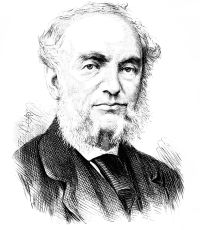
Portrait of Thomas Henry Huxley Thomas Henry Huxley,  The Advance of Science in the Last Half-Century (1887)

“ The laws of motion of visible and tangible, or molar, matter had been worked out to a great degree of refinement and embodied in the branches of science known as Mechanics, Hydrostatics, and Pneumatics. These laws had been shown to hold good, so far as they could be checked by observation and experiment, throughout the universe, on the assumption that all such masses of matter possessed inertia and were susceptible of acquiring motion, in two ways, firstly by impact, or impulse from without; ”
Source: Gutenberg

Portrait of William Whewell William Whewell,  Novum organon renovatum (1858)

“ In the establishment of the Laws of Motion, it happened, in several instances, that Principles were assumed as self-evident which do not now appear evident, but which have since been demonstrated from the simplest and most evident principles. Thus it was assumed that a perpetual motion is impossible;—that the velocities of bodies acquired by falling down planes or curves of the same vertical height are equal;—that the actual descent of the center of gravity is equal to its potential ascent. ”
Source: Gutenberg

Portrait of Robert Stawell Ball Robert Stawell Ball,  In the High Heavens (1910)

“ The science of dynamics is founded upon certain principles known as the laws of motion. The simplest of these principles asserts that a body once set moving in a straight line will continue to move on uniformly for ever in the same straight line, unless some force be permitted to act upon that body. For nature as we know it, this law seems to be fully proved. It has been tested in every way that we have been able to devise. ”
Source: Wikisource

Get perspective with Kwize: daily news enlightened by great literature