Mathematical table

Definition and stakes

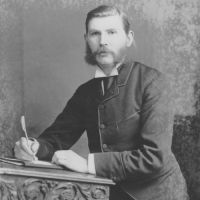
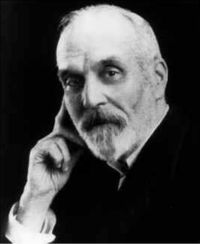
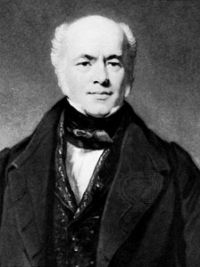
Portrait of Francis Baily Francis Baily,  On Mr. Babbage's new machine for calculating and printing mathematical and astronomical tables (1823)

“ With five orders of differences, a table of logarithms may be computed to eight places of figures, which shall be true to the last figures, and it would not require more than half an hour to compute each set of differences; particularly as the higher numbers require very little labour, two or three terms of the series being quite sufficient. ”
Source: Wikisource

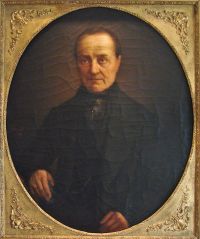
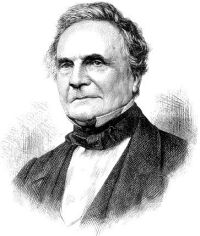
Portrait of Charles Babbage Charles Babbage,  The calculating engine (1834)

“ The principle selected by Mr Babbage as the basis of that part of the machinery which calculates, is the Method of Differences; and he has in fact literally thrown this mathematical principle into wheel-work. In order to form a notion of the nature of the machinery, it will be necessary, first to convey to the reader some idea of the mathematical principle just alluded to.
A numerical table, of whatever kind, is a series of numbers which possess some common character, and which proceed increasing or decreasing according to some general law.
”
Source: Gutenberg

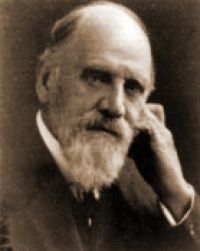
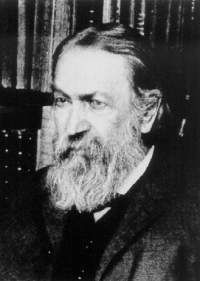
Portrait of Sir Francis Darwin Sir Francis Darwin,  Rustic Sounds, and Other Studies in Literature and Natural History

“ How far every boy ought to be made to do mathematics (beyond simple arithmetic) I cannot say. I know that I am extremely grateful for the small amount of mathematics forced into me. I am even thankful for a very mechanical side of the subject, namely, the use of mathematical tables in general, and for being compelled to work out innumerable sums by logarithms, which we had to do in a “neat tabular form” to quote our precise master’s words. ”
Source: Gutenberg

Get perspective with Kwize: daily news enlightened by great literature