Mathematical truth

Definition and stakes

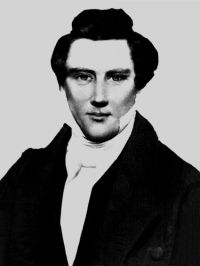
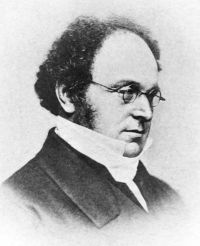
Portrait of John Stuart Mill John Stuart Mill,  A System of Logic, Ratiocinative and Inductive…

“ What is commonly called mathematical certainty, therefore, which comprises the twofold conception of unconditional truth and perfect accuracy, is not an attribute of all mathematical truths, but of those only which relate to pure Number, as distinguished from Quantity in the more enlarged sense; and only so long as we abstain from supposing that the numbers are a precise index to actual quantities. The certainty usually ascribed to the conclusions of geometry, and even to those of mechanics, is nothing whatever but certainty of inference. ”
Source: Gutenberg

Portrait of John Stuart Mill John Stuart Mill,  On Liberty

“ The peculiarity of the evidence of mathematical truths is, that all the argument is on one side. There are no objections, and no answers to objections. But on every subject on which difference of opinion is possible, the truth depends on a balance to be struck between two sets of conflicting reasons. Even in natural philosophy, there is always some [Pg 67] other explanation possible of the same facts; some geocentric theory instead of heliocentric, some phlogiston instead of oxygen; and it has to be shown why that other theory cannot be the true one: ”
Source: Gutenberg

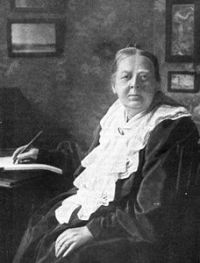
Portrait of Leslie Stephen Leslie Stephen,  Social Rights And Duties: Addresses to Ethical Societies…

“ However elaborate may be the evolutions of mathematical truth, they can never get beyond the germs out of which they are evolved. They are valid precisely because the most complex statement is always the exact equivalent of the simpler, out of which it is constructed. They remain to the end truths of number or truths of geometry. They cannot, by themselves, tell us that things exist which can be counted or which can be measured. ”
Source: Gutenberg

Get perspective with Kwize: daily news enlightened by great literature