Mercury (element)

Definition and stakes

William Ramsay,  The Gases of the Atmosphere: The History of Their Discovery

“ The amount of mercury which combines with 16 parts by weight of oxygen is easily found by heating a weighed quantity of oxide of mercury, as Priestley and Scheele did, and weighing the residue of metal. The results of the most accurate experiments show that 200·36 grams of mercury combine with 16 grams of oxygen, and if the compound consists of one atom of each element, 200·36 must be the atomic weight of mercury. The first idea which naturally occurs is to find out the relative weight of mercury gas. ”
Source: Gutenberg

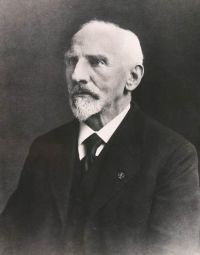
Portrait of Christiaan Snouck Hurgronje Christiaan Snouck Hurgronje,  The Achehnese (1906)

“ In the earth then all elements are united and capable of changing places with one another. Now the ,éleumèë of iron has the power of producing on any part of the human body that is exposed to the attack of iron or lead, a temporary formation of iron or some still stronger element that makes the man keubay or invulnerable.
Treatment with mercury.Mercury (raʾsa) is regarded as exercising a mysterious influence over the other metals; hence one of the most popular methods of attaining invulnerability is the introduction of mercury in a particular manner into the human body (peutamòng raʾsa) .
”
Source: Wikisource

Dmitry Ivanovich Mendeleyev,  The Principles of Chemistry, Volume II

“ As many of the compounds of mercury decompose on being heated—for instance, the oxide or carbonate [17] —and as zinc, cadmium, copper, iron, and other metals separate mercury from its salts, [18] it is evident [51] that mercury has less chemical energy than the metals already described, even than zinc and cadmium. Nitric acid, when acting on an excess of mercury at the ordinary temperature, gives mercurous nitrate, HgNO3. ”
Source: Gutenberg

Get perspective with Kwize: daily news enlightened by great literature