Molar tooth

Definition and stakes

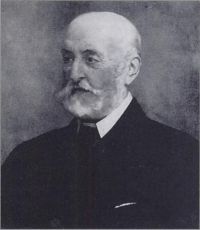
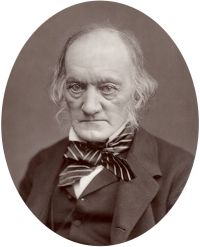
Portrait of Richard Owen Richard Owen,  The zoology of the voyage of H.M.S. Beagle… (1839)

“ The fractured molar tooth appears to have belonged to the inferior maxilla on the right side; the crown is destroyed; a part of the cavity of the root remains. The body is compressed transversely, and presents a double curvature, which renders its anterior and exterior aspects slightly convex; the posterior and interior gently concave; these surfaces are all uniform, with the exception of the interior or mesial aspect, which presents a longitudinal rib or ridge, one-half the thickness of the long diameter of the tooth ”
Source: Gutenberg

Cassell's Natural History, Vol…

“ The young have milk teeth, and in the upper jaw the last crushing or molar tooth has large cusps behind and projecting inwards, and the incisor teeth are equal in size. In the lower jaw the incisors are grooved in front in a curious manner; and the great molar teeth with five cusps have a curiously wrinkled-looking surface. Underneath the skull looks long, and the hole for the spinal cord is much longer than broad, and the joints or condyles are distant from the front of it. The palate is broad and the nose cavity also, and there is a bony styloid process connected with the ear-bone. ”
Source: Gutenberg

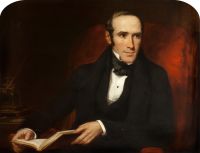
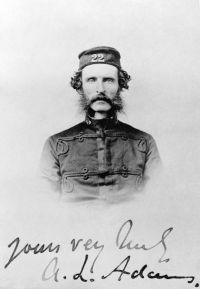
Portrait of Andrew Leith Adams Andrew Leith Adams,  Quarterly Journal of the Geological Society of London (1877)

“ There is, moreover, a greater roughening of the outer surface of the enamel, which on the worn disk produces a faint crimping not generally observed in northern specimens; otherwise the tooth is un distinguishable from the same molar of the mammoth.
3. Two fragments of germ molars:—
a. A fragment of an upper tooth, holding 8–9 posterior ridges, including a broad, flat, digitated talon. The plates are of precisely the same character as in the preceding tooth, but longer and broader.
”
Source: Wikisource

Get perspective with Kwize: daily news enlightened by great literature