Frederick L. Lipman, Creating Capital
“ What are the considerations to be observed by a man in deciding whether or not he should adopt money-making—that is, the acquisition of a surplus beyond his current needs—as one of his definite aims in life? ”
Frederick L. Lipman, Creating Capital
“ What are the considerations to be observed by a man in deciding whether or not he should adopt money-making—that is, the acquisition of a surplus beyond his current needs—as one of his definite aims in life? ”
G. A. Johnston, An Introduction to Ethics, for Training Colleges… (1915)
“ We should, of course, remember that many occupations which seem at first sight to be concerned simply with money-making have a significance which transcends this. The business of stockbroking, for instance, does not have money-making as its end-all and be-all. ”
 Woodrow Wilson,
Congressional Government
(1885, 1900)
“ Their wealth is in all sorts of stocks, in all sorts of machinery, in all sorts of buildings, in possessions of all the sorts possible in a land of bustling commerce and money-making industries. They have made their money in a hundred different ways, or have inherited it from fathers who amassed it in enterprises too numerous to imagine ”
Frederick L. Lipman, Creating Capital
“ After cataloguing so much that is virtuous in the pursuit of money-making the suggestion is inevitable that there must be some other side to it, that the common views of the rapacity of the money-maker cannot be wholly unfounded. What then are the vices of the money-making aim? ”
Benjamin M. Anderson, The Value of Money
“ A greater or less proportion of capital works with labor in producing different things, and the value of product, in that case, varies not merely with the labor, but also with the amount of capital, and the length of time the capital is employed. How say, then, that labor alone governs value? How reduce labor-cost and capital-cost to homogeneous terms? James Mill tried to do it for him by making capital merely stored up or petrified labor, which gives up its value again in production. ”
Benjamin R. Tucker, Instead of a Book — Money and Interest (1897)
“ The laborer who has capital ready when it is wanted, and thus, by saving time in making it, increases production, will get and ought to get some consideration,—higher wages, if you choose, or interest, as we call it,—just as the skilful printer who sets fifteen hundred ems an hour will get more for an hour's work than the less skilful printer who sets only a thousand. ”
Chester Arthur Phillips, Readings in Money and Banking
“ Under ordinary circumstances one would say that when the great majority of men already in business are "making money" with more than usual rapidity they will be inclined to enlarge their operations, that others will be inclined to enter the field, and that thus the production of wealth will be stimulated. ”
 Louis F. Post,
The basic facts of economics
(1927)
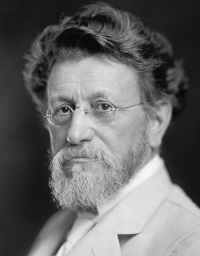
“ And investors, do they not invest by money measurements and in money terms for the purpose of obtaining Economic incomes measured by money and expressed in terms of money?Manifestly, the immediate object of everybody’s activity in the field of Economics is to make money.Does one desire food? By making money he gets food. Does one desire clothing? He gets it by making money. ”
 John Bates Clark,
Essentials of Economic Theory
“ Bargain-making strategy, the "higgling of the market," may yield an imperfect result, and the lender of real or commodity capital may or may not get the exact real earnings of marginal capital of the same kind. In translating the earnings of real capital for the earlier or test year into terms of money, the appreciation of the coins has unerringly entered as an element. ”
Samuel Smiles, Self Help; with Illustrations of Conduct and Perseverance
“ Nothing is more common than energy in money-making, quite independent of any higher object than its accumulation. A man who devotes himself to this pursuit, body and soul, can scarcely fail to become rich. Very little brains will do; spend less than you earn; add guinea to guinea; scrape and save; and the pile of gold will gradually rise. ”
Benjamin M. Anderson, The Value of Money
“ The forces which a cross-section analysis reveals are not necessarily identical with those which a theory of origins sets forth. Once the thing is set going, the forces of inertia favor it. A new theory, fixed in the minds of the people, say the quantity theory itself, might give them such confidence in their money that its value might be maintained. A fiat of the government, making the money legal tender, supplemented by the loyalty of the people, might keep up its value. ”
“ Now this group in the past through their control direct or inter-related has been able to dominate the centers of credit, the money loaning institutions, such as the great banks and insurance companies. By this means they have been in a measure able to keep to themselves the great industrial exploitations dependent on the ability to finance in the hundreds of millions. More, they have been able to limit to narrow fields such men as myself and other newcomers, who wish to rise to the same financial advantage. ”
Chester Arthur Phillips, Readings in Money and Banking
“ For to the latter every further [Pg 660] rise of prices for products which they buy means a further strain upon their already stretched resources.As prosperity approaches its height, then, a sharp contrast develops between the business prospects of different enterprises. Many, probably the majority, are making more money than at any previous stage of the business cycle. But an important minority, at least, face the prospect of declining profits. The more intense prosperity becomes, the larger grows this threatened group. ”
 John Stuart Mill,
A System of Logic, Ratiocinative and Inductive
(1881)
“ Take, for instance, the common notion so plausible at the first glance, of the encouragement given to industry by lavish expenditure. A, who spends his whole income, and even his capital, in expensive living, is supposed to give great employment to labor. B, who lives on a small portion, and invests the remainder in the funds, is thought to give little or no employment. For every body sees the gains which are made by A's tradesmen, servants, and others, while his money is spending. ”
 Lysander Spooner,
A New Banking System
“ And as money, or currency, is the great, the indispensable instrumentality in the production and distribution of wealth; as it is the capital, the motive power, that sets all other instrumentalities in motion; as it is the one thing, without which all the other great agencies of production—such as science, skill, and machinery—are practically paralyzed; to say that we need no more of it, and shall have no more of it, than we now have, is to say that we need no more wealth, and shall have no more wealth, and no more equal or equitable distribution of wealth, than we now have. ”
Benjamin M. Anderson, The Value of Money
“ Arbitraging transactions, as between different places, time-speculation, transferring labor and capital from one enterprise to another, increasing the supplies of some goods and reducing the supplies of other, changing land from wheat to corn, etc., etc.,—all these things are sources of gain, and they will be done, whatever the origin of the values involved. The new, dynamic enterprise, before it becomes actualized in concrete machinery, factory building, etc., and long before its income is actualized in money-receipts from the goods it is destined to produce, becomes an object of value. ”
Lysander Spooner,
A Letter to Grover Cleveland, on His False Inaugural Address…
(1886)
“ To make their industry most effective, and to enable them, individually, to put into their own pockets as large a portion as possible of their own earnings, they need, on an average, one thousand dollars each of money capital. ”
Benjamin M. Anderson, The Value of Money
“ Seasonal calls on an inelastic money supply for actual cash to move crops and pay agricultural wages may make a real difference in the value of money; scarcity of money of the right denominations for retail trade may give an agio to such money, [550] but the money and credit used by specula [Pg 523] tors, bill brokers, dealers in foreign exchange, investment bankers, etc., increases, rather than decreases, the funds available for ordinary industry and commerce. ”
Armenian Literature: Comprising Poetry…
“ OSSEP. In our line of trade only a few persons carry on their business with their own money. Most of us have to borrow. When I sell goods to one, I pay my debt to the other. I sell goods to the third and pay to the fourth; and so it goes in a circle, like a wheel drawing water, until one falls in the hands of a man who draws the needle out of the knitting and everything falls in pieces. Who is in a position to fight against such conditions? One must pay the store rent and the clerk's salary, and beside that the interest on the working capital. ”
John Stuart Mill,
Principles of Political Economy
(1871)
“ So soon as they asked themselves what is really meant by money—what it is in its essential characters, and the precise nature of the functions it performs—they reflected that money, like other things, is only a desirable possession on account of its uses; and that these, instead of being, as they delusively appear, indefinite, are of a strictly defined and limited description, namely, to facilitate the distribution of the produce of industry according to the convenience of those among whom it is shared. ”
M. Garnier, An Inquiry Into the Nature and Causes of the Wealth of Nations
“ Money, therefore, the great wheel of circulation, the great instrument of commerce, like all other instruments of trade, though it makes a part, and a very valuable part, of the capital, makes no part of the revenue of the society to which it belongs; and though the metal pieces of which it is composed, in the course of their annual circulation, distribute to every man the revenue which properly belongs to him, they make themselves no part of that revenue. ”
M. Garnier, An Inquiry Into the Nature and Causes of the Wealth of Nations
“ Wages, profit, and rent, are the three original sources of all revenue, as well as of all exchangeable value. All other revenue is ultimately derived from some one or other of these.Whoever derives his revenue from a fund which is his own, must draw it either from his labour, from his stock, or from his land. The revenue derived from labour is called wages; that derived from stock, by the person who manages or employs it, is called profit; that derived from it by the person who does not employ it himself, but lends it to another, is called the interest or the use of money. ”
 Daniel Defoe,
The Complete English Tradesman…
“ If he knows what he buys, and how to put it off, he buys a thousand pounds' worth of goods at once, sells them for less time than he buys at, and pays them with their own money. I might swell this discourse to a volume by itself, to set out the particular profit that such a man may make of his credit, and how he can raise what sums he will, by buying goods, and by ordering the people whom he is to pay in the country, to draw bills on him. ”
Chester Arthur Phillips, Readings in Money and Banking
“ For the active enterprises must buy more materials, wares, and current supplies from other enterprises, the latter from still others, and so on without assignable limits. Meanwhile all enterprises which become busier employ more labor, use more borrowed money, and make higher profits. ”
 Aristotle,
Politics (Jowett) — Book I
(1920)
“ And this term usury [tokos] , which means the birth of money from money, is applied to the breeding of money because the offspring resembles the parent. Wherefore of all modes of making money this is the most unnatural. ”
John Stuart Mill,
Principles of Political Economy
(1871)
“ And this is not a question of any difficulty, when the illusion is dispelled, which caused money to be looked upon as a peculiar thing, not governed by the same laws as other things. Money is a commodity, and its value is determined like that of other commodities, temporarily by demand and supply, permanently and on the average by cost of production. ”
 George Cary Eggleston,
A Captain in the Ranks: A Romance of Affairs
“ In fact it pays more, as the reports show. And then there is the larger business—lending money on sound enterprises, financing industrial companies, and especially advancing money on bills of lading for goods in transit. ”
 Adam Smith,
The Wealth of Nations
(1776)
“ That portion which he annually saves, as, for the sake of the profit, it is immediately employed as a capital, is consumed in the same manner, and nearly in the same time too, but by a different set of people: by labourers, manufacturers, and artificers, who reproduce, with a profit, the value of their annual consumption. His revenue, we shall suppose, is paid him in money. ”
Benjamin R. Tucker, Instead of a Book — Money and Interest (1897)
“ It is then shown that interest on money-loans is paid because money affords special advantages as a medium of exchange, and the value of this property of money is traced to its ultimate utility, or, in other words, to the increment of productivity which the last addendum to the volume of money affords by facilitating the division of labor. ”
Various, The Arena, Volume 4, No. 21, August…
“ Running through the above statement of the independent doctrine of finance, we see that three ideas are most prominent. First, a desire that the government supersede avaricious man and blind nature in the creation and distribution of money, in order that money may be a stable purchasing power. Second, a determination that money shall no longer be a commodity to be bought, and sold, and manipulated, a leech upon labor in the hands of a few, but a convenience of trade, accessible to the many at first cost. ”
Hartley Withers, International Finance
“ It has already been shown that capital, saved by thrifty folk, is essential to industry as society is at present built and worked; and the financiers are the people who see to the management of these savings, their collection into the great reservoir of the money market, and their placing at the disposal of industry. ”
 John Clark Ridpath,
The Life and Work of James A. Garfield…
“ When a man has earned, out of his hard work, a hundred dollars more than he needs for current expenses, he reasons thus: ‘I can not go into business with a hundred dollars; I can not embark in trade; but, as I work, I want my money to work.’ And so he puts his small gains where they will earn something. He lends his money to a wealthier neighbor, or puts it in the savings-bank. ”
Benjamin R. Tucker, Instead of a Book — Money and Interest (1897)
“ All capital is at once made available by the abundance of the currency, and the supply is so great that interest is kept very low; but confidence being restored and the way being clear for all sorts of new enterprises, there is also a great demand for capital, and the consequent increase in the volume of business causes wages to rise to a very high point. ”
Alfred Charles Michaud, Our coming world (1951)
“ Money travels rapidly from hand to hand, from one pocketbook to another, from bank to bank, to borrower or drawer, in constant circulation."Has any one of your economists calculated how many times an active one-dollar multiplies itself in a year from the time it is first issued from the Treasury? How much does it earn in interest, compound interest, commissions, bonuses, dividends, and profit gain from constantly being shifted from person to person, bank to bank, and loan to loan? ”
Benjamin M. Anderson, The Value of Money
“ But the expansion of business is checked, the volume of business confidence is reduced, the values of future incomes in enterprises is lowered, production is checked, and prices are reduced, (a) because the value of money rises; and (b) because the values of goods and income-bearers is reduced. The exchange side of production is hampered. Substitutes for gold, through increased activities of bankers and other agents of exchange, are costly. ”
Self-made man, A Lucky Deal; or The 'Cutest Boy in Wall Street (1905)
“ You’ve no idea of the money engaged in productive industry, money earned by hard years of labor and economy, money held in trust for widows and orphans, money stolen from banks and corporations, money abstracted by clerks and office boys, is carried into Wall Street, in the vain hope of acquiring a sudden fortune, and there remains. ”
John Stuart Mill,
Principles of Political Economy
“ Or, lastly, instead of [capital] being afforded by persons not in business, the affording it may itself become a business. A portion of the capital employed in trade may be supplied by a class of professional money-lenders. ”
 Henry George,
Progress and Poverty (George)…
(1879)
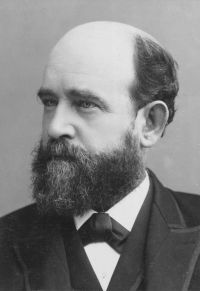
“ We shall see that wages are the earnings-that is to say, the makings - of labour, not the advances of capital, and that the labourer who receives his wages in money (coined or printed, it may be, before his labour commenced) really receives in return for the addition his labour has made to the general stock of wealth a draft upon that general stock, which he may utilize in any particular form of wealth that will best satisfy his desires. ”