Mood (grammar)

Definition and stakes

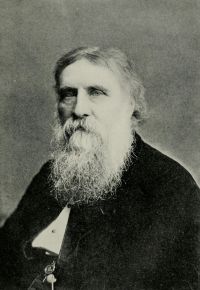
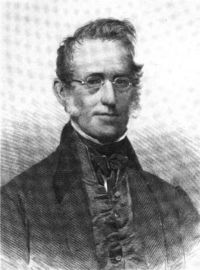
Portrait of Goold Brown Goold Brown,  The Grammar of English Grammars (1882)

“ The Indicative mood is that form of the verb, which simply indicates or declares a thing: as, I write; you know: or asks a question; as, "Do you know?"--"Know ye not?"
The Potential mood is that form of the verb which expres ses the power, liberty, possibility, or necessity, of the being, action, or passion: as, "I can walk; he may ride; we must go."
The Subjunctive mood is that form of the verb, which represents the being, action, or passion, as conditional, doubtful, and contingent: as, "If thou go, see that thou offend not."--"See thou do it not."--Rev., xix, 10.
”
Source: Wikisource

Portrait of Goold Brown Goold Brown,  The Grammar of English Grammars

“ In short, the idea of a "subjunctive mood in the indicative form," (which is adopted by Chandler, Frazee, Fisk, S. S. Greene, Comly, Ingersoll, R. C. Smith, Sanborn, Mack, Butler, Hart, Weld, Pinneo, and others,) is utterly inconsistent with any just notion of what a mood is; and the suggestion, which we frequently meet with, that the regular indicative or potential mood may be thrown into the subjunctive by merely prefixing a conjunction, is something worse than nonsense. Indeed, no mood can ever be made a part of an other, without the grossest confusion and absurdity. ”
Source: Gutenberg

William Malone Baskervill,  An English Grammar

“ The water was first brought in barrels drawn by horses, till some officer came and opened the fire plug.
9. The exclusive in fashionable life does not see that he excludes himself from enjoyment, in the attempt to appropriate it.
(b) Find sentences with five verbs in the active and five in the passive voice.
MOOD.
Definition.
213. The word mood is from the Latin modus, meaning manner, way, method. Hence, when applied to verbs,—
Mood means the manner of conceiving and expressing action or being of some subject.
”
Source: Gutenberg

Get perspective with Kwize: daily news enlightened by great literature